

 by
by The Raja Saab full movie story & ending explained starts with what looks like a fun commercial entertainer but slowly turns into a haunted family drama filled with royal secrets, hypnosis, revenge, and a supernatural battle against the past. On the surface, the film gives you the familiar ingredients of a big Telugu horror-fantasy entertainer—Prabhas in a stylish lead role, a massive old mansion, comedy, romance, a villain with dark powers, and a climax that pushes everything into full supernatural chaos. But once the film settles into its core conflict, it becomes clear that The Raja Saab is really about legacy, guilt, and the burden of facing the darkness inside your own bloodline.
If you were searching for The Raja Saab full movie story & ending explained, the confusion is understandable because the film keeps shifting tones. It begins with a lighter, almost playful rhythm and then slowly moves into horror, mystery, black magic, and emotional family conflict. One scene makes it feel like a romantic entertainer, while the next throws you into the eerie world of a haunted royal mansion. That tonal mix is one of the reasons the movie has divided audiences, but it is also what makes the story worth unpacking. Beneath the comedy and supernatural visuals, there’s a fairly emotional core: a grandson trying to free his family from the grip of a powerful and toxic ancestor.
So if you want The Raja Saab full movie story & ending explained in a clean and easy-to-read format, here is a complete breakdown of the plot, the haunted mansion mystery, the major characters, and what the ending actually means.
The Raja Saab Movie Overview
Before getting into the full plot, it helps to understand what kind of film The Raja Saab is trying to be. This is not a straightforward horror movie, and it’s not a regular family drama either. The film blends horror, fantasy, romance, comedy, and royal family mystery into one story. That combination is ambitious, and sometimes messy, but it also gives the movie its identity.
The story follows Raju, played by Prabhas, a young man who seems far removed from the dark history of his family. His life initially feels simple compared to the chaos waiting for him. But once his grandmother’s last wish pushes him toward his ancestral roots, he is forced to enter a mansion tied to his grandfather Kanakaraju, a man whose legacy is soaked in revenge, mind control, and supernatural power. Public explainers and cast listings broadly describe the film as a fantasy horror-comedy centered on Raju’s return to a haunted royal property and his eventual confrontation with Kanakaraju’s hypnotic influence.
That setup is the key to understanding The Raja Saab full movie story & ending explained. This isn’t just about a hero walking into a haunted house. It’s about a man walking into the emotional and supernatural wreckage of his own family.
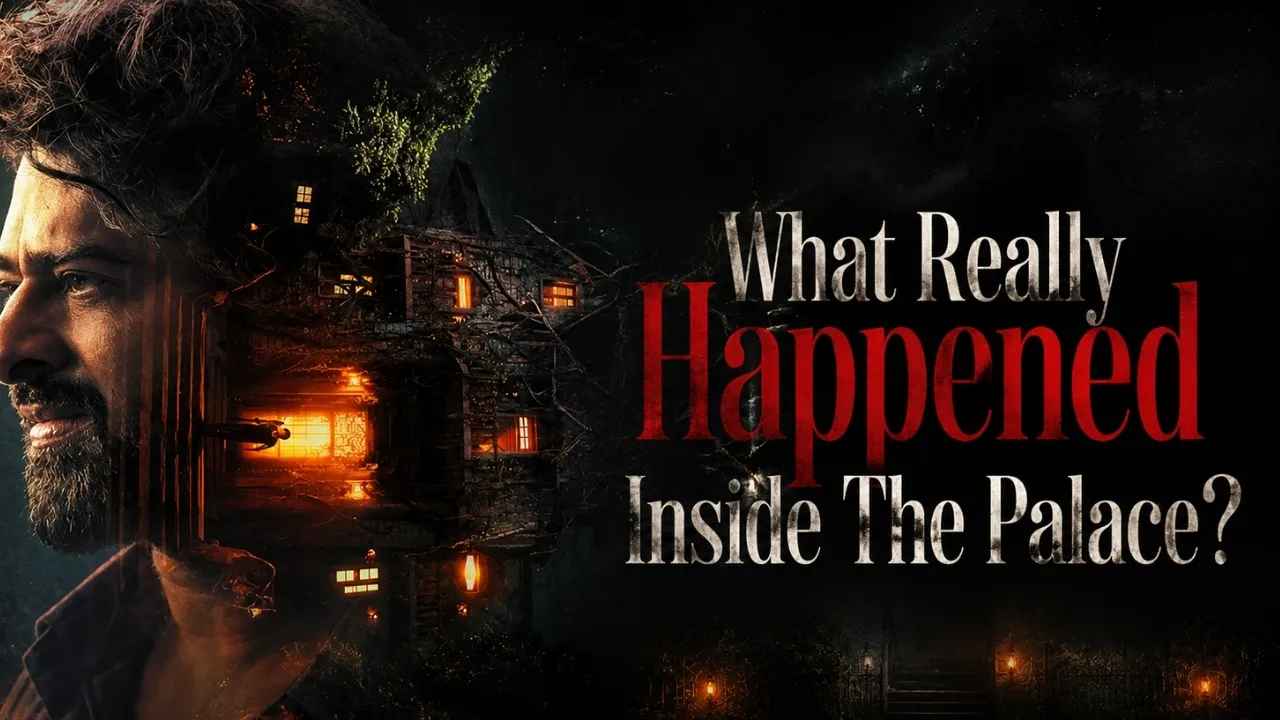
The Raja Saab Full Movie Story & Ending Explained: How the Story Begins
The film opens with Raju, who is introduced as a relatively carefree and charming young man. He doesn’t seem like someone carrying the weight of a tragic royal legacy. In fact, the beginning of the movie deliberately makes him feel more like a commercial entertainer hero than a haunted heir. He has a normal life, a playful side, and a certain emotional distance from the darker side of his family history.
That changes because of Gangadevi, his grandmother.
Gangadevi is old, emotionally fragile, and deeply attached to memories of the past. She is also one of the emotional anchors of the film. Her last wish is to reunite with her husband Kanakaraju, and that wish becomes the trigger for the entire plot. Raju doesn’t go searching for his family’s past because he wants power, wealth, or a throne. He goes because of his grandmother. That’s an important detail because it gives the story emotional grounding. Without Gangadevi, the film would have been just another haunted-mansion thriller. With her, it becomes a family story.
Raju’s journey to uncover Kanakaraju’s past slowly leads him toward an ancestral mansion in Devnagar, a place where the family’s buried history is still very much alive. Public plot summaries describe this shift as the point where Raju’s easygoing life gives way to a supernatural thriller, with the mansion becoming the center of the mystery and Kanakaraju’s influence growing stronger the deeper Raju goes into the past.
Who Is Kanakaraju in The Raja Saab?
To understand The Raja Saab full movie story & ending explained, you need to understand Kanakaraju, because he is not just the villain of the film—he is the source of the entire family’s curse.
Kanakaraju, played by Sanjay Dutt, is not remembered as a gentle patriarch or a tragic old king. He is tied to a darker legacy—one built on humiliation, obsession, revenge, and black magic. According to public ending explainers, Kanakaraju was insulted in the past and turned to occult practices and hypnotic mind control as a way to reclaim power and take revenge. He used black magic and hypnosis to dominate others, manipulate their minds, and maintain control over his world long after he should have lost it.
This is what makes him more than a regular supernatural villain. He doesn’t just haunt people. He controls them. He bends memory, perception, and fear to his advantage. That power turns him into a terrifying force because he is not limited to physical presence. He can live inside the mind, which means even the truth becomes unstable around him.
Kanakaraju’s influence is especially dangerous because it extends to Gangadevi. In some plot explanations, he takes emotional and psychological control over her, trapping her in his version of reality and using her attachment to the past as a weapon.
That emotional angle is what gives the story its weight. Raju is not just trying to defeat a villain. He is trying to free his grandmother from a lifetime of emotional captivity.
Why the Haunted Mansion Matters So Much
The mansion in The Raja Saab is more than a spooky backdrop. It is the real heart of the film. If you’re reading The Raja Saab full movie story & ending explained, think of the mansion as the physical form of the family’s trauma.
On the outside, it represents royal history, wealth, and prestige. It looks like the kind of place built to display power. But inside, it is full of silence, manipulation, fear, and unresolved pain. The mansion holds the secrets of Kanakaraju’s actions, the damage he caused, and the way his obsession with control poisoned the entire family.
That’s why the house feels alive. It isn’t just haunted by a spirit. It is haunted by a legacy.
Every room Raju enters pulls him closer to the truth about his bloodline. The mansion doesn’t just hide supernatural forces—it hides emotional ones too. It becomes a space where the past refuses to stay buried, where guilt has settled into the walls, and where every secret carries a cost.
In that sense, The Raja Saab full movie story & ending explained is really about a man entering his own family’s emotional battlefield.
Raju’s Character Arc: From Outsider to True Heir
One of the better things about the film is the way it changes Raju over the course of the story. In the beginning, he doesn’t behave like someone who understands the gravity of his heritage. He’s not a prince reclaiming a kingdom. He feels like an outsider looking in from the edge of a mystery.
But the mansion changes him.
The more Raju learns about Kanakaraju, Gangadevi, and the family’s history, the more he realizes that being an heir is not about claiming status. It’s about confronting the damage left behind by the people whose blood runs in your veins. He slowly understands that if he walks away, Kanakaraju’s shadow will continue to control the family.
That realization is what turns him into the real “Raja Saab.”
He doesn’t earn that title because of inheritance papers or royal lineage. He earns it because he is the first person willing to face the truth and challenge the power that everyone else has been afraid of.
The Role of Hypnosis and Black Magic in The Raja Saab
A big part of The Raja Saab full movie story & ending explained revolves around hypnosis. This is where the film tries to separate itself from a standard ghost story. Kanakaraju is not simply a spirit haunting a mansion. He is a manipulator who uses tantric rituals, black magic, and hypnosis to control the minds of others.
That makes the horror more psychological than physical. The real danger isn’t just that Kanakaraju can attack someone. It’s that he can make them doubt what they see, twist their memories, and trap them in a false reality. This becomes especially important in the final act, where Raju realizes that defeating Kanakaraju will require more than physical courage.
It also explains why the film’s climax feels different from a regular action-horror showdown. Instead of a straightforward fight, the ending leans into mind games, psychic resistance, and a battle inside a manipulated reality. Some explainers even describe the climax as a “mind-world” confrontation, where Raju must defeat Kanakaraju on a psychological plane rather than through brute force alone.
That idea doesn’t work perfectly for everyone, but it is central to the story.

The Raja Saab Cast and Main Characters
A big part of why the movie remains watchable even when the screenplay gets messy is the cast.
Prabhas as Raju
Prabhas carries the emotional and commercial weight of the film. He starts as a lighter, more playful hero and gradually shifts into someone burdened by family history and responsibility. Audience reactions were mixed on the film overall, but many viewers still felt Prabhas was one of its biggest strengths.
Sanjay Dutt as Pekamedala Kanakaraju
Sanjay Dutt plays Kanakaraju, the dark center of the family’s past. His role needs menace, authority, and a sense of larger-than-life evil, and the character is designed to dominate the film even when he is functioning more as a supernatural force than a conventional villain.
Zarina Wahab as Gangadevi
Gangadevi is the emotional bridge between the past and the present. Her love for Kanakaraju, despite everything, gives the story its tragic edge. She isn’t just there to cry or suffer—she is the reason Raju enters this nightmare in the first place.
Malavika Mohanan, Nidhhi Agerwal and Riddhi Kumar
These characters add romance, emotional contrast, and moments of normalcy before the story becomes fully trapped inside the mansion’s darkness. Some viewers felt the women were underused once the story moved heavily into the haunted-house track, which is a fair criticism.
The Raja Saab Full Movie Story & Ending Explained: Climax Breakdown
Now let’s get to the part most readers are actually searching for: The Raja Saab full movie story & ending explained in terms of the climax.
By the time the film reaches its final act, Raju understands three major truths:
- Kanakaraju’s power has not ended with time
- Gangadevi is still emotionally trapped by him
- The mansion itself is a space where Kanakaraju’s influence can distort reality
That leads to the final confrontation.
Kanakaraju’s last attempt to control everything
In the climax, Kanakaraju tightens his psychological grip. He uses deception, false voices, hypnotic traps, and emotional manipulation to keep Raju off balance. According to public explainers, he even impersonates or misleads through mental tricks in order to trap Gangadevi and continue controlling the family.
Raju must defeat him mentally, not just physically
This is the core twist of the ending. Raju cannot simply punch his way out of the conflict because Kanakaraju’s real strength lies in his ability to control minds. The climax becomes a battle of psychic resistance, willpower, and mental clarity. Some ending explainers describe Raju entering a mind-space or resisting Kanakaraju’s hypnosis through awakened mental strength, turning the finale into a psychological showdown rather than a normal supernatural fight.
Gangadevi becomes the emotional center of the climax
Raju is not just fighting for survival. He is fighting to free his grandmother from Kanakaraju’s emotional hold. That’s why the climax matters. Without Gangadevi, the ending would be just another hero-vs-villain battle. With her, it becomes a family confrontation where love, memory, and pain all collide.
Raju breaks the cycle
The real victory comes when Raju resists Kanakaraju’s control, breaks the hypnotic hold, and frees both himself and Gangadevi from the curse. Public ending summaries describe the film concluding with Raju overcoming the hypnotism and even performing prayers for Kanakaraju’s soul, which adds a spiritual closure to the conflict rather than ending only with destruction.
That final note matters because it shows Raju choosing compassion without surrendering to the past. He defeats Kanakaraju, but he also tries to end the suffering tied to him.
What The Raja Saab Ending Really Means
If you want the simplest meaning behind The Raja Saab full movie story & ending explained, it’s this:
The film is about breaking inherited darkness.
Kanakaraju represents the worst parts of legacy—ego, control, revenge, and the refusal to let the next generation live freely. He is a patriarch who poisoned his own bloodline. Raju represents the opposite. He inherits the same family name, the same house, and the same painful history, but he chooses not to continue that cycle.
That’s why the ending matters. Raju does not become the true “Raja Saab” because he defeats a ghost in a haunted mansion. He becomes Raja Saab because he reclaims his family’s future from the man who tried to own it forever.
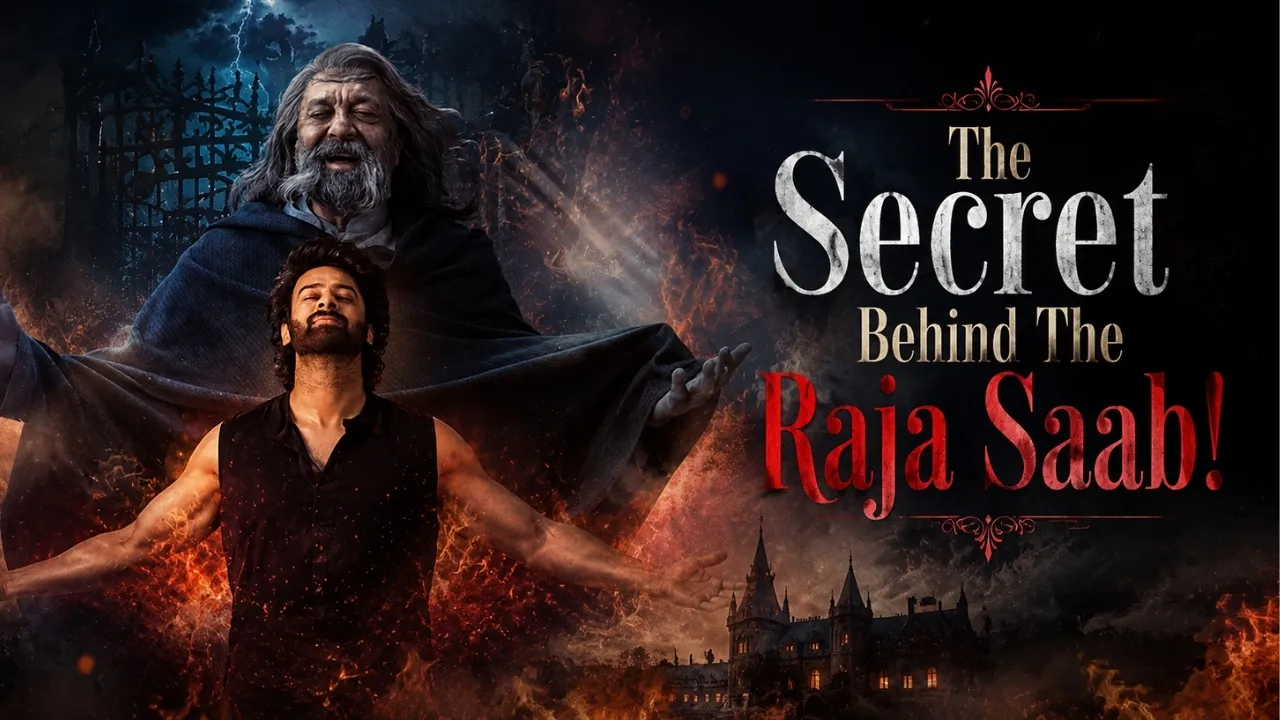
What Works Best in The Raja Saab
1. The premise is strong
A young heir entering a haunted royal mansion to confront his grandfather’s dark legacy is a solid hook for a horror-fantasy entertainer.
2. Prabhas gives the film emotional weight
Even mixed audience reactions often singled out Prabhas as one of the reasons the film remains engaging.
3. The family angle makes the supernatural story matter
Without Gangadevi and the emotional history of the family, the film would feel much emptier.
4. Kanakaraju is more than a jump-scare villain
His role as a manipulative patriarch makes the conflict more personal than a standard haunted-house story.
Where The Raja Saab Feels Uneven
At the same time, the film clearly doesn’t work for everyone. Many audience reactions and discussion threads praised the basic concept but criticized the execution, especially the tonal inconsistency, overlong runtime, and abrupt climax. Some viewers liked the story setup and Prabhas’ performance but felt the screenplay became messy once the plot fully entered the mansion and leaned into the hypnosis-heavy ending.
That criticism is fair. The Raja Saab has a better idea than execution in places. But the core story still has enough intrigue to keep people talking.
Conclusion
The Raja Saab full movie story & ending explained is ultimately the story of a man forced to confront the darkness buried inside his own family. What begins as a grandson’s attempt to fulfill his grandmother’s wish slowly becomes a haunted journey through revenge, black magic, emotional trauma, and royal secrets. The mansion is not just a creepy setting. It is the physical memory of a family poisoned by power. Kanakaraju is not just a villain. He is the symbol of inherited damage, a man so obsessed with control that even death cannot loosen his grip on the people he once ruled.
Raju’s journey matters because he refuses to accept that legacy as destiny. He enters the mansion as someone simply trying to understand the past, but he leaves it as the person willing to end its hold over the future. That is the real meaning behind The Raja Saab full movie story & ending explained. It is not only about defeating a supernatural enemy. It is about reclaiming a family name from the darkness that corrupted it.
So if you were confused by the climax, the easiest way to read the film is this: The Raja Saab starts as a haunted royal mystery, but it ends as a story about a grandson breaking the cycle of fear, control, and emotional captivity that his grandfather left behind.