 by
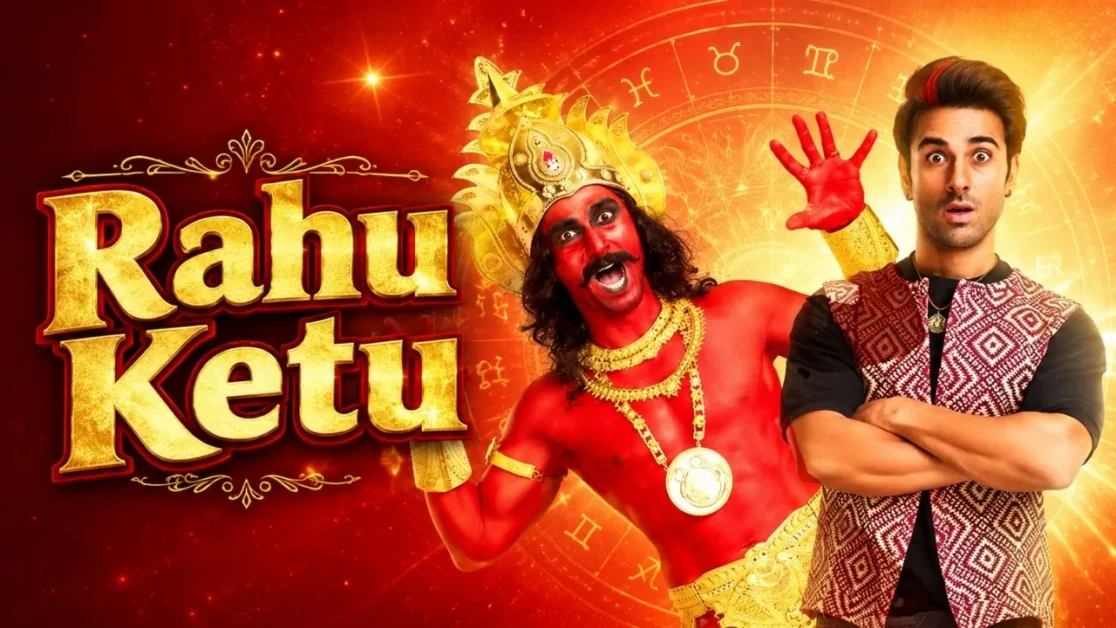
by Hindi comedy often blends everyday situations with unexpected fantasy, and Rahu Ketu takes that approach to an entirely different level. Directed by Vipul Vig, the film stars Varun Sharma, Pulkit Samrat, and Shalini Pandey in a fantasy-comedy that combines mythology-inspired characters, a magical notebook, crime, romance, and self-discovery into one unusual adventure.
The story follows Rahu and Ketu, two fictional characters created through a magical notebook by writer Churu Lal Sharma. Their lives take an unexpected turn when the notebook falls into the wrong hands, forcing them into a dangerous journey involving a drug mafia, hidden truths, and questions about their own existence. While the film delivers plenty of comedy and commercial entertainment, it also explores deeper themes such as destiny, free will, and personal identity.
If the ending left you confused or you’re looking for a clear explanation of the story, this article breaks down Rahu Ketu‘s plot, major themes, and climax in a simple, spoiler-filled, and easy-to-understand way.
Rahu Ketu Movie Overview
Before jumping into the ending, it helps to understand what kind of movie this is trying to be.
Rahu Ketu is a fantasy-comedy with a clever meta-storytelling concept. The story begins with struggling writer Churu Lal Sharma, who creates two fictional heroes, Rahu and Ketu, to fight corruption and social evil.
However, this is no ordinary story. Churu Lal’s notebook has magical powers—whatever he writes becomes reality and cannot easily be undone. That single rule drives every major event in the film and sets the stage for the adventure that follows.
From there, the film turns the concept into a full commercial entertainer. Rahu and Ketu aren’t just names on paper; they become living characters inside the story world. They exist, argue, fall in love, make mistakes, and create trouble like any other Bollywood comic duo. But because their existence is tied to the magical notebook, they are also vulnerable to whoever controls it. That’s the real source of conflict in the film.
The moment the notebook changes hands, Rahu and Ketu’s lives stop being their own.
The Core Story: Who Are Rahu and Ketu in This Film?
The first thing to understand is that Rahu and Ketu are not treated as literal mythological grahas in a devotional or religious sense. The film borrows their names and some of the larger symbolic ideas around fate, trouble, and cosmic mischief, but within the actual story, they function more like fictional characters brought to life.
In the film, Churu Lal Sharma is portrayed as a writer whose magical notebook brings Rahu and Ketu to life. He creates them with the purpose of fighting corruption and social evil, while Foofaji appears to understand the mysterious power of the notebook better than anyone else.
Rahu and Ketu, however, are not polished superheroes. They are bumbling, chaotic, slightly clueless men who keep stumbling into bigger messes than they can handle. That’s where the comedy comes from. Instead of behaving like divine avengers, they behave like a mismatched pair of lovable troublemakers who don’t fully understand the rules of the world they’ve been dropped into.
This is also where the film tries to create its emotional angle. Rahu and Ketu are “born” with a purpose — to fight evil — but they don’t fully understand who created them, why they exist, or whether they have any choice in the matter. At first, that doesn’t seem to bother them because the movie is busy playing with comic situations. But as the plot moves forward, the question of identity becomes much more important.
Where Meenu Taxi Changes Everything
Every chaotic comedy needs one character who throws the entire balance of the story off, and in Rahu Ketu, that character is Meenu Taxi, played by Shalini Pandey.
The story takes a major turn when Meenu steals Churu Lal’s mysterious notebook. Once it falls into her hands, she gains the power to influence events, putting Rahu and Ketu in a situation where they must fight to regain control of their own story.
At this point, the film becomes more than a simple fantasy comedy. Meenu steals the notebook to protect her involvement in an illegal drug operation connected to Mordechai and his criminal network.
By controlling the notebook, she can influence events to serve her own interests, forcing Rahu and Ketu into a much larger conflict than they ever expected.
That’s a very Bollywood-style escalation. What begins as a magical-fantasy setup suddenly folds in crime, greed, and a larger social evil. The notebook stops being a fun plot device and becomes a weapon. Whoever writes in it can push Rahu and Ketu into chaos, rewrite their fate, and steer events toward their own selfish goals.
And that’s exactly what the middle portion of the film runs on: Rahu and Ketu trying to recover the notebook while the story around them keeps changing because someone else is holding the pen.
Why the Magical Notebook Is the Real Hero-Villain of the Film
If you strip Rahu Ketu down to its most important idea, the magical notebook is the whole movie.
It’s not just a fantasy gimmick. It’s the film’s way of talking about control.
At first, the notebook represents creation. It’s how Churu Lal brings Rahu and Ketu into existence. It gives them life, purpose, and a world to operate in. But the moment Meenu steals it, the notebook becomes a symbol of manipulation. Instead of creating life, it starts controlling it. Rahu and Ketu become characters trapped inside a script someone else is constantly editing.
That’s actually a much stronger concept than the film always knows how to use. Because underneath the slapstick and the jokes, Rahu Ketu is really about two people discovering that their lives have been written for them — and then trying to break out of that script. The fantasy is silly, yes, but the emotional idea behind it is surprisingly solid.
How the Drug Mafia Track Fits into the Story
One of the reasons some viewers found Rahu Ketu messy is because the movie doesn’t stick to a single tone. It keeps adding layers. What starts as a magical comedy about two fictional characters becomes a story about drug trafficking, corruption, and social exploitation.
That shift can feel abrupt, but it isn’t random.
Rahu and Ketu were supposedly created to eliminate evil and corruption, so the film needs to eventually place them in direct conflict with a larger criminal system. The drug mafia angle gives the story that larger enemy. Once the notebook is tied to Meenu’s attempt to protect the illegal operation and the gangsters financing it, the film suddenly has a proper antagonist structure.
Characters like Mordechai and the other figures behind the drug network represent the larger corruption Rahu and Ketu were created to fight. However, the screenplay sometimes struggles to balance its many ideas, shifting quickly between mythology, comedy, romance, crime, and social commentary. As a result, certain transitions feel rushed and the overall narrative becomes slightly uneven.
Still, from a story perspective, the drug mafia subplot serves a clear purpose. It raises the stakes. Without it, the film would remain a quirky fantasy chase. With it, the climax gets a reason to exist beyond “get the notebook back.”
Rahu Ketu Ending Explained
Now let’s get to the part most people search for: what actually happens in the ending of Rahu Ketu?
By the climax, the central conflict finally becomes clear. Throughout the film, Rahu and Ketu have been manipulated by the magical notebook, Meenu’s actions, and the criminal forces surrounding it.
The final act marks the moment when they stop reacting to events and begin taking control of their own destiny.
1) Rahu and Ketu recover the magical notebook
The biggest turning point in the climax is when Rahu and Ketu finally recover the notebook from Meenu, bringing an end to her control over the events unfolding around them.
This matters because until that moment, Rahu and Ketu are constantly at the mercy of what other people write into their lives. Once they get the notebook back, they are no longer just comic victims of fate. They become decision-makers.
2) The truth of their existence becomes emotionally important
By this stage, Rahu and Ketu understand that they are not ordinary men. They are creations of Churu Lal’s imagination, brought into existence through the notebook. That revelation could have been played as a depressing twist, but the film uses it in a more empowering way. Instead of collapsing under the idea that they were “written,” they decide to use that knowledge as strength.
This is the emotional heart of the ending. Rahu and Ketu stop asking, “Why were we created?” and start asking, “Now that we are here, what do we want to do?”
3) They use the notebook against the real villains
Instead of using the notebook for personal gain, Rahu and Ketu use its power to stop the criminal network and fulfill the purpose for which they were created.
This is the film’s attempt to complete their arc. Rahu and Ketu were created to fight evil, but most of the movie shows them fumbling through that purpose. In the climax, they finally live up to it. They stop being passive jokers and become active agents of change.
4) Meenu’s role becomes part of the lesson, not just the villainy
Meenu is not a full-blown supernatural villain. She’s more like the catalyst who pushes the story into chaos by misusing power. Her theft of the notebook and involvement with the drug trade create the crisis, but the ending ultimately shifts the focus away from punishing her alone and toward exposing the larger criminal machinery around her.
That’s an important detail because it keeps the climax from feeling too small. The real enemy isn’t just one woman stealing a notebook; it’s the greed, corruption, and criminal network that turns people into tools.
5) Rahu and Ketu finally earn their independence
The climax is meaningful because Rahu and Ketu stop reacting to events and begin making their own choices. Recovering the notebook allows them to end the villains’ control and complete the mission they were originally created for. Instead of relying on fate, they prove that courage and responsibility define who they become.
What the Ending of Rahu Ketu Really Means
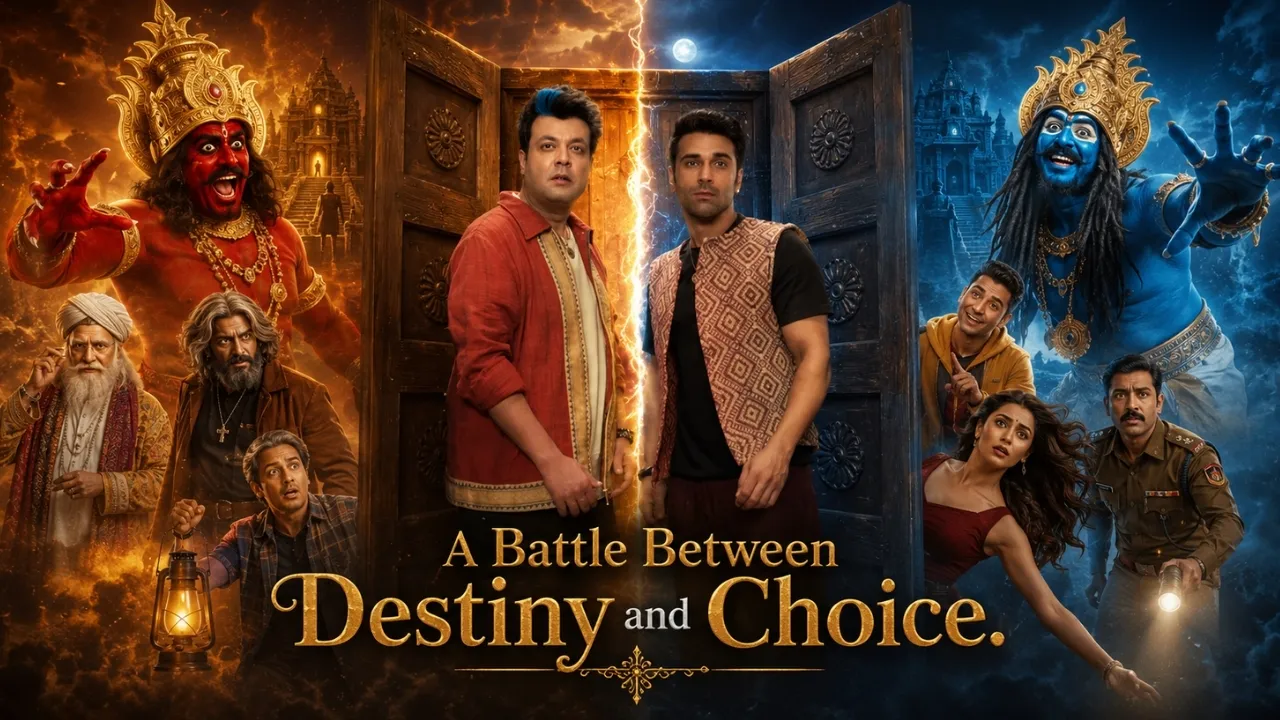
At its core, Rahu Ketu is about choice rather than destiny. Although Rahu and Ketu are created through a magical notebook, the ending shows that their true identity is shaped by the decisions they make, not by the circumstances of their creation.
The magical notebook represents power and control throughout the story. Once Rahu and Ketu reclaim it and stop those abusing its power, they complete their journey from fictional creations to heroes capable of choosing their own path.
What Works in Rahu Ketu — Even If the Film Is Uneven
Although Rahu Ketu doesn’t execute every idea perfectly, it remains entertaining because its unusual premise is supported by likable performances and a meaningful message. Even when the screenplay becomes uneven, the film never loses sight of its central theme—that people are ultimately defined by the choices they make rather than the circumstances they are born into.
Some of the film’s biggest strengths include:
1. The central concept is genuinely fun
Two fictional characters created by a magical writer’s notebook trying to take control of their own lives? That’s a much fresher setup than the average slapstick comedy.
2. Varun Sharma and Pulkit Samrat have natural comic chemistry
Varun Sharma and Pulkit Samrat share natural comic chemistry, and their performances keep the film entertaining even during some of its weaker moments.
3. The climax at least tries to give the comedy a larger point
A lot of fantasy comedies collapse into random noise by the end. Rahu Ketu at least attempts to tie its madness back to a theme — free will, purpose, and using power against real corruption.
Overall Rating
| Category | Rating |
|---|---|
| Story | 3.0/5 |
| Performances | 3.5/5 |
| Direction | 3.0/5 |
| Music & Background Score | 3.5/5 |
| Entertainment Value | 3.0/5 |
| Overall Rating | 3.2/5 |
Verdict: Rahu Ketu delivers an entertaining mix of comedy, drama, and emotions with decent performances from the cast. While the story follows a familiar formula in parts, its humorous moments and engaging narrative make it a worthwhile one-time watch. Overall, the film earns a 3.2/5 rating.
For the latest IMDb rating, cast, crew, user reviews, and complete movie information, visit the official IMDb page of Rahu Ketu.
Conclusion
Rahu Ketu blends fantasy, comedy, crime, and social commentary into a single story. While that ambitious approach makes the film feel unique, it also results in an uneven screenplay that tries to balance too many ideas at once.
Despite its uneven screenplay, Rahu Ketu succeeds because of its imaginative concept, entertaining performances, and meaningful themes. While the film occasionally tries to balance too many ideas at once, it still delivers an enjoyable fantasy-comedy with a surprisingly thoughtful message.
For viewers searching for a complete Rahu Ketu Ending Explained, the message is simple: true purpose comes from the choices people make. By reclaiming the notebook and defeating those who misuse its power, Rahu and Ketu prove that true purpose comes not from how a story begins, but from the choices made before it ends.
Frequently Asked Questions
How does Rahu Ketu end, and what does the ending mean?
The ending shows Rahu and Ketu finally taking control of their own lives. By recovering the magical notebook and stopping the criminal network, they complete the purpose they were created for while proving that choices matter more than destiny.
Who created Rahu and Ketu in the film?
Rahu and Ketu are fictional characters created by writer Churu Lal Sharma through a magical notebook. Their existence and journey are directly connected to the notebook’s supernatural powers.
Why does Meenu steal the magical notebook?
Meenu steals the magical notebook because it gives her the power to influence events and protect the criminal operation linked to Mordechai. Her actions become the main reason behind the conflict in the story.
What does the notebook symbolize in Rahu Ketu?
The notebook is more than a fantasy object. It symbolizes creation, power, and control, as whoever possesses it can shape the lives of Rahu and Ketu and influence the course of the story.
Is Rahu Ketu based on Hindu mythology?
No. While the film borrows the names Rahu and Ketu from Hindu mythology, the story itself is fictional. It uses mythological references as part of a fantasy-comedy rather than retelling any religious or mythological event.