
 by
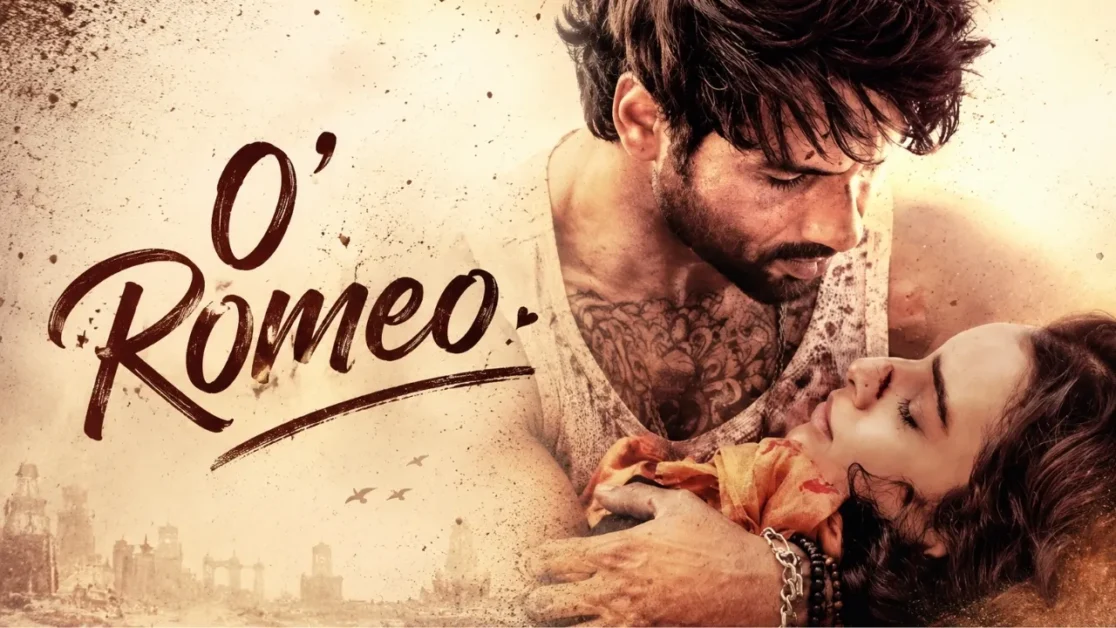
by Not every love story begins with flowers, songs, and a boy meeting a girl in a harmless, feel-good setting. Some begin in places where love feels almost impossible — in violent cities, among damaged people, under the shadow of crime, revenge, and power. O Romeo belongs to that second category. It is not a soft romantic drama pretending to be edgy. It is a gangster romance through and through, one that takes a man shaped by bloodshed and places him in the path of a woman whose grief is just as dangerous as his violence.
Directed by Vishal Bhardwaj, O Romeo arrived with a lot of curiosity attached to it. Part of that came from the Shahid Kapoor–Vishal Bhardwaj reunion, a pairing that already carries serious expectations because of films like Kaminey and Haider. Part of it came from the cast, with Triptii Dimri, Nana Patekar, Avinash Tiwary, Tamannaah Bhatia, Disha Patani, and Vikrant Massey adding star presence to a film that clearly wanted scale. But more than anything, the intrigue came from the film’s setup: a 1990s Bombay underworld story where a feared gangster-hired gunman and a grieving woman become tied together by revenge, attraction, and a mission that could destroy them both.
That setup instantly separates O Romeo from the kind of romance most audiences expect on paper. This is not a “boy falls in love, family objects, couple fights the world” story. It’s a film where the world is already rotten before the romance begins. The lead man is not a charming innocent. The lead woman is not entering the story to soften him with sweetness alone. Both characters come into the film carrying damage, anger, and unfinished business. That changes the entire emotional tone.
A Love Story Built Inside a Crime World, Not Outside It
The easiest mistake to make with O Romeo is to assume it’s a romantic film that merely borrows a crime setting for style. It really doesn’t work that way. The underworld isn’t a backdrop here — it is the story’s bloodstream. Based on the film’s official promotional material and publicly available story details, O Romeo is set in Bombay in 1995 and follows Ustara, a feared gangster-hitman known for killing with a barber’s razor. His path crosses with Afshan, a widow seeking revenge for her husband’s murder, drawing both into a violent struggle involving gangsters, corrupt power structures, and shifting loyalties.
That setup matters because it tells you what kind of romance this is. Love here is not a calm emotional refuge. It’s a destabilizing force. Ustara is a man who already knows how to survive in a world built on violence, but he does not know how to exist in a world where someone’s pain starts to matter to him. Afshan, meanwhile, is not introduced as a passive romantic interest waiting to be rescued. She enters the story with a purpose, and that purpose is revenge.
That gives the central relationship a very different shape from a conventional Bollywood romance. The emotional pull between Ustara and Afshan is tied to fear, vulnerability, and shared damage. They are not simply attracted to each other; they are drawn together by the fact that both are trying to live through a world that has already taken too much from them.
And that’s where O Romeo becomes more compelling than its title might initially suggest. The “Romeo” in this story is not a dreamy lover singing in the rain. He’s a dangerous man who doesn’t know what to do when tenderness enters his life at the wrong time.
Shahid Kapoor’s Ustara Is the Film’s Main Attraction
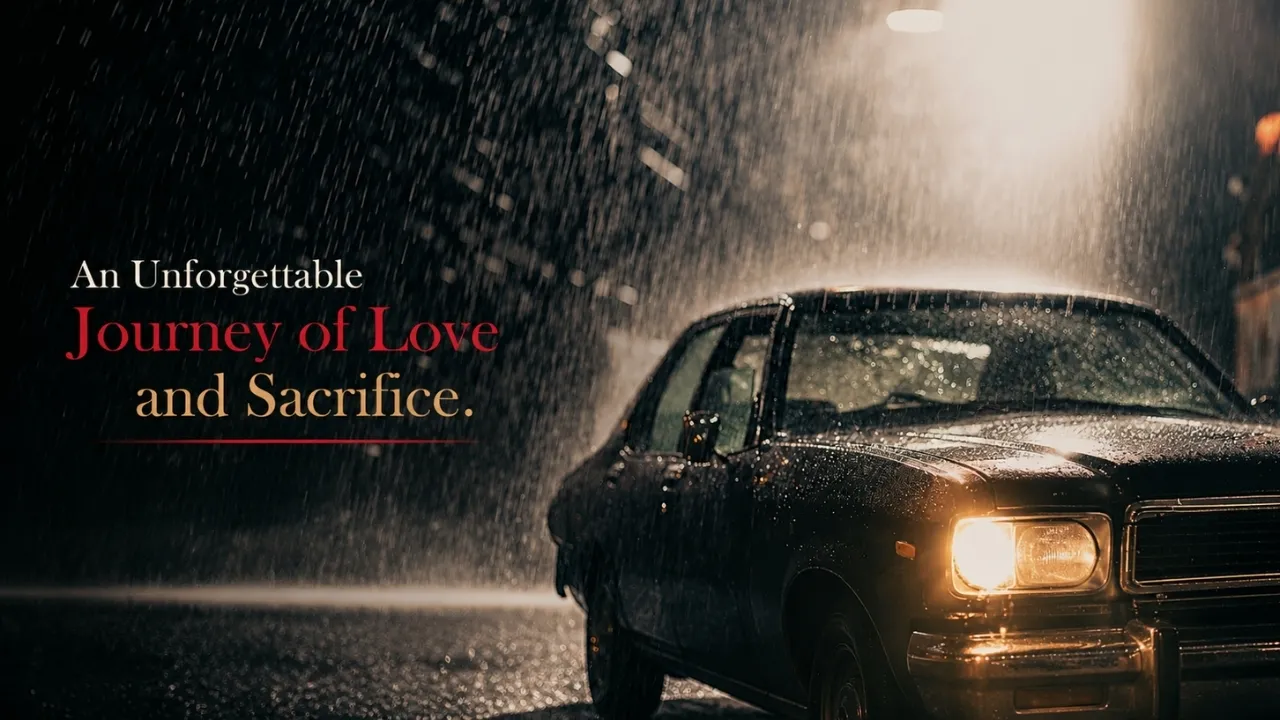
Let’s be honest: if O Romeo didn’t have a lead performance strong enough to carry all this intensity, the film would collapse under its own ambition. Shahid Kapoor is the main reason that doesn’t happen.
As Ustara, Shahid gets a role that is built almost entirely on contradiction. Ustara is violent, impulsive, feared, and emotionally damaged, but the film also needs him to be vulnerable enough that the love story makes sense. If he is played only as a swaggering gangster, the romance feels fake. If he is played too softly, the underworld drama loses its danger. The performance has to sit somewhere in between — and Shahid seems to understand that.
Reviews and audience reactions repeatedly pointed to Shahid as one of the film’s biggest strengths. Some praised the sheer force of his screen presence, while others highlighted how fully he commits to the role’s emotional chaos, especially in the second half.
What makes his performance work is that Ustara doesn’t feel like a polished antihero designed to look cool every second. He feels unstable in a way that suits the film. There’s ego in him, but also exhaustion. There’s cruelty, but also a sense that he has spent too long living as a weapon for other people’s wars. When Afshan enters his life, the shift in his emotional rhythm becomes believable because Shahid never lets the character become emotionally blank.
That doesn’t mean Ustara is easy to like. He isn’t supposed to be. But he is compelling, and in a film this dark, compelling matters more than likeable.
Triptii Dimri’s Afshan Gives the Film Its Emotional Wound
If Ustara is the blade of O Romeo, Afshan is its wound.
She is the emotional reason the film exists at all. Without her, the story would still have gangsters, violence, and betrayal, but it wouldn’t have the emotional fracture that makes the romance matter. Afshan is not there simply to be loved by the hero. She is there because she has her own grief, her own rage, and her own agenda.
According to plot descriptions, Afshan seeks revenge for the murder of her husband and turns to Ustara as part of that mission. That alone already makes her more active than the average female lead in a crime romance. She is not being pulled into danger by the hero; she is walking into danger because she has unfinished business of her own.
That’s why Triptii Dimri’s performance matters so much. Afshan can’t just look tragic. She has to feel emotionally believable as someone living in the space between pain and determination. Several reactions to the film specifically praised Triptii for bringing depth to a role that could have been reduced to a symbol of loss.
The chemistry between Shahid and Triptii has been one of the more divisive parts of the conversation around O Romeo. Some viewers found it effective in a restrained, uneasy way, while others felt the romance didn’t fully ignite. I can see why the response is split. This is not a romance built on easy flirtation or playful banter. It’s tense, bruised, and awkward by design. Whether that lands for you will depend on what kind of chemistry you expect from a love story. If you want spark in the conventional Bollywood sense, you may feel something is missing. If you’re open to a relationship that grows out of grief and danger rather than charm, the pairing makes more sense.
The Real Hook Is the Atmosphere: Bombay, 1995, and a World Full of Decay
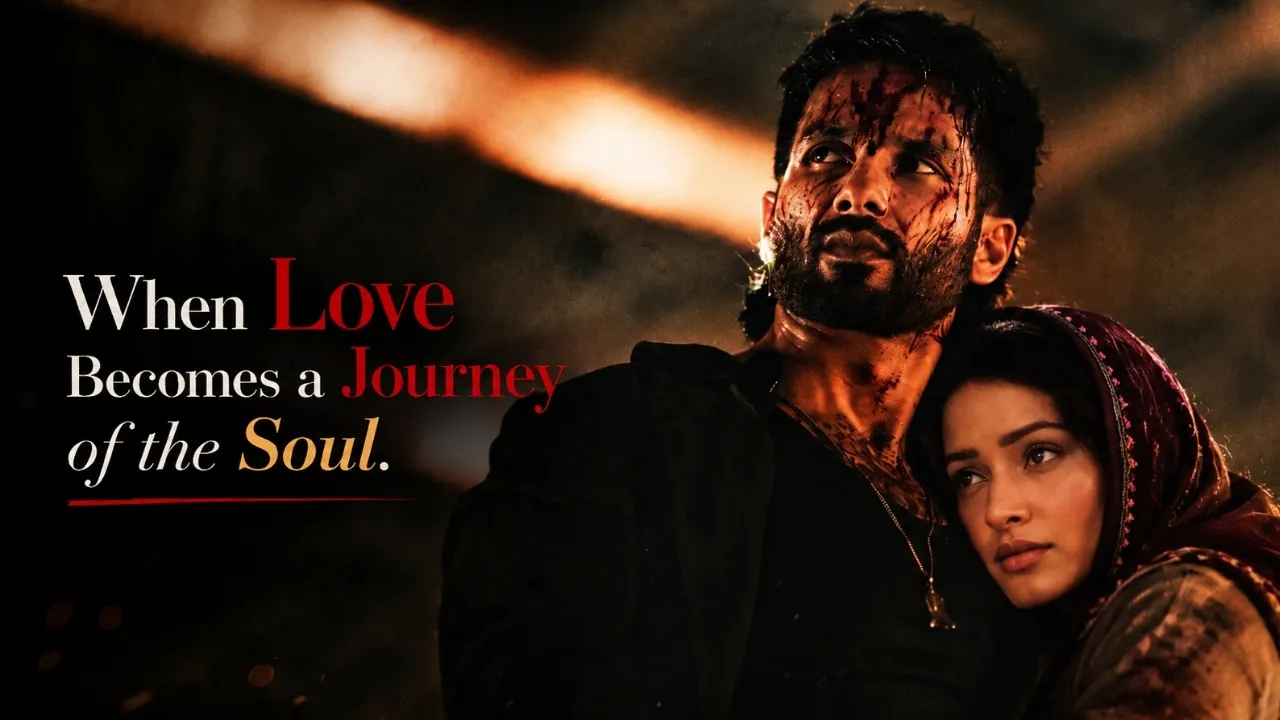
One of the strongest things O Romeo has going for it is its setting. The film doesn’t just tell you it’s in the underworld — it wants you to feel it. Bombay in the mid-1990s is a crucial part of the film’s identity, and a lot of the movie’s appeal comes from how it uses that world: smoky interiors, gangland politics, coded loyalties, and the constant sense that every conversation could tip into violence.
Early reviews from established entertainment publications highlighted the film’s production design and atmospheric world-building as some of its strongest elements, even among critics who were less convinced by its pacing.
This matters because the love story would lose much of its power if it took place in a generic cinematic space. Ustara and Afshan’s connection only feels tragic because it is growing in a world that has no room for softness. Every moment of vulnerability feels borrowed, temporary, and under threat. That tension gives the film its mood.
A Story About Love, Revenge and Obsession — Not Just Romance
Calling O Romeo a love story is accurate, but it’s also incomplete. This is just as much a film about obsession and revenge as it is about romance. The emotional fuel behind the plot doesn’t come from two people falling for each other in a vacuum. It comes from everything they are trying to destroy, survive, or avenge.
That distinction matters because it changes how the film should be watched. If you go into O Romeo expecting a tragic romance with a crime-flavored backdrop, you may find the violence and political underworld plotting too dominant. But if you approach it as a crime saga with a love story tearing through its center, the film starts to make more sense.
Ustara is not trying to become a better man in a neat redemption arc. Afshan is not simply waiting for justice to arrive. Their relationship develops while both are still caught inside cycles of violence and revenge. That’s why the film often feels emotionally unstable in an interesting way. It isn’t trying to convince you that love heals everything. If anything, it seems more interested in asking whether love can survive when the people involved are already too damaged to hold it properly.
That’s a much darker question than most romantic dramas are willing to ask.
Where O Romeo May Divide Viewers
For all its strengths, O Romeo is not the kind of film everyone will respond to the same way. The split in reactions is already pretty obvious.
Some viewers loved the second half, the operatic violence, the tragic tone, and the performances. Others felt the film was too long, too uneven, or too eager to balance poetic filmmaking with commercial mass moments. Critical reception has been mixed, with some reviewers praising the film’s performances and visual style while others felt its ambitious storytelling doesn’t always maintain consistent pacing. Filmfare called it a “blood-soaked romance” with credible performances, while Cinema Express argued that the film often falters between being poetic and pandering.
That split probably comes down to tone. O Romeo is not content with being one thing. It wants to be lyrical and brutal, intimate and large-scale, emotionally tragic and crowd-pleasing. Sometimes those impulses work together; sometimes they pull the film in different directions.
The runtime also doesn’t help. At nearly three hours, the film gives itself plenty of space to build character and atmosphere, but it also risks stretching certain emotional beats longer than necessary. Some audience reactions specifically mentioned that the first half takes time to settle and that the film only fully catches fire after the interval.
That doesn’t make the film a failure. It just means O Romeo asks for patience. It’s not a lean thriller. It’s a moody, overgrown crime romance that sometimes values atmosphere and emotion over speed.
Supporting Cast, Songs and the Vishal Bhardwaj Touch
The supporting cast gives O Romeo extra weight, especially with names like Nana Patekar and Avinash Tiwary anchoring the criminal world around the leads. The film’s larger underworld network would feel much flatter without strong secondary players, and audience reactions suggest that both Nana and Avinash leave an impression even when the screenplay doesn’t fully maximize every role.
Then there’s the music. Since this is a Vishal Bhardwaj film, the soundtrack isn’t just filler between scenes. Songs like “Hum To Tere Hi Liye The,” “Aashiqon Ki Colony,” and “Ishq Ka Fever” were used as part of the film’s promotional identity, and the score helps reinforce the film’s strange blend of tenderness and danger. Some viewers felt the songs interrupted the pace in parts, while others loved how the music added to the emotional texture.
That’s very much in line with Bhardwaj’s style. His films often use music as emotional atmosphere rather than pure commercial obligation, even when the placement can feel indulgent.
What O Romeo Is Really About
Strip away the gangsters, the razor violence, the revenge mission, and the underworld politics, and O Romeo still comes down to something simple: what happens when two emotionally broken people meet at a time when neither of them is safe enough to love properly?
That’s the question at the center of the film.
After watching O Romeo, what stayed with me most wasn’t just the violence or the performances—it was the film’s emotional atmosphere. Vishal Bhardwaj creates a world where every quiet conversation feels as dangerous as the action scenes. While the pacing slows down in parts, I found the emotional tension between Ustara and Afshan far more engaging than the film’s gangster politics. That balance won’t work for everyone, but it gives the movie a distinct identity compared to typical Bollywood crime dramas.
Ustara doesn’t just fall for Afshan; he gets emotionally destabilized by her existence. Afshan doesn’t just use Ustara for revenge; she becomes part of the one emotional shift he never prepared for. Their relationship isn’t healthy, easy, or romantic in the conventional sense. It’s complicated, damaged, and constantly threatened by the world around them. But that’s also why it feels more interesting than a standard gangster-love subplot.
O Romeo may not be perfectly balanced, but it is at least reaching for something bigger than routine crime storytelling. It wants romance to feel dangerous and violence to feel intimate. That’s a hard mix to pull off, but when it works, it gives the film its own identity.
Conclusion
O Romeo is not a conventional romance, and it’s not a conventional gangster film either. It sits in the uncomfortable middle, where love, revenge, obsession, and violence all keep colliding. Set against the underworld of Bombay in 1995, the film uses the story of Ustara and Afshan to explore what happens when two damaged people get pulled together by grief, attraction, and unfinished vengeance.
What makes the film worth watching is not that it reinvents the gangster genre from scratch. It’s that it tries to bring real emotional weight into a world that usually treats romance as decoration. Shahid Kapoor gives the film its volatile energy, Triptii Dimri gives it emotional ache, and Vishal Bhardwaj wraps the whole thing in a mood that feels bruised, lyrical, and occasionally self-indulgent in the way only his films can be.
It’s not a perfectly controlled film. The runtime is heavy, the pacing is uneven, and not every emotional beat lands with the force it wants. Some viewers will connect deeply with the tragedy and atmosphere; others may feel the film is trying too hard to be both poetic and massy at the same time. But even with those flaws, O Romeo has personality — and that matters. It’s not a generic love story dressed up in dark lighting. It’s a violent, messy, emotionally unstable romance that actually wants love to feel risky.
If you enjoy films where romance is tangled up with crime, loyalty, revenge, and the feeling that everything beautiful is happening in the worst possible place, O Romeo is the kind of movie that gives you plenty to think about. It may not be gentle, but it definitely isn’t forgettable.
Sources & References
This article combines personal viewing impressions with publicly available information about the film. Factual details regarding the cast, crew, release information, and critical reception have been cross-checked using official promotional material and reputable entertainment publications.
References
– Official Trailer (YouTube)
– IMDb – O Romeo
– Filmfare Review
– Cinema Express Review
– Official announcements from the film’s production team


A really good blog and me back again.
Film dekhni hai