 by
by Haq explained is not just about understanding the ending of a courtroom drama. It is about unpacking a film that uses one woman’s personal pain to talk about something much bigger—justice, religion, patriarchy, legal power, and the cost of speaking up in a society that expects silence from women. At first glance, Haq looks like a legal drama built around a troubled marriage and a maintenance case.
But as the story moves forward, it becomes clear that the film is doing more than telling the story of a divorce dispute. It is examining how systems—family, religion, law, and social pressure—can all work together to make a woman feel powerless, and how one act of resistance can shake that entire structure.
If you were searching for Haq explained, the film can feel emotionally heavy because it doesn’t rely on one single villain or one dramatic twist. Its conflict grows slowly. It begins with a husband’s betrayal, but then opens into a larger debate about women’s rights, triple talaq, maintenance, constitutional justice, and the misuse of religious authority.
This emotional depth is what makes the film memorable. It is not just about whether Shazia wins a case. It is about what it takes for a woman to ask for something that should have been hers in the first place—respect, financial security, and the right to live with dignity.
So if you want Haq explained in a simple, human-written way, here is a complete breakdown of the story, the emotional conflict, the legal battle, and what the ending really means.
Haq Movie Overview
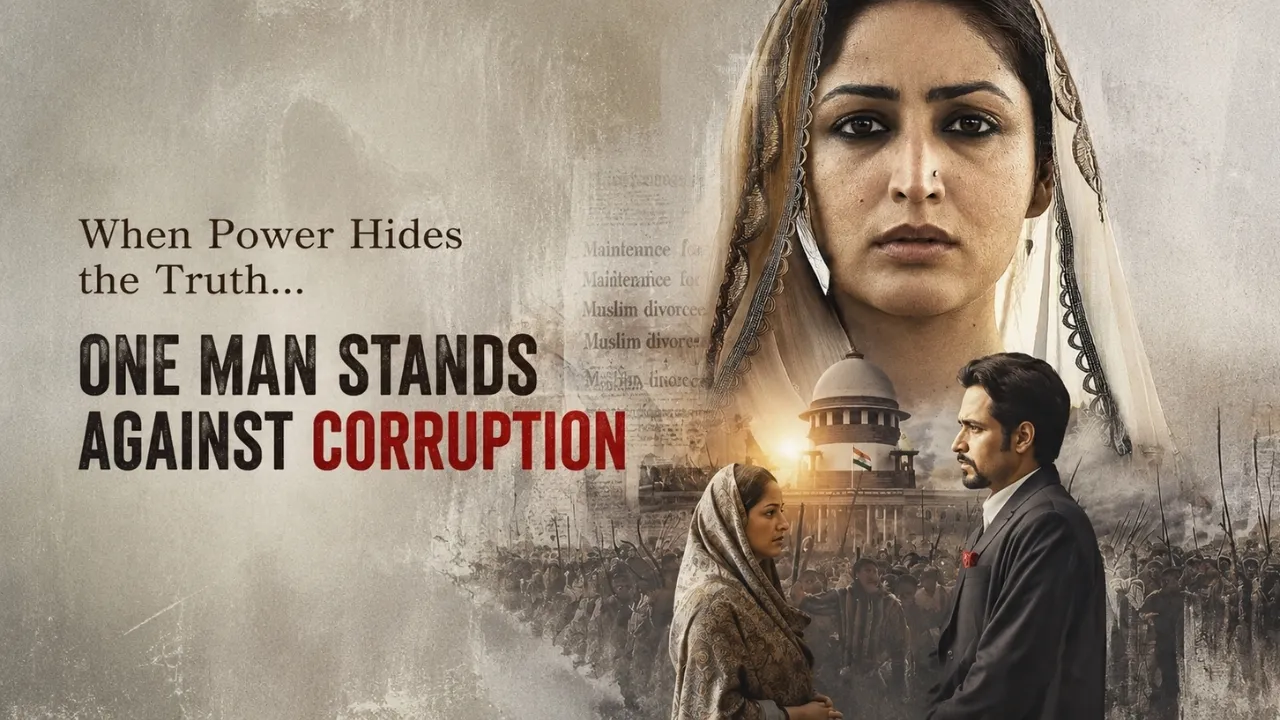
Haq is a courtroom drama inspired by the larger social and legal debates surrounding the Shah Bano case, one of the most significant maintenance rights cases in India. According to the official synopsis, Haq follows Shazia Bano, a woman whose husband abandons her and later divorces her through instant triple talaq, forcing her into a legal battle that grows far beyond her marriage.
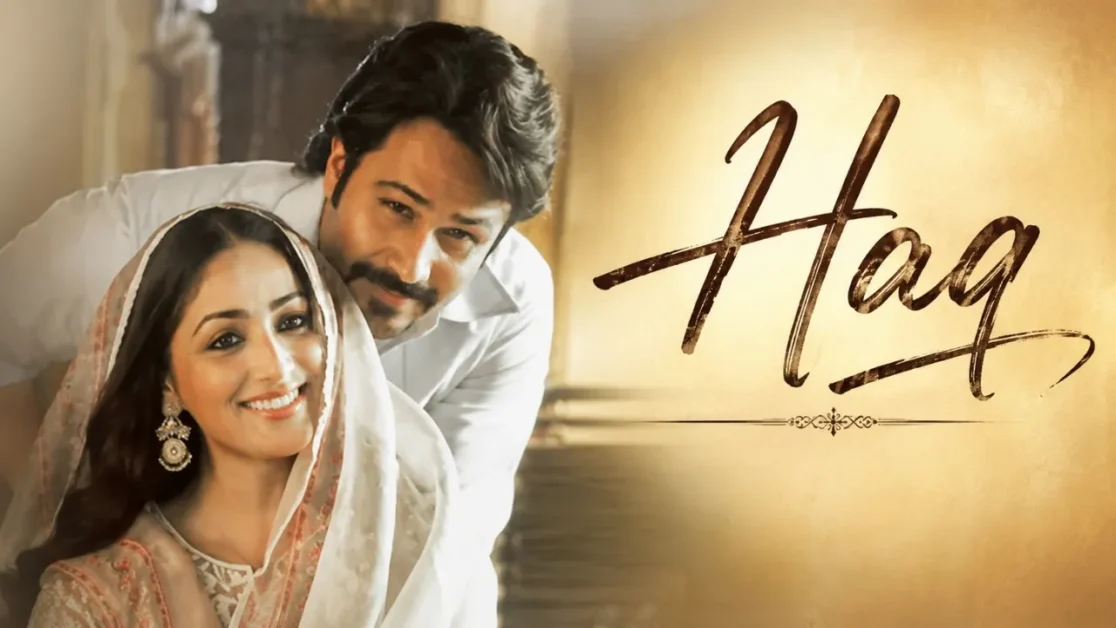
Directed by Suparn S. Varma, the film stars Yami Gautam as Shazia Bano and Emraan Hashmi as her husband Abbas Khan. Official promotional material and the film’s synopsis present Haq as a courtroom drama exploring faith, women’s rights, and the relationship between personal law and constitutional justice.
But if you strip away the courtroom setting, the film is really about a simple question: what happens when a woman is told that the law of her home, her religion, and her society matter more than her survival?
That is the emotional center of the film.
Haq Explained: How the Story Begins
To understand the story, you need to start with Shazia Bano, you need to start with Shazia Bano. Shazia is not introduced as a rebel or a political symbol. She is a wife, a mother, and someone who believes in the basic stability of her family.
She is married to Abbas Khan, a lawyer who is respected, articulate, and socially powerful. On the surface, their life appears normal enough. There are children, responsibilities, domestic routines, and the quiet compromises that often hold marriages together.
But slowly, cracks begin to show.
Abbas gradually becomes emotionally distant, leaving Shazia to shoulder the family’s responsibilities alone. Their marriage reaches a breaking point when he returns with a second wife, claiming it was an act of compassion. Shazia eventually realizes that this justification hides a much deeper betrayal.
This part of the film matters because it shows that Haq is not interested in painting betrayal as a single shocking event. Instead, it presents it as a process—neglect, emotional abandonment, humiliation, and then legal cruelty.
That slow breakdown is what makes Shazia’s eventual fight feel earned.
Why Shazia Takes Abbas to Court
After Abbas brings home another wife and gradually pushes Shazia to the margins of her own marriage, she leaves and returns to her father’s home. Abbas initially promises financial support, but he soon stops sending any money, leaving Shazia with no financial security for herself or her children.
This is where the film becomes more than a domestic drama. Shazia does not go to court because she wants revenge. She goes because she needs survival. That distinction matters. The film repeatedly reminds us that Shazia is not seeking revenge or sympathy. She simply wants the financial support that she and her children are legally entitled to receive.
Abbas, however, does not see it that way. In his eyes, Shazia taking him to court is not a cry for justice. It is an insult to his authority. The film portrays Abbas’s reaction as a reflection of patriarchal pride, where being challenged publicly matters more to him than acknowledging his responsibilities.
And that is where the story turns from painful to explosive.
The Triple Talaq Turning Point in Haq
When Shazia seeks legal maintenance, Abbas responds by pronouncing triple talaq, divorcing her instantly and attempting to use religious personal law as a shield against responsibility. This is the central turning point of the film.
This is the moment where the film’s personal conflict transforms into a much larger debate about law, religion, and women’s rights. Up until now, Shazia’s suffering could still be seen as a private marital issue. But the moment Abbas uses talaq-e-biddat to cut her off, the story becomes a public fight over how law, religion, and gender intersect.
Shazia refuses to accept that a few spoken words should erase her rights, her dignity, and her children’s future. That refusal is what gives Haq its spine.
The film is careful here. It does not frame the conflict as “religion versus modernity” in a simplistic way. Instead, it shows that the real issue is misuse of religious interpretation by men who benefit from it. One of the film’s strongest themes is its distinction between religious faith and the misuse of religious interpretation for personal benefit.
That is one of the strongest aspects of the film.
Haq Explained: Faith, Law and the Battle Over Interpretation
One of the most compelling things about the film is that Shazia is not written as someone who opposes religion. In fact, part of her strength comes from understanding it. Throughout the film, Shazia is portrayed as someone who understands her faith well enough to question how it is selectively interpreted around her. She does not reject faith; she rejects its misuse.
This is why the legal battle in Haq feels richer than a simple courtroom argument. It is not just “wife versus husband.” It becomes:
- A woman versus a patriarchal reading of religious law
- A citizen versus a system that wants to reduce her to a technicality
- A human need for dignity versus a legal structure built to delay or deny it
The courtroom arguments emphasize that constitutional rights and personal law must be examined together when questions of dignity and justice arise.
Ultimately, the film is about much more than a courtroom verdict.
Legal dramas can sometimes become too focused on arguments and speeches, but Haq works because it never loses sight of Shazia as a person. Her fight is not just intellectual. It is deeply emotional.
She has to endure:
- Betrayal from the man she trusted
- Financial insecurity
- Social judgment
- Pressure from religious leaders
- The fear of dragging her family through public humiliation
- The emotional burden of raising children while fighting a system much bigger than herself
That emotional exhaustion is one of the film’s strongest undercurrents. Yami Gautam’s performance gives emotional weight to the story by portraying Shazia as vulnerable, determined, and believable.
That is what makes her compelling. She does not fight because she is fearless. She fights because she has no other choice left.
Abbas Khan: Villain or Product of a Patriarchal System?
Abbas is easy to dislike, but one interesting thing about Haq is that he is not written like a cartoon villain. He is arrogant, manipulative, and emotionally cruel, yes—but he also represents a very familiar kind of male entitlement. He genuinely believes his position, his logic, and his reading of the law justify what he is doing.
That makes him more disturbing.
He is not a man twirling his moustache and plotting evil. He is a respected lawyer who thinks his wife asking for maintenance is a personal attack. Abbas represents a deeply rooted form of entitlement, making him a believable symbol of the patriarchal system rather than a one-dimensional villain.
He doesn’t need to scream to be oppressive. He simply moves through the world assuming that his needs, his pride, and his interpretation of the rules matter more than Shazia’s life.
That’s why the conflict works. Abbas is not just “the bad husband.” He is the face of a system that normalizes female suffering as long as male authority stays intact.
The Courtroom Battle in Haq
The courtroom section is where the story becomes most powerful. This is where the film expands from one woman’s struggle into a national conversation about women’s rights and legal equality.
Shazia’s legal battle is not straightforward. She faces resistance from religious authorities, legal technicalities, and the social pressure that comes from challenging a man who knows how to use the system.
The case gradually moves through multiple levels of the judiciary as Abbas continues challenging Shazia’s claim, turning a personal dispute into a much larger legal battle.
The courtroom makes one point clear: maintenance is a legal responsibility, not a favour that can be granted or withdrawn at will.
That’s why the courtroom battle matters so much. It reframes Shazia’s demand. She is not begging.
Haq Ending Explained
Now let’s get to the part many readers search for directly: Haq ending explained.
By the time the film reaches its final act, Shazia’s fight has gone far beyond her marriage. The case has become symbolic of a larger issue—whether a woman abandoned by her husband can still claim justice when personal law is used against her.
How the Final Verdict Unfolds
In the climax, the case reaches the Supreme Court, where Shazia’s side argues that her rights cannot be erased by an instant divorce formula or hidden behind selective interpretations of religion. In the film’s climax, the Supreme Court ultimately rules in Shazia’s favour, reinforcing that constitutional protections cannot be denied through selective interpretations of personal law.
Why the verdict matters
The judgment is important because it reframes Shazia’s struggle. She is no longer just a wronged wife. She becomes a symbol of countless women who are told that faith, custom, and family honour matter more than their survival. The court’s decision says otherwise: a woman’s dignity is not negotiable.
Does the film end like a triumph?
Yes and no. Shazia wins legally, but Haq doesn’t pretend that one verdict fixes everything. The emotional cost remains. The social divisions remain. The film ends with the feeling that a door has been opened, but the road ahead is still hard. That’s what makes the ending land. It gives Shazia justice, but it does not reduce her struggle to a neat fairy-tale victory.
What the Ending Really Means
The simplest way to interpret the film is this:
Haq is about a woman demanding that the law see her as fully human.
Not as a burden.
Not as a wife who can be discarded.
Not as a religious technicality.
Not as someone whose survival depends on male mercy.
The film argues that justice cannot belong only to the powerful, and dignity cannot be conditional. Shazia’s fight matters because it exposes how easily religion, law, and social pressure can be twisted to deny women what should already be theirs. But it also shows that resistance matters—even when it is lonely, humiliating, and painfully slow.
The title itself perfectly captures the film’s central message. It means right—not in the sense of being correct, but in the sense of something owed. Something rightful. Something that should never have required a war to claim.
What Works Best in this movie
1. Yami Gautam’s performance anchors the film
Nearly every major review highlights how much emotional strength she brings to Shazia. She keeps the story grounded even when the legal themes become heavy. Her restrained performance ensures that the film never loses its emotional core, even during its most debate-driven courtroom scenes.
2. The film treats the subject with restraint
3. It separates faith from patriarchal misuse of faith
This is one of the film’s most important strengths. It does not attack religion as a whole; it challenges the way religion is selectively interpreted to protect male power.
4. The legal conflict feels socially relevant
Even though the story is set in a specific context, the themes of maintenance, dignity, abandonment, and women’s rights remain painfully current.
Where Haq Feels Uneven
Conclusion
Haq explained is ultimately the story of a woman who refuses to accept that silence is her fate. What begins as a painful marital betrayal slowly grows into a fight over maintenance, legal identity, religious interpretation, and a woman’s right to dignity.
Shazia Bano’s struggle is deeply personal, but the film makes it clear that her case stands for something larger: the countless women who are expected to endure injustice quietly because speaking up would make life even harder.
It is not a film about one dramatic courtroom victory and nothing more. It is a film about how difficult it is to ask for justice when the people around you would rather protect tradition, ego, or public image than protect your life.
Shazia’s courage lies not in grand speeches alone, but in her refusal to disappear. She insists on being seen, heard, and treated as someone whose life has value beyond the roles assigned to her by marriage and society.
So if you were looking for Haq ending explained or Haq full story explained, the clearest way to understand the film is this: Haq is the story of a woman claiming what was always hers—her right to dignity, fairness, and justice in a world that tried to convince her she deserved none of it.