 by
by Malayalam cinema has built a strong reputation for turning rooted stories into emotionally gripping films. It doesn’t always need glossy scale or over-the-top heroism to leave an impact. Sometimes all it takes is a place that feels lived in, a conflict that feels personal, and characters who carry the weight of a changing society on their shoulders. Pallichattambi steps into that space with big ambition. Set against a politically charged period backdrop, the film tries to combine rural drama, social tension, emotional trauma, and a hero who is both feared and broken.
On the surface, Pallichattambi looks like a mass-driven period action drama built around Tovino Thomas. But underneath the hero entry, the church politics, and the clashes between power groups, there is a more serious film trying to emerge — one about identity, exploitation, and the way communities are manipulated in the name of faith, power, and survival.
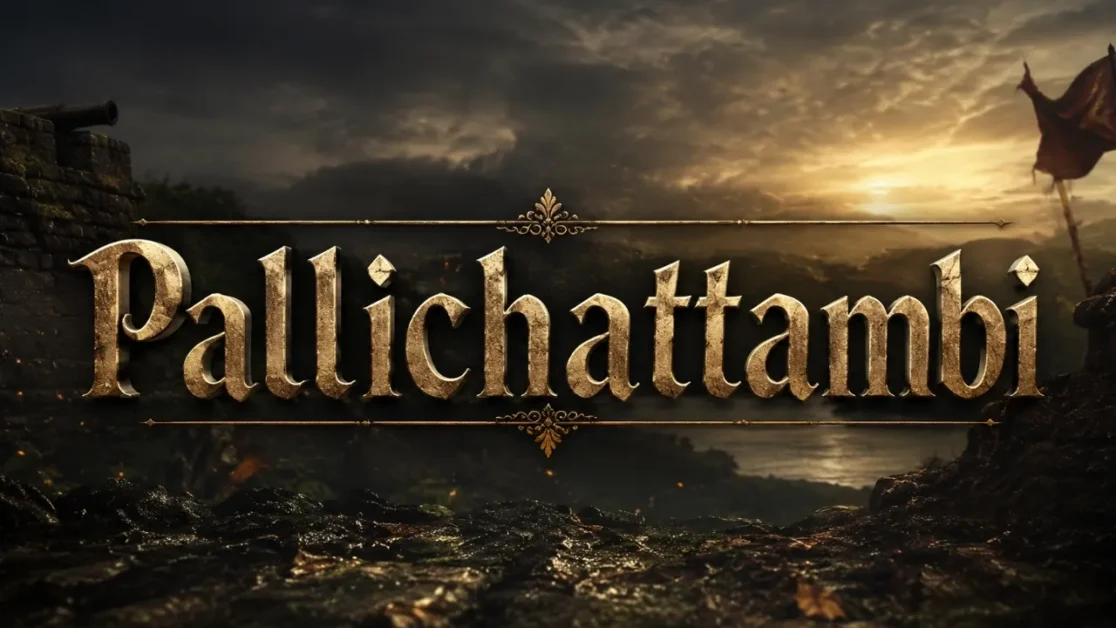
Directed by Dijo Jose Antony and fronted by Tovino Thomas, Pallichattambi arrives with scale, mood, and a title that immediately sparks curiosity. The real test is whether its rich setting and emotional themes translate into a consistently engaging story. The answer is a little complicated. Despite its impressive atmosphere and performances, the screenplay isn’t always consistent enough to match its ambition.
Still, Pallichattambi is not a film that can be dismissed easily. Although it falls short of its highest ambitions, its strong performances and thoughtful themes make it worth discussing.
Pallichattambi at a Glance
Pallichattambi is a Malayalam period action drama directed by Dijo Jose Antony and written by S. Suresh Babu. The film stars Tovino Thomas in the title role, with Kayadu Lohar playing the female lead. The supporting cast includes Vijayaraghavan, Siddique, Baburaj, Johny Antony, Sudheer Karamana, Alexander Prasanth, T. G. Ravi, and others.
Set in the late 1950s, the story unfolds in a high-range village shaped by migration, land struggles, church influence, and the growing clash between local power structures and communist ideology. Tovino’s character, known as Pallichattambi, is not introduced as a polished hero. He is a rough-edged man with a reputation, a past, and a place in the conflict that makes him both useful and dangerous.
Blending political conflict, personal revenge, and religious power struggles, the story creates a village where loyalties constantly shift. It wants to be both a crowd-pleasing drama and a serious socio-political film. That ambition is one of its biggest strengths — and also one of the reasons it feels uneven.
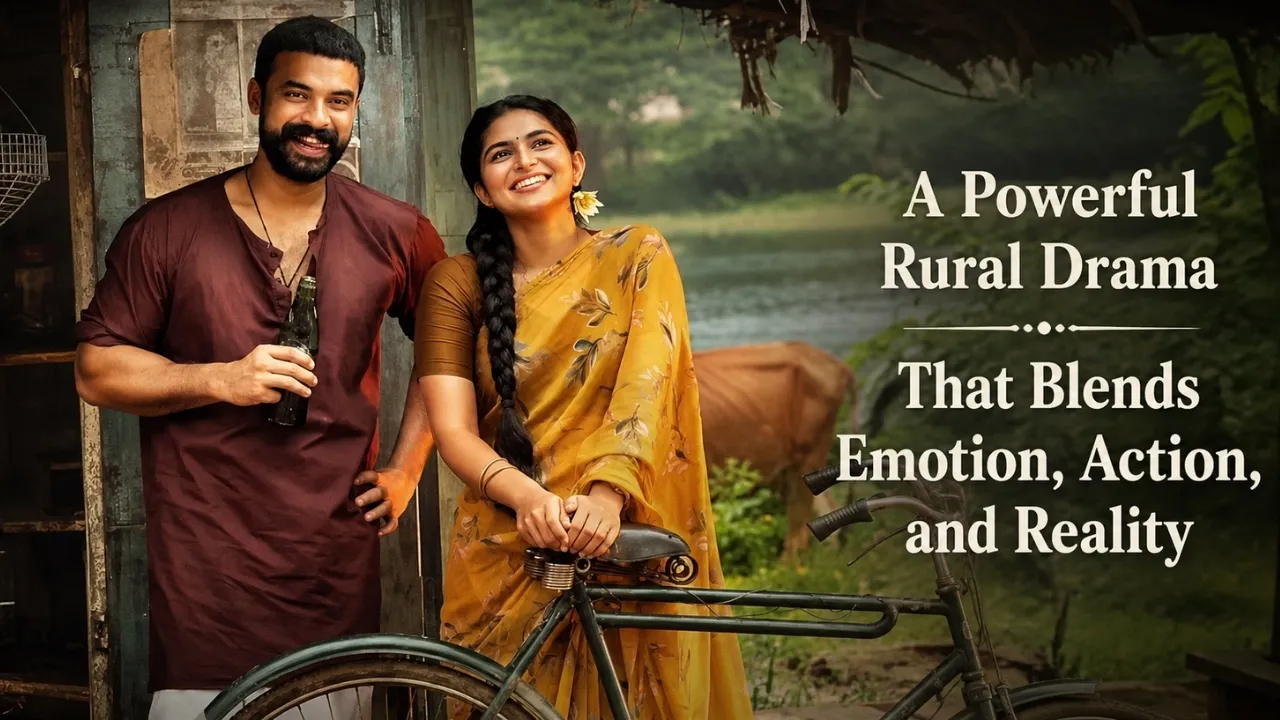
The Story: More Than Just a Village Action Drama
At its core, Pallichattambi is not simply about one man fighting enemies in a village. It’s about how a community becomes a battleground for ideology, control, and fear.
The story is set in a period when Kerala was going through major political change. Rather than turning that history into a documentary-style narrative, the film uses it as the emotional and political background for a fictional drama. A church-backed faction and the rise of communist influence begin to shape life in a remote village, where migrant communities are already dealing with hardship, land insecurity, and fragile survival. Into this landscape enters Pallichattambi — a man who is both an outsider and an insider, someone who can intimidate, protect, and provoke all at once.
One of the story’s biggest strengths is that Pallichattambi is never portrayed as a flawless hero.He is part of the system and also trapped by it. He carries emotional scars, unresolved anger, and a violent usefulness that others are happy to exploit. This gives the story a little more texture than the average hero-driven rural drama.
The village itself is also an important part of the film. It’s not just a backdrop where fights happen. It’s a place full of fear, faith, resentment, and dependence. The people are trying to survive in a system where power is never neutral. Religion, politics, and social hierarchy overlap in ways that shape everyday life. That’s where Pallichattambi is most compelling — not when it tries to be larger than life, but when it quietly shows how ordinary people are caught in forces bigger than them.
Tovino Thomas Carries the Film with Intensity and Restraint
Tovino Thomas has become one of those actors who can move comfortably between mainstream presence and more emotionally layered performances, and Pallichattambi gives him space to do both.
As the title character, Tovino doesn’t play the role like a typical swaggering action hero. Yes, the film gives him heroic moments, dramatic confrontations, and the aura of a feared man, but his performance works best in the quieter stretches. There’s a heaviness to the character that Tovino understands well. Pallichattambi isn’t just angry; he feels worn down by life, by memory, and by the way people around him keep using him as a weapon.
That internal fatigue gives the performance some depth. Tovino brings physical presence to the role, but he also lets the character’s emotional burden show through pauses, expressions, and moments of hesitation. In a film that occasionally slips into familiar mass-drama territory, his performance keeps pulling things back toward something more grounded.
What helps further is that he doesn’t overplay the role. It would have been easy to turn Pallichattambi into a one-note symbol of masculine rage. Instead, Tovino gives him enough vulnerability to make him interesting. Even when the screenplay doesn’t fully support that complexity, the performance does.
Kayadu Lohar and the Supporting Cast Add Weight to the Village World
A well-chosen ensemble gives the village a convincing sense of community instead of reducing the story to a single protagonist.
Kayadu Lohar
Kayadu Lohar brings a calm presence to the film. Her character isn’t written with the kind of depth that would allow her to dominate the narrative, but she still adds emotional softness and dignity to the story. In a film full of male conflict, political tension, and aggressive power games, her presence helps create some balance.
Vijayaraghavan
Vijayaraghavan is one of the film’s strongest supporting pillars. He has the kind of screen authority that works perfectly in period dramas, especially when religion, power, and public influence are part of the story. He doesn’t need to overdo anything — his performance naturally carries weight.
Siddique, Baburaj, Johny Antony and Others
The supporting players contribute to the political and social texture of the film. Some represent authority, some opportunism, some survival instinct. Even when the screenplay doesn’t give every character equal emotional depth, the casting helps because these actors understand the tone of Malayalam rural dramas well.
Every supporting character strengthens the feeling that the village itself is as important as the central character. The supporting cast helps maintain that sense of a larger social world.
What the Film Does Well: Atmosphere, Setting and Emotional Weight
One of the film’s biggest achievements is the way it builds atmosphere.
1. The Rural Setting Feels Alive
The village in Pallichattambi doesn’t look polished or cinematic in a fake way. It feels damp, heavy, and shaped by labour, religion, and social pressure. You can sense the isolation of the region and the vulnerability of the people living there. The high-range setting adds a lot to the film’s mood.
2. It Uses Politics as Texture, Not Just Slogans
Rather than functioning as a conventional political drama, the story uses politics to shape the lives and decisions of its characters. Church authority, communist presence, class tension, and land-related anxiety are woven into the narrative in a way that gives the story some seriousness.
3. The Emotional Tone Is More Mature Than the Trailer Suggests
If you only approach Pallichattambi as a Tovino-led action period film, you may be surprised by how much of it is driven by hurt, memory, and emotional damage rather than pure heroism. Its violent moments are intended to carry emotional weight, although the execution isn’t consistently effective.
4. Tovino’s Performance Grounds the Film
Tovino’s performance remains the foundation that holds the narrative together. Without Tovino’s measured performance, the film could have become much louder and flatter.
Where Pallichattambi Stumbles
For all its strengths, Pallichattambi is also a film that clearly struggles with its own ambitions.
The Screenplay Doesn’t Always Know What to Prioritize
At different points, the story alternates between a grounded political drama and a commercial action entertainer, making the overall tone feel inconsistent.
Both approaches have merit individually, but the transition between them isn’t always seamless.
Instead of deepening the central conflict, it sometimes jumps between tones in a way that weakens the impact.
Melodrama Takes Over in Key Places
A little melodrama is natural in this kind of story, especially in Malayalam rural dramas rooted in pain and loyalty. But Pallichattambi occasionally leans too hard into emotional exaggeration, making some scenes feel more staged than earned.
The Narrative Can Feel Overcrowded
History, politics, faith, revenge, romance, and action compete for attention, making the narrative feel densely packed at times. Some viewers will appreciate the density. Others may feel the film is trying to carry more than it can properly handle in one narrative.
The Second Half Loses Some Sharpness
The first half does a better job of setting up the world, the mood, and the central tension. The later portions are still watchable, but the storytelling becomes more uneven and a little less focused. A tighter second half could have elevated the entire film.
Is Pallichattambi Historically Rich or Just Historically Decorated?
One question viewers are likely to ask is how effectively the story uses its historical backdrop.
Pallichattambi is set in a politically significant era, and it clearly wants to draw energy from Kerala’s social and ideological transitions. But Rather than aiming to be a meticulously researched historical account, it uses its period setting to support the emotional narrative. It uses the period as a dramatic foundation rather than a detailed analytical framework. That means viewers looking for nuanced historical exploration may find the treatment selective or simplified.
Even so, the historical backdrop remains meaningful and shapes the story’s emotional and political conflicts. It does shape the tensions, the power structures, and the emotional climate of the story. Faith, class, migration, and political mobilisation are woven together in a way that reflects the realities of that era. It just doesn’t always dig into those themes with the consistency they deserve.
So the best way to see it is this: Pallichattambi is historically flavored, emotionally charged cinema rather than a rigorous historical drama.
Technical Side: Music, Cinematography and Production Design
Cinematography
Cinematography plays a major role in establishing the film’s atmosphere and emotional tone. The misty landscapes, church spaces, village roads, and tense interiors help create a believable period mood. The cinematography captures both the roughness of the setting and the emotional isolation of the characters.
Background Score
The background score complements the emotional weight of key scenes while reinforcing the film’s dramatic scale. though there are moments where it becomes a little too insistent. Still, it fits the film’s dramatic ambitions and helps maintain momentum during scenes where the writing weakens.
Production Design and Costumes
Production design is one of the story’s strongest technical achievements. The period world looks considered rather than casually assembled. Costumes, props, and the physical environment all contribute to the illusion of time and place.
Who Will Connect Most with Pallichattambi?
You’ll likely enjoy Pallichattambi if you:
- like Malayalam period dramas with political and emotional conflict
- enjoy Tovino Thomas in serious, performance-led roles
- prefer rural stories with social tension rather than urban thrillers
- don’t mind a film that mixes history, action, and melodrama
- appreciate atmosphere and character mood as much as plot
You may feel disappointed if you:
- expect a tightly written political drama with no commercial detours
- want the historical side to be more layered and deeply explored
- prefer subtle storytelling over emotionally heightened scenes
- go in expecting pure action entertainment
Final Thoughts Before the Conclusion
What makes Pallichattambi worth discussing is that it doesn’t feel empty, even when it feels uneven. The ambition is evident in its layered storytelling, immersive world-building, and committed performances, and in the attempt to tell a story about power, faith, class, and emotional damage without making it entirely academic or inaccessible.
It’s not a perfectly balanced film. The balance between intimate storytelling and large-scale drama isn’t consistently maintained. Certain scenes feel overexplained, while others move too quickly or rely on familiar dramatic shortcuts. when it had the material to go deeper. Even with those inconsistencies, the emotional core remains compelling throughout.
Those strengths ensure the story remains engaging, even when its execution isn’t flawless.
Conclusion
Pallichattambi is a film with ambition written all over it. The story blends rural politics, period drama, character-driven storytelling, and themes of power and identity into an ambitious narrative. and while it doesn’t fully master all of those layers, it does enough to stay compelling. Tovino Thomas gives the film its backbone with a performance that feels intense without being overdone, and the village setting, political backdrop, and emotional heaviness give the story a seriousness that goes beyond standard hero-driven drama.
Despite its strong ambitions, the film occasionally struggles to balance thoughtful storytelling with commercial appeal. The screenplay can be uneven, the melodrama occasionally gets too loud, and the narrative doesn’t always dig as deeply into its strongest themes as it could have. But even with those flaws, the film has substance, atmosphere, and enough emotional force to leave an impression. While it doesn’t rank among Malayalam cinema’s finest period dramas, its compelling performances, immersive setting, and emotional depth make it a worthwhile watch for viewers who appreciate character-driven stories.