 by
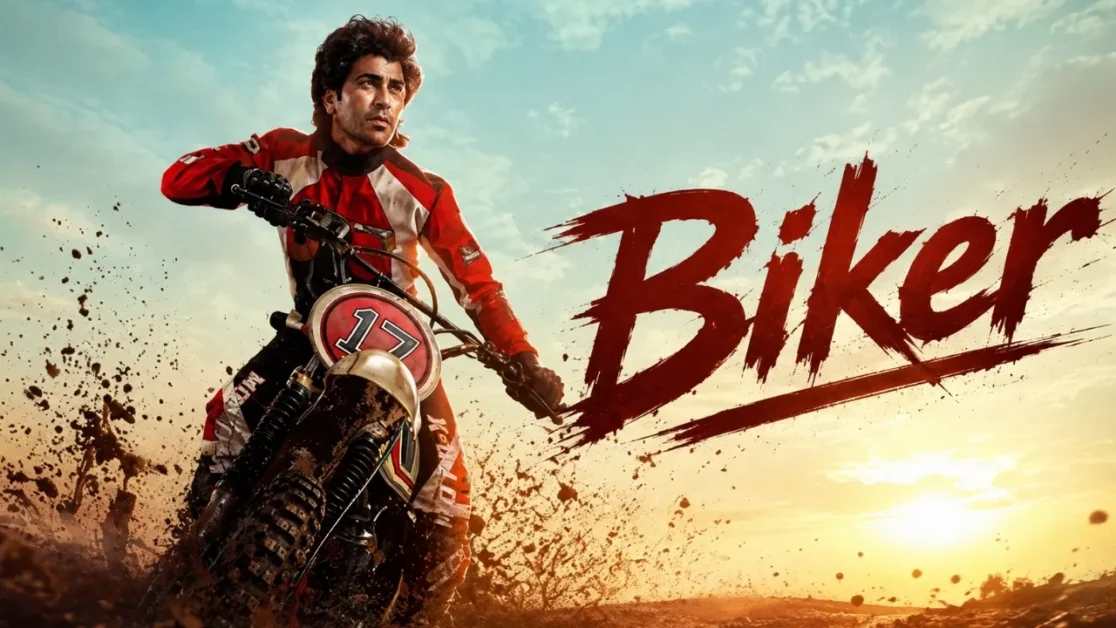
by Sports dramas usually follow a familiar route. There’s a talented lead, a personal setback, a comeback arc, and a final match or race where everything comes together. Biker does follow some of those beats, but it doesn’t stay limited to that formula. At its core, this is not just a movie about motocross, speed, or competition. It’s a film about emotional baggage, family pressure, broken ambition, and the heavy cost of carrying someone else’s dream.
Directed by Abhilash Reddy Kankara, Biker arrives with a refreshing setup for Telugu cinema. Since motocross has rarely been explored in mainstream Indian cinema, Biker feels noticeably different from most sports dramas. The dirt tracks, roaring engines, body-risking stunts, and intense race atmosphere make the film stand out from routine sports dramas. But once the story settles in, it becomes clear that the film is aiming for something deeper than just adrenaline.
At the center of the story is Vikas, played by Sharwanand, a man whose relationship with racing is tied directly to his father’s unfinished legacy. What starts as a sports drama slowly turns into a story about emotional inheritance — about what happens when a child grows up under the shadow of a parent’s obsession, expectations, and unresolved failures.
That emotional angle gives Biker weight. At the same time, it also creates the film’s biggest challenge: balancing the thrill of the sport with the intensity of the family drama.
Movie Details
| Category | Details |
|---|---|
| Release Date | 3 April 2026 |
| Running Time | 162 Minutes |
| Country | India |
| Language | Telugu |
| Budget | ₹45 Crore |
| Director | Abhilash Reddy Kankara |
| Cinematography | J. Yuvaraj |
| Editor | Anil Kumar Palasa |
| Music Director | Ghibran Vaibodha |
| Production Company | UV Creations |
| Distributed By | Think Studios, Shloka Entertainment, E4 Entertainment |
| Sources | IMDB, Wikipedia |
Story Overview: More Than a Racing Film
The basic setup of Biker may sound like a straightforward sports movie, but the emotional conflict makes it more layered than that.
Vikas is not simply a young racer chasing trophies. He’s a man trying to live with the pressure of a legacy that was never really his choice. His father, Sunil Narayan, is a former motocross champion whose own dreams, failures, and frustrations have shaped the family dynamic. For Sunil, racing is not just a sport. It’s pride, identity, and unfinished business. And for Vikas, that becomes both a burden and a challenge.
The film uses this father-son conflict as its emotional backbone. Every race, every comeback, and every difficult choice feels tied to that relationship. That’s what separates Biker from the average “win the championship” sports story. The real battle here isn’t only on the racetrack — it’s inside a family where love, ego, disappointment, and ambition have been mixed together for years.
This is where the film genuinely works. Instead of turning Vikas into a loud, larger-than-life hero, the story presents him as someone emotionally worn out by the weight of expectation. That makes him feel more human and relatable.

What Works Best in Biker
1. The Motocross Setting Feels Fresh and Visually Exciting
What immediately sets Biker apart is its decision to explore the world of motocross, a sport rarely seen in mainstream Indian cinema. Most mainstream Indian sports dramas have traditionally focused on sports such as cricket, boxing, kabaddi, or athletics, making motocross a refreshing change. Motocross brings a different kind of cinematic energy. It’s rough, dangerous, visually dynamic, and physically punishing.
While watching the race sequences, I found myself paying more attention to the way the action was filmed than I expected. The close camera angles, sharp turns, and practical-looking crashes made the motocross scenes feel genuinely intense without relying too heavily on spectacle. Even during slower emotional stretches, these racing moments consistently pulled me back into the story.
There’s also effort in the way the film builds this world. Biker doesn’t treat motocross as a random backdrop added just to look cool. It tries to show the discipline, danger, training, sponsorship pressure, and mental strain that come with the sport. That detail helps the movie feel more grounded.
When the film fully leans into the race sequences, you can feel the ambition behind it. It wants to show something new, and that effort is visible on screen.
2. Sharwanand Gives the Film Its Emotional Core
After following Vikas’s journey from beginning to end, I felt Sharwanand’s restrained performance became the emotional anchor of the film. Instead of relying on exaggerated hero moments, he allows the character’s frustration and emotional exhaustion to build naturally. That understated approach made several of his quieter scenes more impactful than the larger dramatic moments.
Instead, Sharwanand plays Vikas with restraint. He looks like a man carrying old wounds, not just a competitor preparing for a race. There’s emotional fatigue in the performance, and it suits the film. You can sense that Vikas is tired not only because of the physical demands of racing, but because of everything the sport represents in his personal life.
That internal conflict gives the character depth. He isn’t simply trying to win. He’s trying to figure out whether this path is even his own, or if he’s still living inside his father’s unfinished story.
Sharwanand’s body language and emotional control work well in these moments. He doesn’t oversell the pain, and that makes the performance feel more believable.
3. Rajasekhar Brings Weight to the Father-Son Conflict
If Sharwanand gives Biker its emotional center, Rajasekhar gives it tension.
As Sunil Narayan, he plays a father whose love is wrapped in control, pride, and emotional rigidity. This is not a soft, comforting father figure. Sunil is the kind of man who believes pushing harder is the same as caring more. He doesn’t always know how to express love without attaching it to achievement.
That makes the father-son relationship uncomfortable in a good way. It feels real enough to matter. Sunil isn’t written like a one-dimensional villain father who exists only to create drama. He’s more complicated than that. He clearly carries his own pain and disappointments, and Rajasekhar makes sure those layers come through.
Because of that performance, the emotional scenes between father and son have real force. Even when the screenplay becomes melodramatic, the actors keep those scenes grounded enough to hold your attention.
Where the Film Slows Down
1. The Emotional Writing Is Strong in Idea, But Uneven in Execution
Ironically, the film’s strongest idea is also where its execution becomes uneven.
The idea of a sports drama built around inherited ambition and father-son pressure is genuinely compelling. There’s enough emotional material here for a powerful film. But the screenplay doesn’t always dig deep enough into that conflict. At times, it chooses familiar emotional shortcuts instead of exploring the psychological complexity it sets up early on.
You can see the better version of this film in certain scenes — especially when Vikas is forced to confront what racing has done to his life and family. But the movie doesn’t stay in that emotional space long enough. Instead, it occasionally falls back on standard dramatic beats that feel safer and more predictable.
While this doesn’t undermine the overall experience, it prevents the emotional payoff from reaching its full potential.
2. The Domestic and Romantic Portions Affect the Pace
The film also spends a fair amount of time away from the track, focusing on Vikas’s personal life, marriage, emotional responsibilities, and family strain. On paper, that makes complete sense. If the film wants to show the cost of racing, then home life has to matter.
The problem is that these portions don’t always have the same intensity as the father-son scenes or the racing sequences. Some of them feel necessary, but not all of them feel sharply written. That creates a pacing issue in the second half, where the film occasionally loses momentum just when it should be building pressure.
Malvika Nair does a sincere job in her role, but the character could have been written with more depth. She often feels like she’s there to support the emotional arc rather than exist as a fully realized person within the story. That’s unfortunate, because stronger writing for the supporting characters would have made the film’s emotional world feel richer.
Biker Is at Its Best When It Stops Chasing Formula
What impressed me most is that Biker often moves beyond the familiar sports-drama formula. The film seems less interested in the usual question — “Will the hero win the big race?” — and more interested in something more personal: “What does it cost to keep going back to a world that has already hurt you?”
By focusing on that question, the film builds a stronger emotional connection than a typical sports drama.
What worked for me was that the film gradually shifted my attention away from the races themselves. As the story progressed, I became more invested in Vikas’s relationship with his father than in the final competition. That emotional focus made several later scenes more memorable than the racing itself.
That’s why the movie remains interesting even when it isn’t fully consistent. It has more on its mind than a simple underdog arc, and that ambition matters.
Technical Side: A Film With Visible Effort
While watching the motocross sequences, I noticed how effectively the camera stayed close to the riders during turns and jumps, making the races feel more immersive than I expected. Rather than simply showing speed, the film often places the viewer inside the action, helping the danger and intensity come across naturally. Those technical choices made the racing scenes some of the most memorable parts of the film.
The stunt work and race presentation add scale to the film, even if some viewers may feel the motocross portions could have been pushed even further. Still, the visual treatment is strong enough to leave an impression.
I particularly noticed the background score during the racing scenes, where it effectively increased the tension without becoming distracting. In some emotional sequences, however, it occasionally tried to create a stronger impact than the screenplay itself had established.
Performances at a Glance
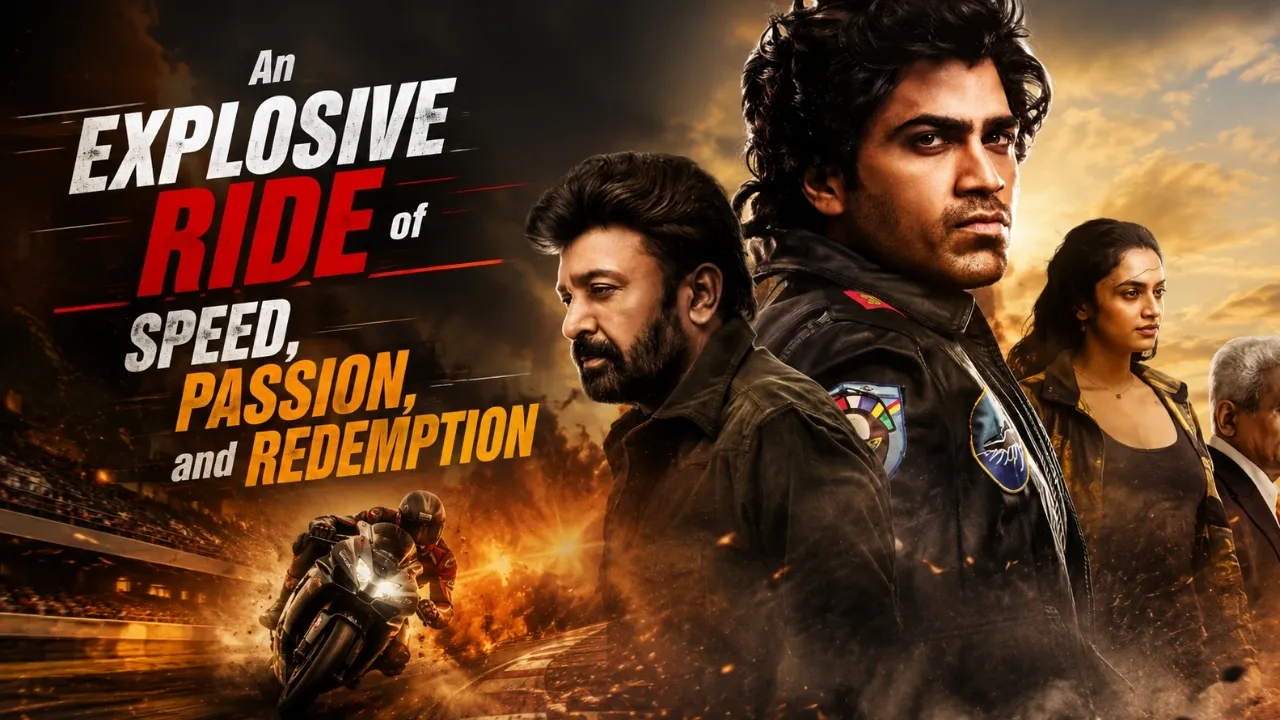
Sharwanand as Vikas
Sharwanand gives a controlled and emotionally grounded performance. He plays Vikas like a man carrying years of pressure rather than a typical commercial hero. That choice helps the film feel more mature.
Rajasekhar as Sunil Narayan
Rajasekhar is one of the film’s biggest strengths. He brings emotional hardness, authority, and frustration to the role, making Sunil both difficult and believable.
Malvika Nair
She brings sincerity to her role, but the writing doesn’t give her enough material to leave a stronger impact.
Supporting Cast
The supporting performances do their job, but the film clearly belongs to the emotional push-and-pull between Sharwanand and Rajasekhar.
What Makes Biker Worth Watching
Although Biker doesn’t succeed in every emotional moment, I never felt that the film was taking shortcuts. Even during its slower portions, there was a clear effort to balance the racing action with a more personal family story, which made it feel more sincere than many recent sports dramas.
That ambition helps Biker stand out from many routine sports dramas despite its imperfections.
There were moments where I wished the screenplay explored certain relationships in greater depth, but the film’s willingness to focus on emotional conflict instead of constant action kept me engaged throughout. That balance made the experience more rewarding than I initially expected.
If you enjoy sports dramas that focus more on emotional conflict than constant action, Biker is likely to keep you engaged from beginning to end.
Biker Movie Ratings
| Category | Rating | Reason |
|---|---|---|
| Story |  ☆ (4.0/5) ☆ (4.0/5) | Familiar sports-drama structure elevated by an emotional father-son conflict. |
| Screenplay | ☆ (3.5/5) | Strong ideas, but the pacing slows and some emotional beats feel conventional. |
| Performances | ½ (4.5/5) | Sharwanand and Rajasekhar deliver convincing, emotionally grounded performances. |
| Direction | ☆ (4.0/5) | Abhilash Reddy Kankara brings freshness through motocross and balances action with emotion. |
| Technical Aspects | ☆ (4.0/5) | Cinematography, race staging, and stunt work are among the film’s highlights. |
| Music & Background Score | ☆ (3.5/5) | Effective during race sequences, though occasionally overemphasizes emotional scenes. |
| Entertainment Value | ☆ (4.0/5) | Engaging despite pacing issues, especially for sports-drama fans. |
| Rewatch Value | ½☆ (3.5/5) | Worth revisiting for the performances and racing sequences more than the overall story. |
| Overall Rating | ☆ (4.0/5) | A sincere and emotionally engaging sports drama that stands out because of its motocross setting and lead performances. |
Final Verdict: Biker Movie Review 2026
Going into Biker, I expected a straightforward sports drama centred on motocross. Instead, I came away remembering the emotional conflict between Vikas and his father far more than the race results. That shift in focus gives the film an identity that separates it from many formula-driven sports dramas.
While watching the film, Sharwanand’s restrained performance consistently held my attention, especially during the emotional scenes with Rajasekhar. Their on-screen dynamic gives the story its strongest moments. The motocross scenes bring novelty and excitement, and The film deserves credit for exploring a sport that has received relatively little attention in mainstream Indian cinema.
Even with those strengths, the film isn’t free from familiar storytelling issues. The pacing dips in places, the domestic drama isn’t always as gripping as the racing material, and some emotional threads deserved sharper writing. You can feel the film reaching for something powerful, even if it doesn’t always get there.
By the time the final race ended, I found myself thinking less about who won and more about the emotional weight Vikas had been carrying throughout the film. That personal shift is what stayed with me after the credits rolled. While Biker isn’t flawless, its sincere performances and emotional core made it a film that remained in my mind long after it ended.
Who Should Watch Biker?
If you enjoy sports dramas that focus more on emotional storytelling than constant action, Biker is worth watching. Its strongest moments come from the father-son relationship rather than the race results, making it a good choice for viewers who appreciate character-driven films over purely commercial entertainers.
Note: This review reflects my personal opinion after watching the film and is intended to help readers decide whether Biker matches their viewing preferences.