 by
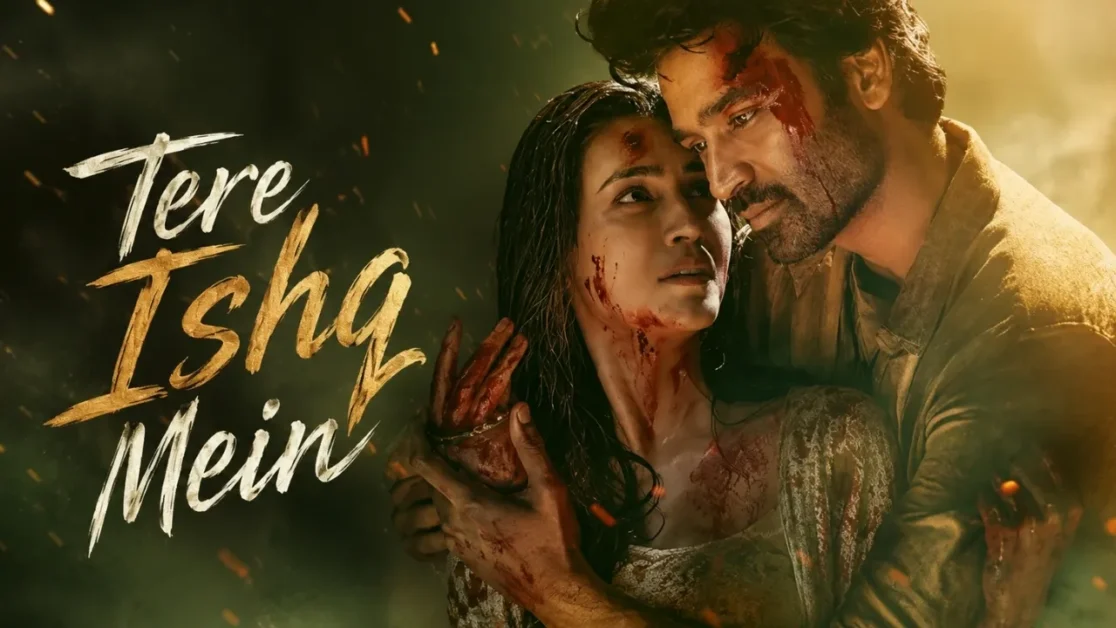
by There are love stories that pull you in with charm, chemistry, and a promise of emotional payoff. Tere Ishq Mein doesn’t work like that. It arrives with intensity from the very first stretch and keeps pushing deeper into messy, painful territory. By the time the film reaches its final act, it stops feeling like a conventional romance and starts looking more like a tragedy about obsession, regret, and the emotional wreckage people leave behind when love turns into something unhealthy.
Although the plot itself is easy to follow, the characters’ motivations become increasingly complex as the story progresses. The emotional choices made in the second half, especially during the climax, have sparked different interpretations among viewers, making the ending one of the film’s most talked-about aspects.
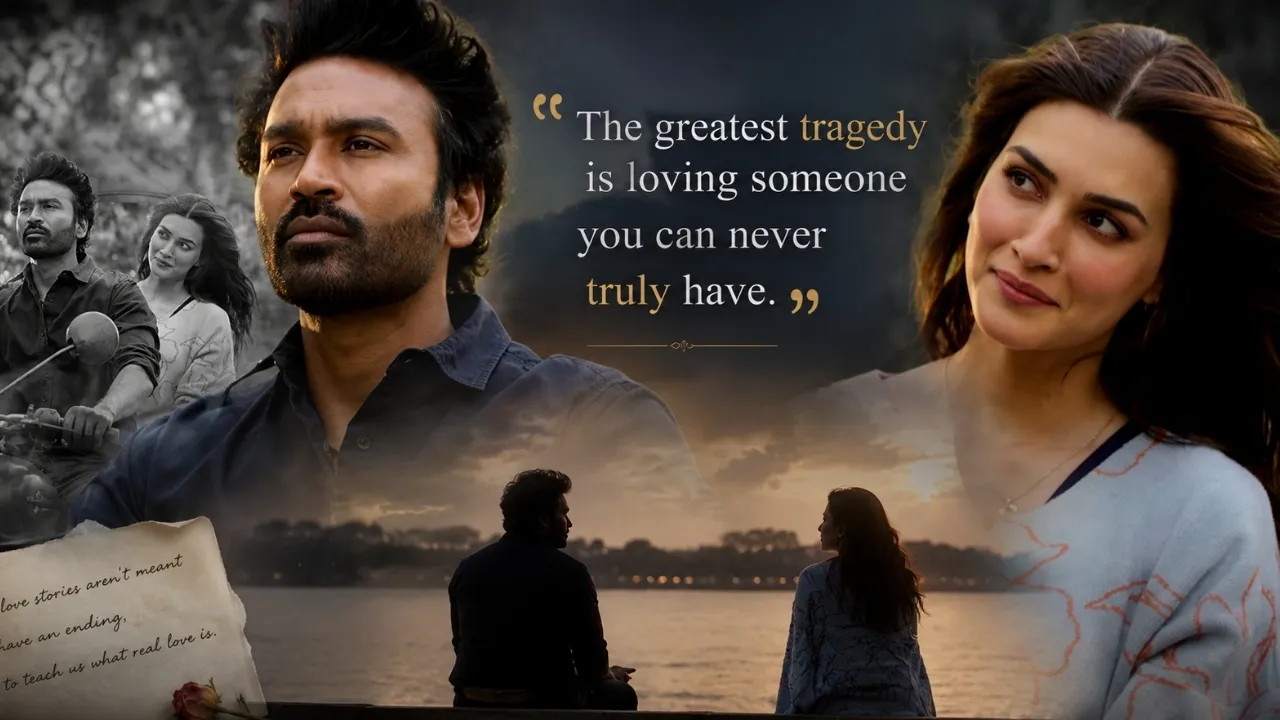
At the center of the film are Shankar and Mukti, played by Dhanush and Kriti Sanon. Their relationship is the backbone of the Tere Ishq Mein story, but it is not written as a soft or idealized romance. It’s unstable, one-sided at points, emotionally manipulative at others, and ultimately destructive. Rather than cleanly condemning that damage, the narrative folds it into a larger tragedy about longing and sacrifice. That creative decision makes the film’s ending one of its most discussed and divisive aspects.
Movie Overview
Before diving into the story and ending, here’s a quick overview of Tere Ishq Mein, including its cast, crew, release details, and key information.
| Information | Details |
|---|---|
| Movie Title | Tere Ishq Mein |
| Release Date | 28 November 2025 |
| Runtime | 2 hours 47 minutes (167 minutes) |
| Language | Hindi (also released in Tamil & Telugu versions) |
| Country | India |
| Genre | Romantic Drama, Musical, Psychological Drama |
| Director | Aanand L. Rai |
| Writers | Himanshu Sharma, Neeraj Yadav |
| Producers | Aanand L. Rai, Himanshu Sharma, Bhushan Kumar, Krishan Kumar |
| Production Companies | Colour Yellow Productions, T-Series Films |
| Distributor | AA Films |
| Lead Cast | Dhanush, Kriti Sanon |
| Supporting Cast | Priyanshu Painyuli, Prakash Raj, Tota Roy Chowdhury, Mohammed Zeeshan Ayyub, Paramvir Cheema, Jaya Bhattacharya, Chittaranjan Tripathi |
| Music Composer | A. R. Rahman |
| Cinematography | Tushar Kanti Ray |
| Editor | Hemal Kothari |
| IMDb Rating | 6.1/10 (may change over time) |
| Age Rating (Netflix) | U/A 16+ |
| Available On | Netflix |
| Story Setting | Begins in Benaras and later shifts to an Indian Air Force backdrop, including Leh. |
| Main Characters | Shankar Gurukkal, Mukti Beniwal, Ved, Raghav |
| Themes | Love, Obsession, Redemption, Sacrifice, Guilt, Emotional Trauma |
| Spiritual Connection | Widely described as a spiritual successor to Raanjhanaa, but not a direct sequel. |
The information above provides a quick snapshot of the film. In the sections below, you’ll find a detailed story breakdown, character analysis, cast information, and a complete explanation of the ending.
Tere Ishq Mein Story: What Is the Film About?
At its core, Tere Ishq Mein tells the story of two people whose relationship changes from passionate love into emotional obsession, leaving lasting consequences for both of them.
Shankar Gurukkal begins his journey as a young man whose love for Mukti Beniwal slowly grows from emotional intensity into obsession. What starts as attraction and emotional attachment becomes something heavier and more unstable. Shankar doesn’t just fall in love with Mukti — he builds his emotional identity around her.
Across different stages of their lives, time, personal choices, and unresolved emotions gradually transform both Shankar and Mukti. Shankar’s attachment deepens. Mukti pulls away. The relationship breaks down. Instead of accepting the breakup, Shankar spirals into anger and destruction, setting the stage for the darker second half of the film. As the story progresses, Shankar faces legal consequences, imprisonment, and a prolonged emotional downfall that permanently changes the course of his life.
Years later, Shankar has changed on the surface. He has rebuilt his life and joined the Indian Air Force. Mukti has also moved on, built another life, and is now facing very different personal struggles. But the past never really leaves either of them. When the story brings them back together, Tere Ishq Mein stops being just a romance and becomes a story about unfinished emotional debt.
At its heart, the film asks a simple but difficult question: can love survive once it has become destructive?
One of the film’s biggest strengths is that it refuses to present its central relationship as either completely right or completely wrong. Instead, it leaves room for viewers to decide whether Shankar’s journey represents emotional growth, lingering obsession, or a mixture of both. That moral ambiguity is one of the reasons the story continues to generate discussion even after the credits roll.
Complete Plot Breakdown
1. Shankar and Mukti meet during their younger years
The early stretch of the film is where the emotional groundwork is laid. Shankar is intense, expressive, impulsive, and the kind of person who feels everything too strongly. Mukti is more layered. She is not cold, but she is harder to read. Her behavior also suggests deeper emotional motives and internal conflicts, making the romance feel far more complicated than it first appears. Audience discussions have also pointed out that her early connection to Shankar is linked to a psychology-related academic angle, which adds another layer of discomfort to the relationship.
2. The relationship turns emotionally dangerous
From this point onward, the story shifts away from traditional romance and focuses on the emotional consequences of obsession. Shankar’s love for Mukti is no longer just passionate — it becomes possessive and destabilizing. When he feels abandoned, he doesn’t process it with heartbreak alone. He unravels.
That unraveling is central to the Tere Ishq Mein plot summary because it transforms Shankar from a tragic lover into a morally complicated protagonist. Even as the story encourages viewers to empathize with him, it also shows him crossing lines that are difficult to excuse. This aspect of the story has divided viewers, with some interpreting it as an emotionally complex character study while others believe it comes close to romanticizing toxic obsession.
3. Prison, loss, and reinvention
After the breakdown of the relationship and the consequences that follow, Shankar’s life changes dramatically. He goes to prison, suffers personal loss, and eventually rebuilds himself through a more disciplined life in the Air Force. Mukti also moves on. She marries, carries her own grief, and enters a very different phase of adulthood.
This shift matters because the Tere Ishq Mein story could have ended as a dark romance about a broken man who never recovers. Instead, the narrative pushes further by asking whether Shankar can become someone else entirely—not by forgetting Mukti, but by loving her differently.
4. The reunion changes the meaning of the film
The second half brings Shankar and Mukti back together in Leh, where Shankar is stationed and Mukti arrives carrying both emotional and physical burdens. She is pregnant, ill, and clearly aware that her future is uncertain. Their reunion marks a turning point because it changes the emotional question the story is trying to answer.
The first half asks: What happens when love turns into obsession?
The second half asks: Can a person who loved destructively ever learn to love selflessly?
Mukti’s request represents the final stage of their relationship. Instead of revisiting their past romance, the film shifts its focus toward responsibility, forgiveness, and emotional closure, giving the climax a deeper meaning beyond love alone.
Main Cast & Characters
The story is driven as much by its characters as its plot. Understanding each major role makes the emotional weight of the ending much easier to appreciate.
Dhanush plays Shankar, the emotional center of the film. Shankar is not meant to be a clean hero. He is impulsive, emotionally wounded, obsessive, and often destructive. But he is also the character through whom the film explores pain, regret, and sacrifice. Dhanush’s performance is one of the reasons the film has stayed in discussion even among viewers who disliked parts of the writing.
Kriti Sanon as Mukti Beniwal
Kriti Sanon plays Mukti, the woman at the center of Shankar’s emotional life and the character who carries much of the film’s ambiguity. Mukti is not just “the girl Shankar loves.” She is also a person shaped by fear, guilt, responsibility, and emotional conflict. As the story progresses, she becomes the key to the film’s final emotional shift.
Priyanshu Painyuli as Ved
Ved represents Mukti’s later life and the reality that she did, in fact, move beyond her past with Shankar. His presence matters because it stops the story from becoming a fantasy where time simply waits for the lovers to reunite.
Prakash Raj as Raghav
Prakash Raj’s character adds emotional weight to Shankar’s family life and helps explain the expectations, grief, and sense of duty that influence Shankar’s later choices.
Supporting cast
The film also includes Prabhu Deva, Mohammed Zeeshan Ayyub, Tota Roy Chowdhury, Paramvir Cheema, and others in roles that expand the world around the lead pair and shape the emotional background of the story.
Ending Explained (Spoilers)
Now let’s examine the climax and understand what really happens in the film’s final moments.
By the climax, the film is juggling two parallel crises:
- Mukti is close to childbirth and her health is deteriorating
- Shankar is involved in a dangerous Air Force mission
The climax crosscuts between these two events to create emotional symmetry. Mukti is literally bringing new life into the world while standing at the edge of death. Shankar is in the sky, facing a mission that may kill him, while emotionally carrying the weight of everything that happened between them.
The Final Sacrifice
During the mission, Shankar’s aircraft is damaged. At that point, the story gives him a choice — survive, or finish the mission. He chooses sacrifice. Instead of ejecting and saving himself, he crashes the jet into the enemy target, destroying it and dying in the process. This moment marks the final transformation of his love: the man who once destroyed things out of obsession now destroys himself in an act of protection.
Mukti’s death
At the same time, Mukti’s health fails during childbirth. The ending strongly implies that she dies from complications related to childbirth and her illness, while the baby survives. As a result, the climax becomes deeply tragic, because the story denies the audience any reunion or emotional release in the traditional romantic sense.
In simple terms, here’s what happens in the ending:
- Shankar dies in the military mission
- Mukti dies during childbirth
- The child survives
- The love story ends in tragedy, with sacrifice replacing reunion
Ending Analysis & Hidden Meaning
The ending continues to generate discussion because it attempts to redefine the meaning of the characters’ relationship.
1. Shankar’s arc is about turning obsession into sacrifice
For most of the film, Shankar’s love feels selfish, unstable, and emotionally dangerous. In the climax, the film tries to convert that love into something selfless. Whether it fully succeeds is up for debate, but that is clearly the intention.
2. Mukti’s child becomes the surviving legacy
The baby is the only thing left after the lovers are gone. Symbolically, that matters. The child represents the part of their connection that survives even after the destructive parts of the relationship have burned everything else down.
3. The film prefers emotional pain over neat closure
This isn’t a film interested in healing the audience. It wants to leave a bruise. That’s why the film leaves such a lasting emotional impact by the time it ends. The story isn’t trying to reward the viewer with peace. It’s trying to leave you sitting with discomfort.
Rather than offering a traditional happy ending, the film chooses emotional consequence over emotional satisfaction. Whether that decision works depends largely on how viewers interpret the characters’ choices, making the ending open to multiple valid interpretations instead of a single definitive message.
Why Viewers Are Divided
Any discussion of the film would be incomplete without acknowledging how differently audiences have responded to it. The film has drawn a mixed response. Some viewers praised the performances, the emotional intensity, and the ambition of the tragic climax. Others criticized the screenplay for romanticizing toxic behavior, making Mukti underwritten, and stretching logic in the military portion of the plot. The wide range of viewer reactions highlights just how differently audiences interpret the film’s themes and ending.
That divide is exactly why the movie keeps getting talked about. It isn’t forgettable. Even people who disliked it seem to have strong feelings about it.
Films that provoke debate often leave a stronger cultural impact than those that simply satisfy expectations. In that sense, Tere Ishq Mein succeeds by encouraging conversation, even if viewers disagree about its execution or emotional message.
Frequently Asked Questions
1. Is Tere Ishq Mein a sequel to Raanjhanaa?
No. Although both films are directed by Aanand L. Rai and explore themes of intense love and emotional conflict, Tere Ishq Mein is not a direct sequel to Raanjhanaa. It tells a separate story with different characters.
2. Do Shankar and Mukti die in Tere Ishq Mein?
Yes. The ending strongly implies that Shankar dies during an Air Force mission, while Mukti dies from complications during childbirth. Their child survives, making the ending deeply tragic.
3. Why is the ending of Tere Ishq Mein so controversial?
The ending has divided viewers because it replaces a traditional romantic reunion with sacrifice and loss. Some appreciate its emotional ambition, while others feel it romanticizes unhealthy relationships.
4. Who plays the lead roles in Tere Ishq Mein?
Dhanush stars as Shankar Gurukkal alongside Kriti Sanon as Mukti Beniwal, with support from Priyanshu Painyuli, Prakash Raj, and several other actors.
5. What is the main message of Tere Ishq Mein?
At its core, the story explores how love can become destructive when mixed with obsession, guilt, and emotional dependence. Rather than presenting a perfect romance, it focuses on the consequences of difficult choices.
Final Thoughts
At its core, this isn’t a conventional Bollywood romance. Instead, it tells the story of two deeply flawed people whose relationship gradually turns into obsession, guilt, and ultimately tragedy.
Shankar and Mukti are written as emotionally complex characters rather than ideal romantic leads. Dhanush and Kriti Sanon deliver convincing performances that make their broken relationship feel believable, even when parts of the screenplay become uneven. By the end, the film chooses sacrifice and emotional consequence over a predictable reunion, making its conclusion both heartbreaking and thought-provoking.
That is why the story continues to stay with many viewers. Rather than offering comfort or easy answers, it explores the darker side of love, where longing becomes painful and difficult to escape. Whether you admire its emotional ambition or disagree with its message, the film leaves a lasting impression because it encourages different interpretations instead of providing a simple ending.
Ultimately, whether the ending feels satisfying or heartbreaking depends on how each viewer interprets the characters’ emotional journey. That openness to interpretation is one of the film’s defining qualities.