 by
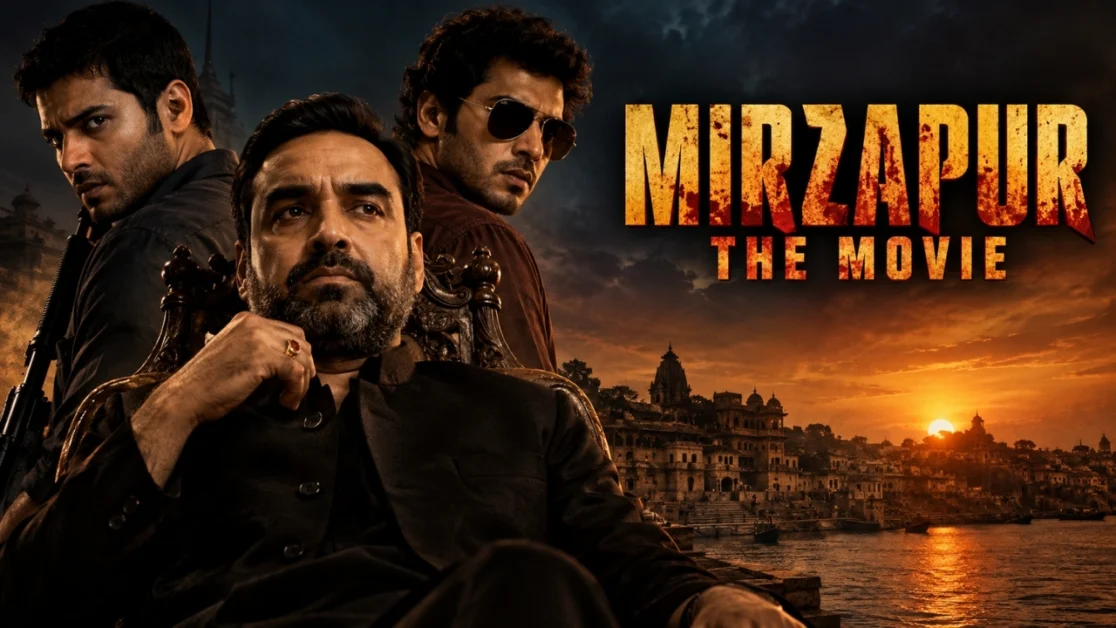
by Mirzapur: The Movie brings one of India’s most popular crime franchises to the big screen. Known for its brutal power struggles, sharp rural Hindi dialogues, unpredictable characters and dark humour, the Mirzapur universe has always been built around one central question: who will control the throne, and how much blood will be spilled to claim it?
The film attempts to translate that familiar world into a theatrical experience. It brings back major characters such as Kaleen Bhaiya, Guddu Pandit and Munna Tripathi, while introducing a fresh criminal threat through Ravi Kishan’s Babban/Babbua Yadav. The result is a film that delivers the expected violence, humour and nostalgia, but also struggles with its extended runtime and crowded screenplay.
Directed by Gurmmeet Singh and created and written by Puneet Krishna, the film was released in theatres on 4 September 2026. It was produced by Ritesh Sidhwani and Farhan Akhtar, with Kassim Jagmagia and Vishal Ramchandani serving as co-producers. The film carries an A certificate and has a reported runtime of approximately 3 hours and 17 minutes.
Mirzapur: The Movie — Quick Details
| Category | Information |
|---|---|
| Movie Title | Mirzapur: The Movie |
| Release Date | 4 September 2026 |
| Director | Gurmmeet Singh |
| Creator and Writer | Puneet Krishna |
| Producers | Ritesh Sidhwani and Farhan Akhtar |
| Co-Producers | Kassim Jagmagia and Vishal Ramchandani |
| Main Cast | Pankaj Tripathi, Ali Fazal, Divyenndu, Ravi Kishan and others |
| Languages | Hindi and Telugu |
| Genre | Action, Crime and Thriller |
| Certification | A |
| Runtime | Approximately 3 hours and 17 minutes |
| Theatrical Release | Nationwide |
| Final Rating | 3.5/5 |
The official Amazon announcement confirms the film’s theatrical release, director, creator, writers and production credits. BookMyShow lists the movie as an in Hindi and Telugu, while certification-related reports put the final runtime at approximately 197 minutes.
Mirzapur: The Movie Story
The film is not presented as a completely disconnected story. It explores another chapter of the Mirzapur universe and is positioned alongside the events of the first season. This makes the film feel more like a cinematic side story within the franchise’s existing timeline rather than a straightforward continuation of the latest season.
The central conflict again revolves around power, loyalty and revenge. Kaleen Bhaiya remains an important figure in the criminal and political structure, while Guddu Pandit continues to operate from a position shaped by ambition and personal anger. Munna Tripathi’s presence adds emotional instability to the conflict because his decisions are often driven by ego and impulse rather than patience.
The film also introduces a new threat through Babban/Babbua Yadav, played by Ravi Kishan. His criminal activities and the drug-related conflict connected to his character create pressure on the existing power structure. Reported plot details also refer to a Jaisalmer-based drug lord whose plan threatens Kaleen Bhaiya’s hold over Mirzapur.
The story develops through several overlapping tensions:
Kaleen Bhaiya’s attempt to protect his position.
Guddu’s continuing hunger for power.
Munna’s unpredictable response to threats.
Babban Yadav’s criminal ambitions.
Rivalries involving drugs, territory and political influence.
Personal relationships that become difficult to separate from business.
The film’s biggest advantage is that these characters already have history. A short exchange can carry the weight of earlier betrayals, family conflicts and power struggles. The audience does not need a long explanation every time two characters meet because their relationship has already been established by the series.
At the same time, this structure creates a limitation for new viewers. People who have not watched Mirzapur may find the character motivations, references and emotional reactions difficult to follow. The film assumes that the audience already understands why certain characters distrust one another and why a seemingly small decision can lead to violence.
A Familiar World with a Theatrical Scale
The theatrical version of Mirzapur does not completely change the identity of the franchise. It does not become a glossy action film or a conventional Bollywood crime drama. Instead, it retains the rough atmosphere, rustic dialogue, criminal politics and sudden brutality that made the series popular.
The larger screen gives the film more room for action set pieces, crowd reactions and dramatic entrances. Some scenes are clearly designed for a theatrical audience, particularly moments involving major character returns, confrontations and the climax.
However, the film’s theatrical scale is not equally effective in every sequence. A larger setting does not automatically make a scene more powerful. The strongest scenes remain the ones where the characters are making decisions, hiding information or testing each other’s loyalty. The weaker moments are those where the film stretches an action sequence or adds movement without developing the central conflict.
This difference is important because Mirzapur has always been more interesting when its violence emerges from character decisions. The gunfights and threats matter because the audience understands what each character wants to gain or protect.
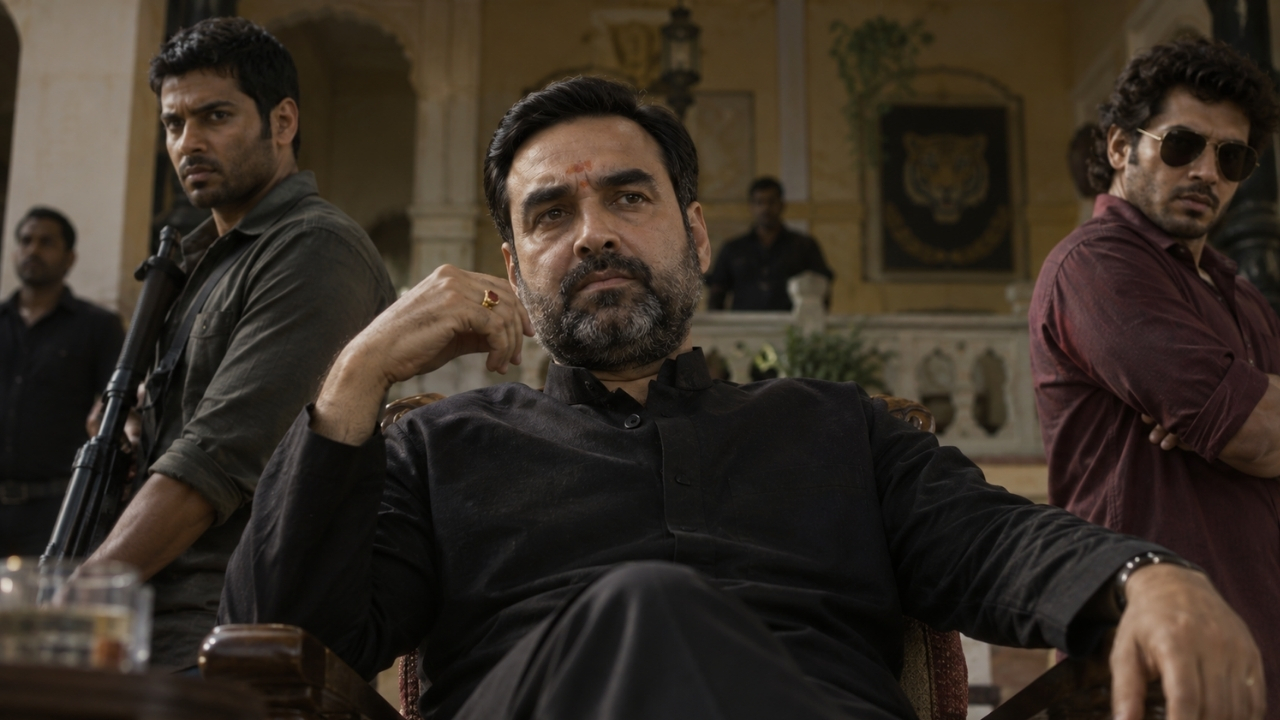
Pankaj Tripathi as Kaleen Bhaiya
Pankaj Tripathi continues to be one of the film’s most reliable performers. His portrayal of Kaleen Bhaiya depends on control. He does not need to raise his voice in every scene to establish authority. A pause, a look or a measured line of dialogue can communicate more than an extended speech.
Kaleen Bhaiya works because he is not written as a simple gangster who solves every problem through violence. He is also a strategist who understands the value of patience. His power comes from his ability to make other people believe that he is always several steps ahead.
Tripathi’s performance is particularly effective in scenes where the character must respond to a threat without revealing fear. The tension comes from the gap between what Kaleen Bhaiya knows and what the other characters think he knows.
Several reviews identified Pankaj Tripathi as one of the film’s major strengths. The Indian Express described his return as a factor that revitalises the franchise, while other reviews also highlighted his presence and performance.
Ali Fazal as Guddu Pandit
Ali Fazal plays Guddu as a character caught between revenge and ambition. In the earlier parts of the franchise, Guddu’s anger often appeared direct and physical. In the film, his position is more complicated because power requires calculation as well as aggression.
Guddu is not presented as a traditional hero. He is capable of making ruthless decisions, and his personal goals often conflict with the interests of the people around him. That moral uncertainty makes him more interesting than a simple revenge-driven protagonist.
Ali Fazal’s performance is strongest when Guddu is forced to think before acting. The character’s intensity is familiar, but the more effective moments are those in which he tries to control that intensity. His interactions with Kaleen Bhaiya and Munna carry the emotional history of the franchise without requiring lengthy explanations.
The film also uses Guddu to show how power changes a person. His journey is not only about defeating enemies. It is about becoming the kind of person who can survive in the world he once wanted to escape.
Divyenndu as Munna Tripathi
Divyenndu’s return as Munna Tripathi is one of the film’s biggest attractions. Munna remains one of the most recognisable characters in the Mirzapur universe because of his mixture of arrogance, insecurity, humour and unpredictability.
His presence changes the mood of a scene. Even when he is not directly threatening someone, the audience expects his emotions to create trouble. He can turn a conversation into a confrontation because he often reacts personally to challenges that other characters might treat as business decisions.
Munna also provides much of the film’s dark humour. His comic moments do not remove the danger surrounding him. Instead, they make the character more unpredictable. The audience may laugh at his behaviour while still understanding that his next decision could have serious consequences.
Early audience reactions specifically praised Divyenndu’s return, along with the film’s action and dialogues.
Ravi Kishan as Babban/Babbua Yadav
Ravi Kishan brings a different energy to the film. His character, Babban/Babbua Yadav, creates a new criminal pressure point within the established Mirzapur world.
Unlike characters whose power is built around long-term political control, Babban’s presence is more direct and aggressive. His activities introduce another layer of danger and force the existing players to respond to a threat they cannot simply ignore.
Ravi Kishan’s performance benefits from his ability to combine menace with theatrical energy. He gives the character a strong screen presence without making him feel identical to Kaleen Bhaiya or Munna.
The official cast discussion identifies Ravi Kishan with the Babban/Babbua Yadav character, while the reported story details connect him to the film’s drug-related conflict.
Supporting Cast and Character Contributions
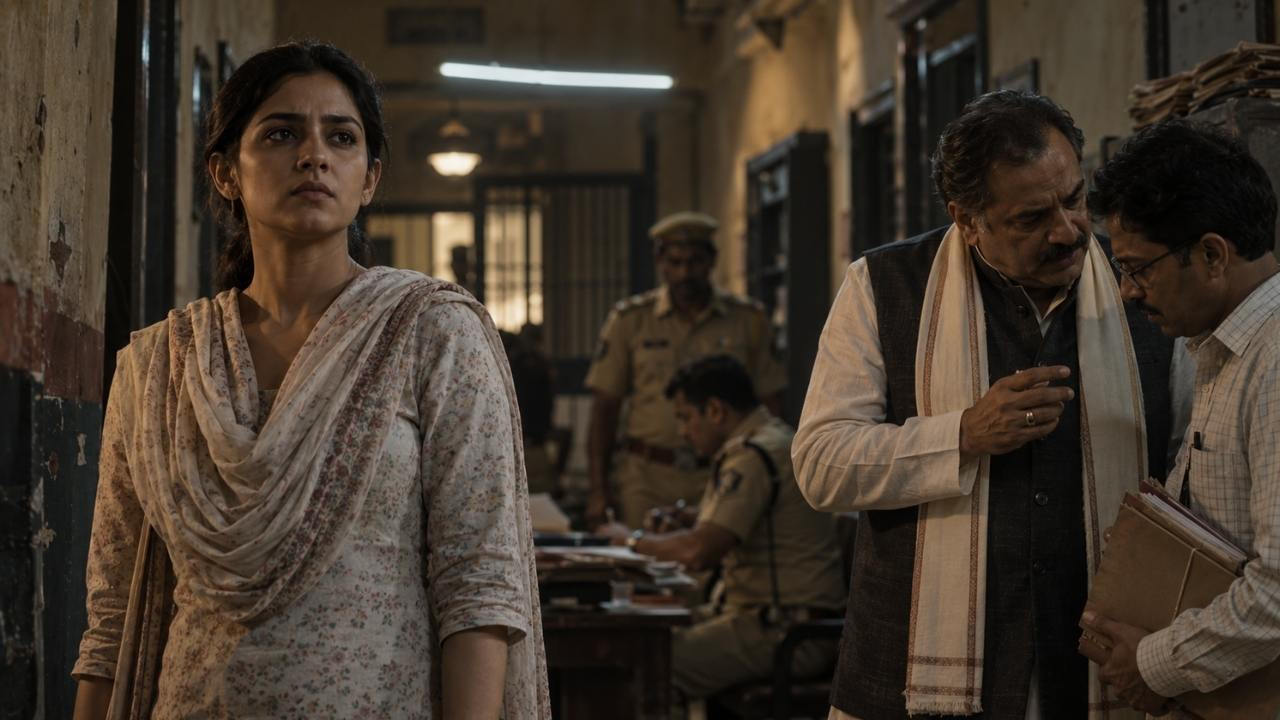
The film also features Shweta Tripathi, Rasika Dugal, Harshita Gaur, Shreya Pilgaonkar, Jitendra Kumar and Sonal Chauhan in the wider ensemble. Not every supporting character receives the same amount of development, but the better moments are those in which personal relationships directly affect the power struggle.
The supporting cast is important because Mirzapur is not only about the men holding guns. Its emotional and political structure also depends on family relationships, loyalty, manipulation and the consequences of criminal ambition.
Rasika Dugal’s presence adds emotional contrast to the otherwise aggressive atmosphere. Shweta Tripathi brings continuity from the original series, while the remaining ensemble helps expand the film’s world beyond the central rivalry.
The weakness is that the screenplay sometimes moves so quickly between subplots that supporting characters appear mainly to advance the next conflict. A few relationships could have benefited from more focused writing instead of being used only as links between major action sequences.
Action Sequences and Violence
The action in Mirzapur: The Movie follows the franchise’s established style. The film includes gunfights, sudden attacks, threats, criminal negotiations and violent confrontations. The action is not designed to be elegant or highly stylised in the manner of a conventional spy thriller. It is rough, sudden and closely connected to the characters’ criminal environment.
The most effective action scenes are those that carry emotional consequences. When a confrontation grows out of betrayal, revenge or a struggle for control, the violence feels meaningful. The audience understands why the characters are willing to risk their lives.
The film’s climax delivers the kind of crowd-pleasing energy expected from a Mirzapur theatrical release. It brings together the franchise’s familiar aggression, dialogue-driven tension and larger-scale presentation.
However, not every action sequence is equally successful. One review specifically pointed to a car chase near the end as a sequence that feels forced. This criticism reflects a larger issue with the film: some scenes appear to have been extended to create theatrical spectacle even when the story does not require them.
The violence also remains intense enough to justify the A certificate. Reports on the certification stated that the final version retained its adult-oriented tone, with limited cuts to intimate material and some muted cuss words.
Dialogues and Dark Humour
Dialogue remains one of the strongest reasons to watch the film. Mirzapur’s identity has always been connected to its blunt threats, rustic expressions and aggressive exchanges. The movie understands that its characters should not sound like polished corporate criminals or generic action heroes.
The dialogues work best when they reveal power relationships. A threat is more effective when the audience understands who has the authority to carry it out. Similarly, an insult becomes meaningful when it exposes an old rivalry or personal insecurity.
Munna’s scenes provide the most recognisable dark humour, while Guddu and Kaleen Bhaiya create tension through controlled verbal exchanges. The film also uses humour to prevent the story from becoming emotionally flat. Without those moments, the constant violence could become exhausting.
However, the dialogue-heavy style is more rewarding for existing fans than for first-time viewers. New audiences may understand the words but miss the history behind them. The film expects viewers to recognise the significance of certain names, expressions and reactions.
Music and Background Score
The music supports the film’s larger-than-life treatment. Rap tracks and energetic musical moments fit the criminal setting, while the background score helps maintain the sense of danger surrounding the characters.
The film also uses music to create emotional contrast. “Vaaroon” and “Saanson Ki Maala” add a different tone to the otherwise violent narrative. “Saanson Ki Maala” is especially useful as a softer musical moment near the end, allowing the film to briefly move away from aggression and create a more reflective mood.
The music does not completely transform the film, but it strengthens the franchise’s atmosphere. It works best when used to underline a character’s emotional state rather than simply accompany a large action scene.
India Today’s review also noted the film’s rap tracks, music, the return of “Vaaroon” and the softer use of “Saanson Ki Maala.”
Screenplay and Narrative Structure
The screenplay has enough material for a substantial crime drama. There are rivalries, shifting alliances, drug-related conflict, political influence and personal revenge. The problem is not a lack of events. The problem is that the film sometimes gives similar dramatic weight to events that do not have equal importance.
The strongest parts of the screenplay are built around the main characters’ decisions. When Kaleen Bhaiya, Guddu or Munna must choose between personal emotion and strategic advantage, the story becomes engaging.
The weaker parts occur when the narrative adds another confrontation or subplot without creating a significant change in the power structure. Some scenes repeat the same idea: a character wants control, another character refuses to surrender, and the conflict moves toward violence.
This repetition is more noticeable because of the runtime. In a shorter film, a familiar exchange might feel like part of the franchise’s style. In a film lasting more than three hours, repeated confrontations begin to feel like delays.
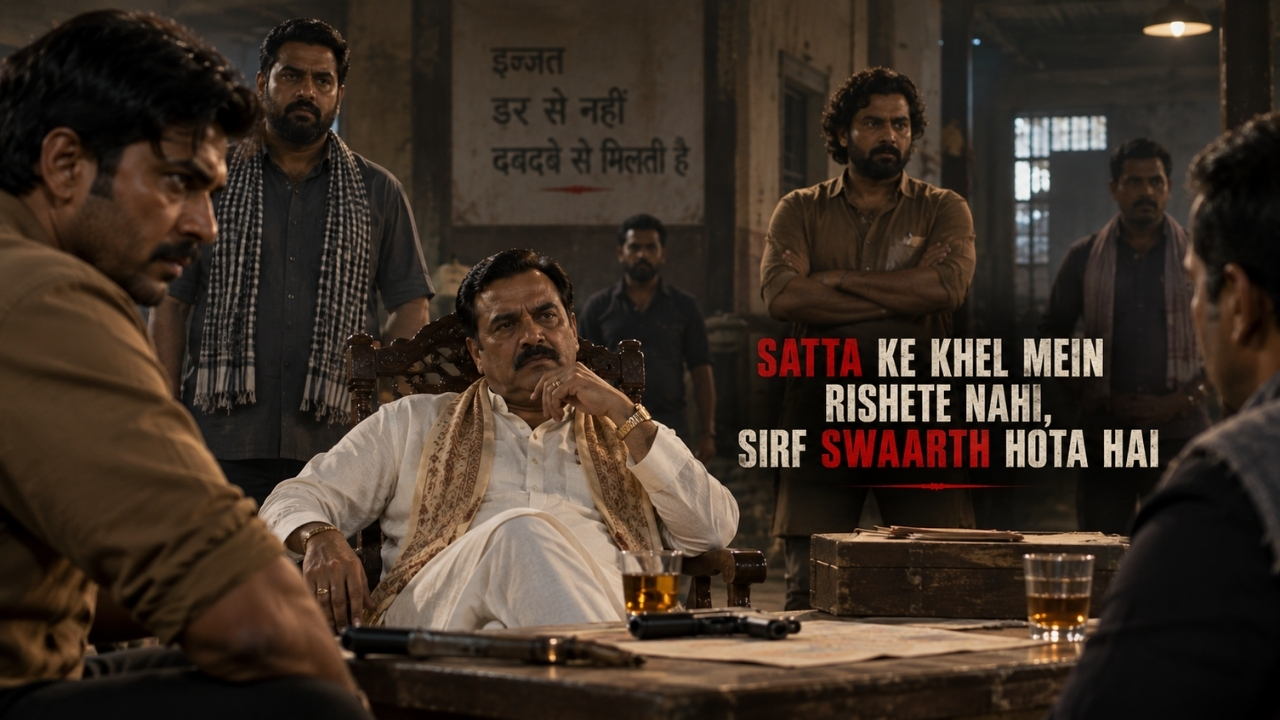
Runtime and Editing
The film’s most visible weakness is its length. With a runtime of approximately 3 hours and 17 minutes, Mirzapur: The Movie is considerably longer than a standard commercial thriller.
A long runtime is not automatically a problem. Crime dramas often need time to develop characters, political networks and shifting loyalties. The issue here is that some scenes do not add enough new information or emotional depth to justify their duration.
The film could have benefited from tighter editing in three areas:
Repeated confrontations: Some arguments and threats communicate information that the audience already understands.
Secondary subplots: A few supporting storylines receive attention without becoming fully developed.
Extended action sequences: Certain action moments appear longer than necessary, particularly when they do not significantly change the story.
The Indian Express described the film as overlong but enjoyable. India Today also criticised the need for tighter scripting and editing, while The Week called it a bloated but solid addition to the franchise.
The result is a film that remains entertaining but requires patience. Viewers who enjoy the franchise’s atmosphere may accept the length, while viewers looking for a tightly structured thriller may find the second half uneven.
How the Film Compares with the Series
The original Mirzapur series had the advantage of time. It could allow character relationships to develop across episodes and could build tension gradually. The film has to compress a similar world into one theatrical narrative.
That compression creates both energy and weakness. The movie moves quickly from one conflict to another, but it cannot always provide the same depth that a multi-episode season can offer.
The film also depends heavily on nostalgia. Returning characters create an immediate connection with the audience, but nostalgia can become a substitute for development. A familiar character entering the frame may generate applause, yet the scene still needs a strong dramatic purpose.
Mirzapur: The Movie works best when it uses the franchise’s past as emotional background rather than as a replacement for storytelling. It is more effective when the characters make new decisions instead of simply repeating old behaviour.
Is the Film Suitable for New Viewers?
New viewers can follow the broad story of criminal rivalry, but they may not experience the same emotional impact as long-time fans.
The film assumes familiarity with:
Kaleen Bhaiya’s position in the Mirzapur power structure.
Guddu’s personal and criminal journey.
Munna’s relationship with power and authority.
The emotional history between major characters.
The franchise’s recurring political and family conflicts.
For someone who has watched the series, the film offers recognisable faces, familiar dialogues and the pleasure of seeing the characters in a theatrical setting. For someone completely new to the universe, the story may feel crowded and emotionally distant.
A short recap of the earlier seasons would help first-time viewers understand the major relationships before watching the movie.
Is Mirzapur: The Movie Worth Watching?
Mirzapur: The Movie is worth watching for fans of the original series who want more of the franchise’s violence, humour and character rivalries. The performances, particularly those of Pankaj Tripathi, Ali Fazal, Divyenndu and Ravi Kishan, provide enough energy to keep the film engaging.
The movie is also a good choice for viewers who enjoy crime dramas with political tension, morally complicated characters and dialogue-driven confrontations.
However, viewers who prefer compact storytelling may find the runtime difficult. The film’s extended length, crowded subplots and occasional forced action sequences prevent it from becoming a fully satisfying theatrical crime epic.
The movie is not a complete failure of scale. Its best scenes show that the Mirzapur universe can work on a larger screen. But its most memorable moments still come from the characters rather than from the size of the action.
Final Verdict
Mirzapur: The Movie is an entertaining but uneven theatrical return. It succeeds through its performances, familiar dialogue style, dark humour, violent confrontations and strong character chemistry.
Pankaj Tripathi remains the film’s most controlled performer, while Ali Fazal gives Guddu a mixture of ambition and emotional conflict. Divyenndu brings back Munna’s unpredictable energy, and Ravi Kishan adds a fresh criminal threat through Babban/Babbua Yadav.
The film’s main weakness is its screenplay discipline. Several scenes could have been shortened, some supporting characters needed more focused development, and a few action sequences feel designed for scale rather than necessity.
For existing fans, the movie offers enough nostalgia and entertainment to justify a theatrical watch. For newcomers, it may feel crowded without the background of the series.
Rating: 3.5/5
| Category | Rating |
|---|---|
| Story | 3.5/5 |
| Performances | 4/5 |
| Action | 3.5/5 |
| Dialogues | 4/5 |
| Music | 3.5/5 |
| Editing and Pacing | 2.5/5 |
| Overall | 3.5/5 |
Frequently Asked Questions
What is the release date of Mirzapur: The Movie?
Mirzapur: The Movie was released in theatres on 4 September 2026.
What is the runtime of Mirzapur: The Movie?
The film has a reported runtime of approximately 3 hours and 17 minutes.
Who plays Babban/Babbua Yadav?
Ravi Kishan plays Babban/Babbua Yadav in the film.