 by
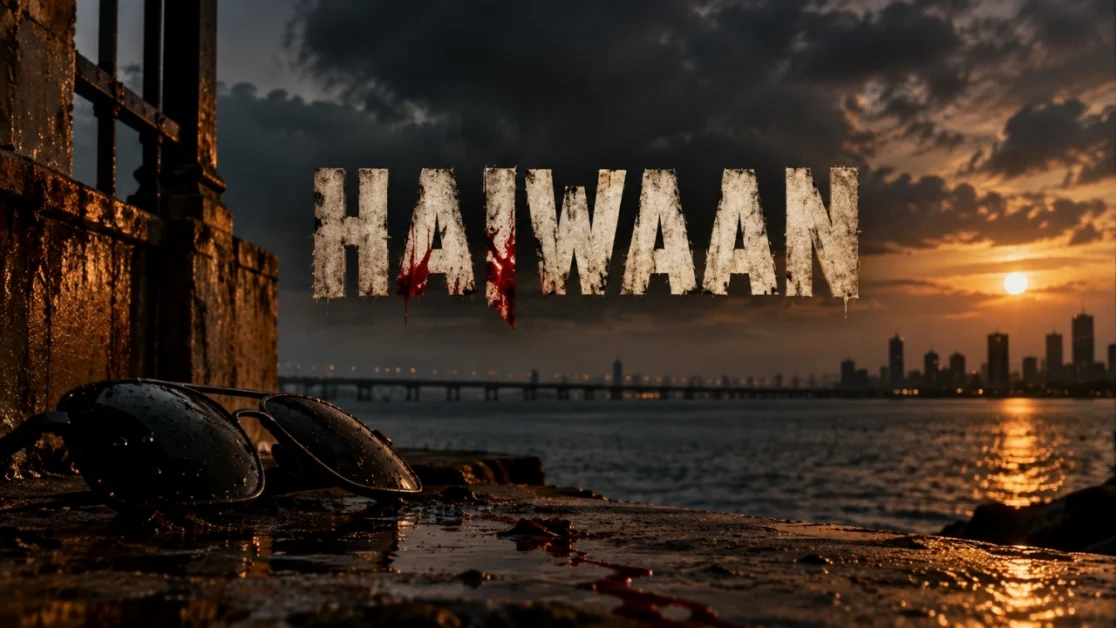
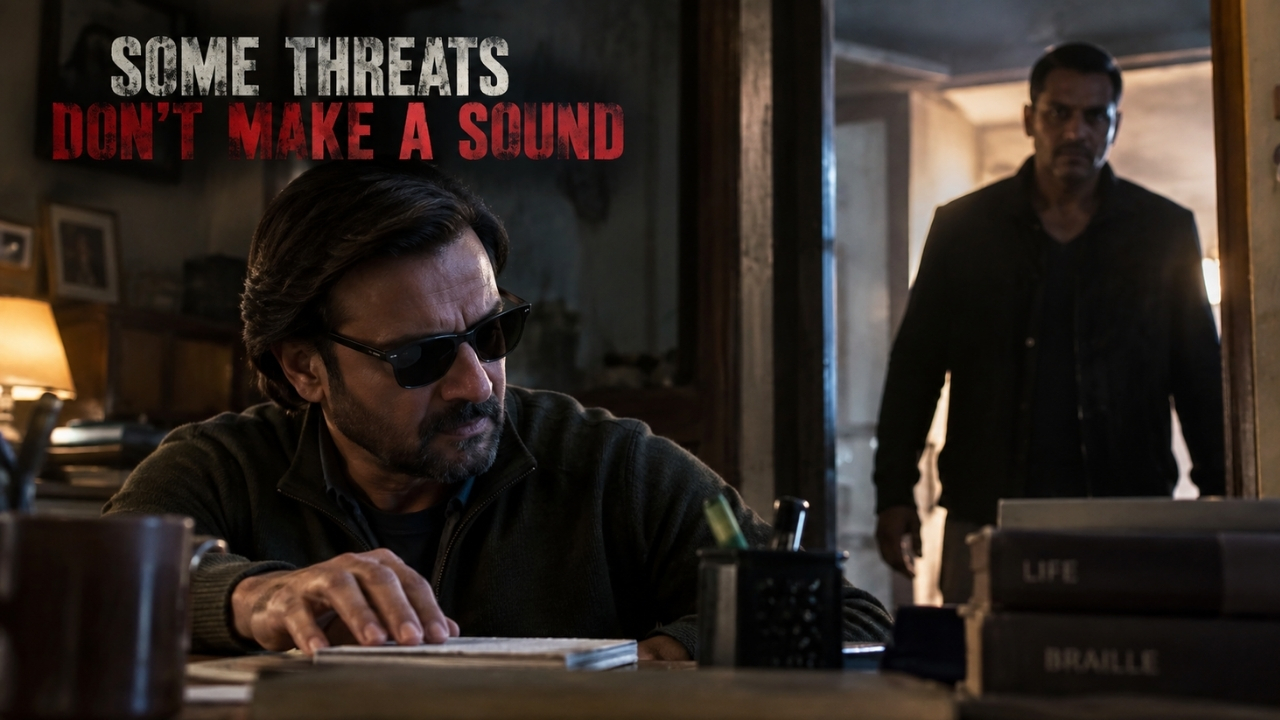
by Akshay Kumar and Saif Ali Khan return to the big screen together in Haiwaan, but this is not the kind of reunion built around friendship, comedy or nostalgia. Priyadarshan puts the two actors on opposite sides of a revenge-driven thriller, with Saif playing Shyam Rane, a visually impaired man, and Akshay portraying Parshuram, a dangerous criminal.
That setup is easily the film’s biggest attraction.
There is an obvious dramatic question at its centre: how does a man who cannot see deal with an opponent who has made violence his weapon? The premise creates opportunities for sound-based suspense, physical vulnerability and a very different kind of hero.
Haiwaan does make use of those ideas. The problem is that it takes too long to get to them.
At 165 minutes, the film spends a substantial amount of time establishing its characters and relationships before the thriller properly takes over. By the time the central conflict becomes urgent, the audience has already been asked to sit through songs, a wedding celebration and several stretches that could have been considerably tighter.
The result is a film with a solid premise, committed performances and a stronger final act than its uneven first half suggests—but also one that feels like it needed a much more aggressive edit.
Haiwaan Movie Details
| Detail | Information |
|---|---|
| Movie | Haiwaan |
| Release Date | September 11, 2026 |
| Language | Hindi |
| Genre | Crime Thriller |
| Director | Priyadarshan |
| Lead Cast | Akshay Kumar, Saif Ali Khan |
| Supporting Cast | Boman Irani, Sharib Hashmi, Saiyami Kher, Shriya Pilgaonkar |
| Runtime | 165 minutes |
| Original Film | Oppam (2016) |
What Is Haiwaan About?
The story revolves around Shyam Rane, a visually impaired man whose life becomes entangled with a dangerous revenge plot.
Shyam has a close connection with retired judge Pradhan, played by Boman Irani. Pradhan’s past eventually brings him into conflict with Parshuram, a convict whose return sets the main story in motion.
Shyam is then pulled into a situation where his limitations become both a vulnerability and an unexpected advantage.
That is where Haiwaan has its most interesting material.
Instead of making Shyam dependent on conventional action-hero abilities, the film can build suspense around what he can hear, recognise and understand. A sound in the wrong place or an unfamiliar movement can mean something very different to him than it would to a sighted person.
The concept is strong enough to carry a thriller.
Unfortunately, the screenplay does not use that advantage often enough.
The Biggest Problem: Haiwaan Takes Too Long to Become a Thriller
The opening gives us a clear indication of what Parshuram is capable of. The film establishes him through violence and visual details, including his distinctive snake tattoo.
That should immediately create a sense of danger.
Instead, the narrative takes a detour.
Three songs and a wedding celebration arrive before the thriller reaches one of its important sequences. The issue is not that songs or celebrations automatically belong outside a thriller. The problem is their placement. The story has already introduced a threat, but instead of increasing the pressure, it repeatedly releases it.
That makes the first half feel longer than it needs to be.
A tighter version of Haiwaan could have used the same characters and story while reaching the Shyam-Parshuram conflict considerably earlier.
This is not merely a matter of runtime. It affects suspense. When a thriller pauses too often before its central conflict has properly developed, the audience has less reason to feel anxious about what comes next.
And that is exactly what happens here.
Saif Ali Khan’s Shyam Works Best When the Film Keeps Things Human
Saif Ali Khan has the more demanding character because Shyam has to be both vulnerable and capable.
The vulnerability comes naturally from the character’s visual impairment. The challenge is making the audience believe that this man can survive the physical danger eventually thrown at him.
Saif is more convincing in the quieter portions.
His Shyam has a sense of responsibility towards his family and the people around him. That gives the character an emotional reason to keep moving forward instead of making him feel like a protagonist who exists only to defeat the villain.
The physical side is less convincing.
India Today’s review makes a similar distinction: Saif works as Shyam the person, but the more physically demanding aspects of the role are harder to accept.
That contrast is important because it explains why some of Shyam’s scenes connect while others do not. When the film asks Saif to communicate fear, uncertainty or responsibility, the performance feels grounded. When it asks the character to become a conventional physical action hero, the illusion becomes weaker.
Akshay Kumar’s Parshuram Needed More Restraint
Akshay Kumar is the film’s biggest casting surprise.
After years of playing heroes, comic characters and action leads, he is positioned here as the source of danger.
There are moments when the choice works. His physical presence immediately tells the audience that Parshuram is not someone Shyam can casually confront.
But the character has a problem that goes beyond performance: the screenplay does not give his menace enough consistency.
A truly frightening antagonist does not need to constantly announce that he is dangerous. The quieter moments can often be more effective.
Parshuram, however, occasionally becomes too theatrical. Instead of creating dread, some scenes push the character towards exaggeration.
India Today’s review reaches a similar conclusion, arguing that Akshay’s villain is not consistently frightening and that the performance sometimes becomes unintentionally comic.
The irony is that Akshay might have been more effective if the film had asked him to do less.
A colder, quieter Parshuram could have made the conflict considerably more unsettling.
Sharib Hashmi Provides the Film’s Most Reliable Comic Relief
Sharib Hashmi, playing Inspector Sanjay Shinde, is one of the film’s more enjoyable supporting performers.
His comedy gives the movie some breathing room, particularly during stretches where the main story becomes heavy.
But there is a problem with the way the humour is placed.
Some comic moments arrive precisely when the thriller should be tightening its grip. Instead of increasing the contrast between normal life and danger, those interruptions sometimes break the momentum that the film has just begun to create.
Still, Hashmi makes the material work more consistently than some of the surrounding comic beats. India Today also singled him out as one of the film’s reliable pleasures.
Boman Irani Gives the Story Its Emotional Context
Boman Irani plays retired judge Pradhan, a character whose history is essential to understanding Parshuram’s revenge.
His role is not simply there to provide information. Pradhan represents the past that Parshuram cannot leave behind, while his relationship with Shyam provides the protagonist with an emotional connection to the larger conflict.
Boman’s performance is controlled and dependable.
Interestingly, Boman has also spoken about the process behind the film. He said Priyadarshan deliberately did not want the cast to simply reproduce Oppam, and described the Hindi film as a different approach to the same underlying premise. He also praised Saif’s preparation for playing a visually impaired character.
That context is useful when looking at Haiwaan as an adaptation rather than judging it only as a remake.

Saiyami Kher and Shriya Pilgaonkar Deserved More
The female supporting characters are not given enough dramatic weight.
Saiyami Kher and Shriya Pilgaonkar contribute to the narrative, but neither is given the kind of material that would make their performances major talking points.
This is particularly noticeable because the film has enough characters and subplots already. Adding characters is not automatically useful unless the screenplay gives them something meaningful to do.
Here, some of the supporting roles feel functional rather than fully developed.
That does not make the performances poor. It simply means the screenplay has not given them enough room.
Does the Comedy Fit the Thriller?
This is where Priyadarshan’s strengths and the film’s weaknesses collide.
Priyadarshan is an experienced filmmaker with a strong association with comedy, and Haiwaan clearly retains some of that instinct.
The problem is tonal timing.
A thriller can absolutely contain humour. In fact, humour can make a later danger sequence more effective by giving the audience something comfortable to hold on to first.
But Haiwaan does not always make that transition smoothly.
The result is a film that sometimes feels like it is switching between two different modes instead of allowing the comedy to serve the suspense.
The issue is therefore not “there is too much comedy.”
It is “some of the comedy arrives at the wrong dramatic moment.”
That is a screenplay problem, not simply a genre problem.
The Climax Finally Gives the Film the Urgency It Needed
The final stretch is where Haiwaan comes closest to delivering the thriller promised by its premise.
Once the story narrows its attention to the main conflict, there is less distraction. The characters have clearer objectives and the danger feels immediate.
This is also where the concept of Shyam’s limitations becomes more useful dramatically.
The final act is not flawless, but it has a level of urgency that is missing from several earlier portions.
Hindustan Times also described the film as uneven but highlighted its final act as the part that helps rescue the overall experience.
That makes the film’s biggest weakness even clearer: the movie eventually finds the right rhythm, but it finds it too late.
Haiwaan vs Oppam
Haiwaan is based on Priyadarshan’s 2016 Malayalam film Oppam, which starred Mohanlal.
The central premise remains connected to the original: a visually impaired protagonist becomes involved in a dangerous situation and has to use abilities beyond sight to navigate it.
However, the filmmakers have stressed that the Hindi version was not intended as a simple scene-for-scene recreation.
Boman Irani said Priyadarshan did not want the cast to watch Oppam initially and described the Hindi film as a different treatment of the premise.
That distinction is worth making because calling Haiwaan nothing more than a copy would oversimplify the adaptation.
Still, comparisons are unavoidable.
If you have seen Oppam, the broad narrative territory will obviously be familiar. And that means Haiwaan has to succeed through its own performances, tone and treatment rather than relying on the basic story as a surprise.
Mohanlal also makes a brief appearance in Haiwaan, connecting the Hindi adaptation directly to the original film.
Screenplay: The Story Is Better Than the Way It Is Told
This is ultimately where Haiwaan loses points.
The basic story is perfectly workable.
The problem lies in the distribution of information and tension.
The film has:
- a clear antagonist
- a vulnerable protagonist
- a personal connection between the characters
- a revenge motive
- a visually interesting central premise
- and a final confrontation
Those ingredients should be enough for a compact thriller.
Instead, the movie repeatedly pauses before the main conflict can gather momentum.
The songs and wedding sequence are the most obvious examples, but the larger issue is structural. The screenplay spends too much time getting the audience to the point that the premise itself promises.
Once it gets there, the movie becomes noticeably more engaging.
That is why Haiwaan feels less like a bad story and more like an overextended version of a potentially good one.
Is Haiwaan Worth Watching?
Yes, with realistic expectations.
If you are watching for Akshay Kumar’s unusual antagonist role, Saif Ali Khan’s performance or Priyadarshan’s take on a Hindi crime thriller, there is enough material here to justify a viewing.
If your priority is a fast, tightly edited thriller with consistently intimidating villains, the film is harder to recommend.
The biggest question is not whether Haiwaan has good ideas.
It does.
The question is whether those ideas are developed efficiently enough.
They aren’t.
Haiwaan Movie Review: Final Verdict
Haiwaan has a better thriller hiding inside it than the finished film manages to deliver.
The central premise is strong, Saif Ali Khan brings credibility to Shyam’s emotional side, and Akshay Kumar’s casting as Parshuram gives the story an unexpected edge. Sharib Hashmi adds some genuinely entertaining moments, while Boman Irani provides the backstory and emotional connection needed to make the revenge plot understandable.
But the film needed a tighter edit.
The 165-minute runtime is felt, especially during the early portions. The songs and wedding sequence interrupt the build-up, the comedy does not always arrive at the right time, and Parshuram’s menace is less consistent than the story requires.
The final act shows that Priyadarshan had the ingredients for a more effective thriller. Unfortunately, by then, the film has already spent too much time getting there.
Rating: 2.5/5
Worth watching for: Akshay-Saif’s unusual pairing, Saif’s emotional performance, the central premise and the stronger final stretch.
Skip it if: You want a lean, consistently tense thriller with minimal detours.
Haiwaan FAQs
Is Haiwaan based on Oppam?
Yes. Haiwaan is based on Priyadarshan’s 2016 Malayalam thriller Oppam, which starred Mohanlal. However, Boman Irani has said that Priyadarshan approached the Hindi film differently rather than simply reproducing the original.
Should you watch Haiwaan if you have already seen Oppam?
You can, particularly if you want to see how the premise has been adapted for a Hindi-language audience and how Saif Ali Khan and Akshay Kumar approach their roles. However, viewers who know Oppam will naturally have fewer surprises.
Is Haiwaan a fast-paced movie?
No. Its biggest criticism is its pacing. The film runs for around 165 minutes, and several early portions delay the main thriller. The final act is more focused.
Is Haiwaan more of an action film or a crime thriller?
It is primarily a crime thriller with action, drama and comedy elements. The central conflict and revenge plot are more important to the story than conventional action spectacle.
Is Haiwaan suitable for children?
The film has a UA 16+ certification and contains crime, violence and darker themes. Parents should consider the certification and content before watching it with younger viewers.
Does Mohanlal appear in Haiwaan?
Yes. Mohanlal, who played the lead in the original Oppam, makes a brief appearance in the Hindi adaptation.
What is the biggest weakness of Haiwaan?
The screenplay’s pacing is the main weakness. The central story has enough material for an effective thriller, but the film takes too long to reach and sustain its strongest conflict.
Is Akshay Kumar good as Parshuram?
Akshay’s casting is interesting and his screen presence is strong, but the character is not consistently frightening. The performance occasionally becomes too exaggerated when a quieter approach may have created more menace.