 by
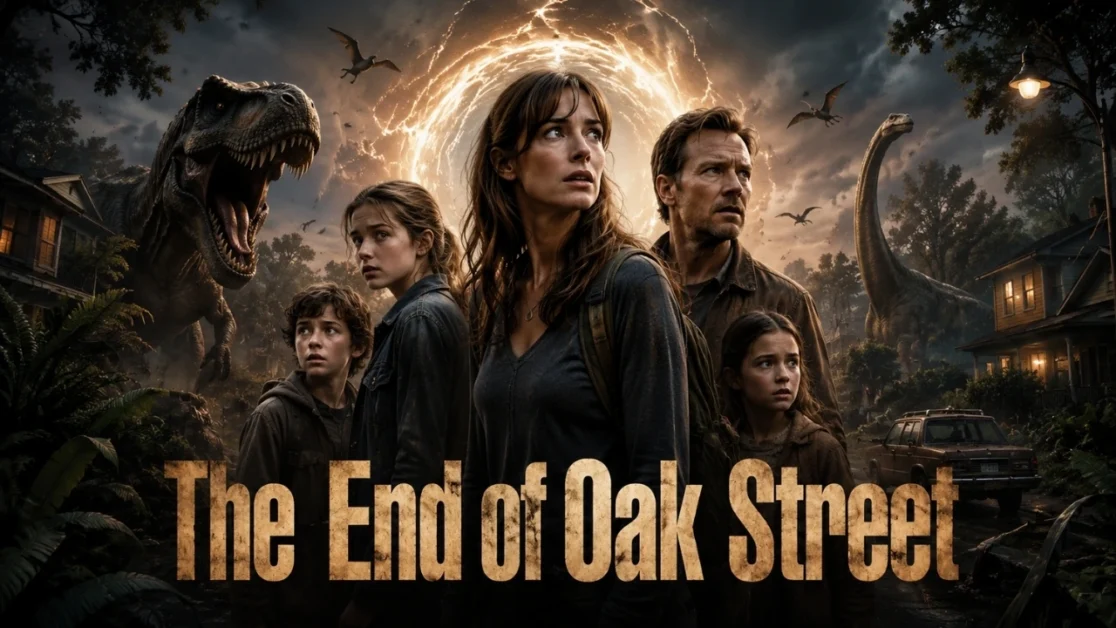
by The End of Oak Street is a science-fiction survival movie that combines family drama, prehistoric creatures, time travel and mystery. The story follows the Platt family after an unexplained cosmic event suddenly transports their suburban neighborhood into a dangerous prehistoric world.
At first, the situation appears to be a strange science-fiction adventure. However, the movie gradually becomes more focused on family relationships, personal responsibility and the meaning of home. The dinosaurs and other prehistoric dangers create suspense, but the emotional conflict between the characters remains at the center of the story.
The End of Oak Street Movie Information
| Movie Information | Details |
|---|---|
| Movie Title | The End of Oak Street |
| Director | David Robert Mitchell |
| Writer | David Robert Mitchell |
| Genre | Science Fiction, Family Drama, Survival Thriller |
| Main Cast | Anne Hathaway, Ewan McGregor, Maisy Stella, Christian Convery, Jordan Alexa Davis |
| Main Characters | Denise Platt, Greg Platt, Audrey Platt, Brian Platt and Jeannette Christiansen |
| Story Setting | A suburban neighborhood transported into a prehistoric world |
| Main Story | A family struggles to survive after a mysterious cosmic event changes their reality |
| Main Themes | Family, survival, responsibility, identity and time travel |
| Cinematography | Michael Gioulakis |
| Production Design | Maya Shimoguchi |
| Editing | John Axelrad |
| Music | Michael Giacchino |
| Costume Design | Erin Benach |
| Visual Effects | Industrial Light & Magic |
| Visual Effects Supervisor | Jay Cooper |
| Main Conflict | The Platt family must survive prehistoric dangers while searching for a way home |
| Ending Elements | A wormhole, a return to 1982 and two versions of Jeannette |
| Overall Rating | 7.5/10 |
What Is The End of Oak Street About?
The movie begins with the Platt family living in the Oak Street neighborhood. Their life is familiar and ordinary, filled with family disagreements, daily responsibilities and personal problems. Everything changes when an unexplained cosmic event transports the neighborhood into a prehistoric environment.
The residents suddenly find themselves surrounded by unfamiliar landscapes and dangerous creatures. The streets and houses that once represented safety are now located in a world where survival is uncertain. The family must quickly understand their new surroundings and find a way to protect themselves.
Denise, Greg, Audrey and Brian are forced to cooperate even though they do not always agree. Their biggest challenge is not simply escaping dinosaurs. They must also manage fear, limited resources, family conflict and the possibility that they may never return home.
The story uses this unusual situation to explore how people react when their normal lives disappear. The prehistoric world becomes both a physical threat and a test of the family’s emotional strength.
A Suburban Neighborhood in a Prehistoric World
One of the most interesting parts of the movie is the contrast between the familiar neighborhood and the prehistoric setting. A suburban street normally represents comfort, routine and security. In the movie, the same type of environment becomes unpredictable and dangerous.
Houses, roads and backyards remain reminders of the characters’ previous lives. However, the world outside these familiar spaces has changed completely. This contrast makes the situation more unsettling because the characters are not transported to a completely unknown planet. Instead, their own neighborhood becomes part of an environment they cannot control.
The setting also supports the movie’s central theme. Home is not only a physical place. It is connected to memories, relationships and a sense of belonging. When the neighborhood is removed from its original time and location, the characters must decide what home really means to them.
The Platt Family
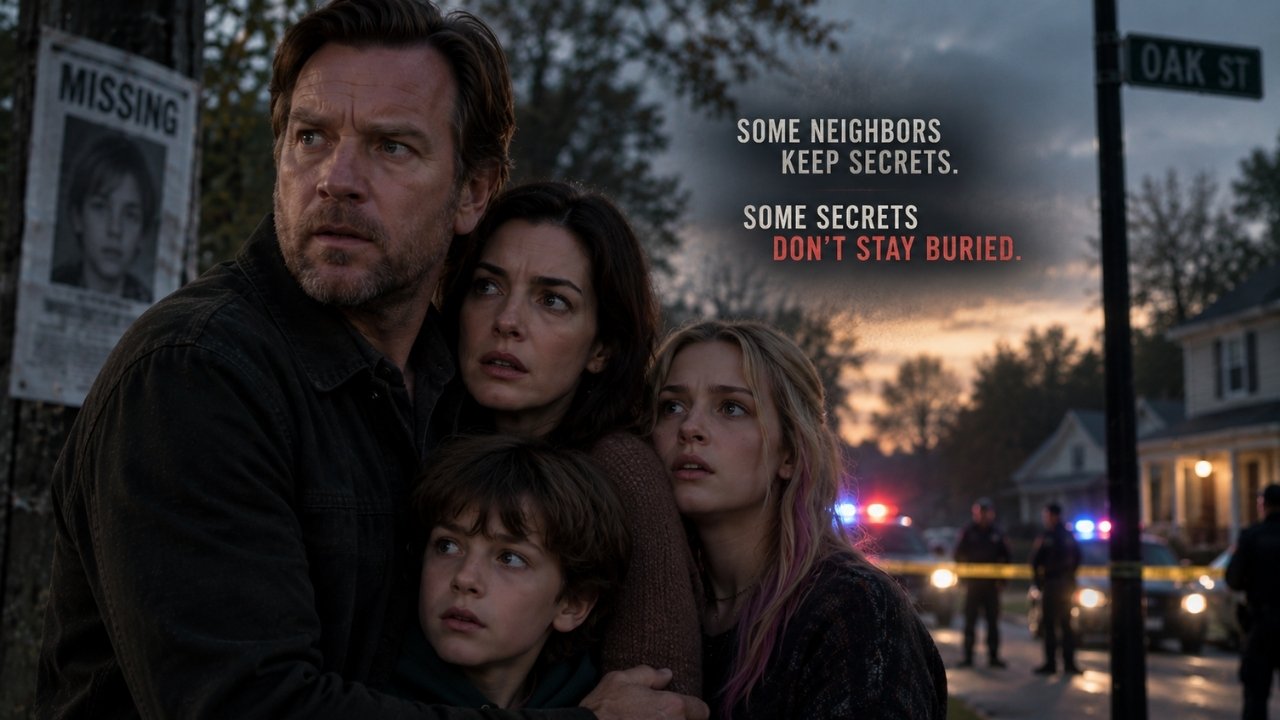
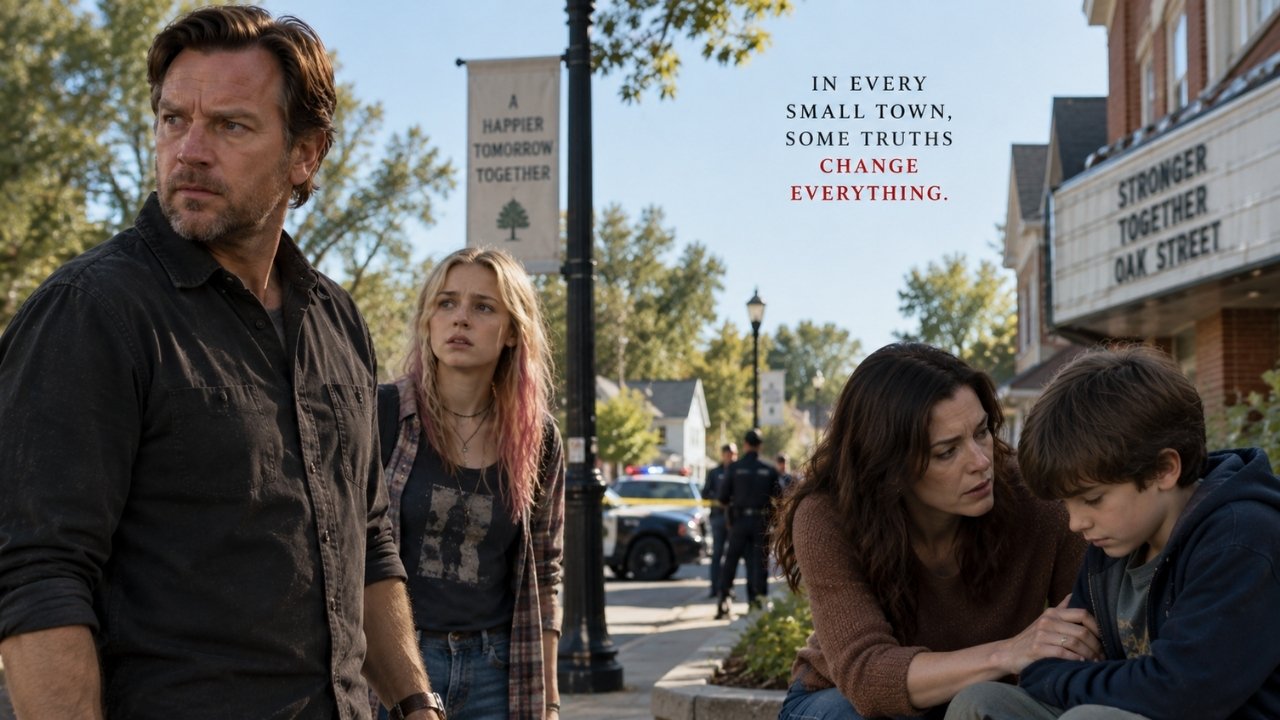
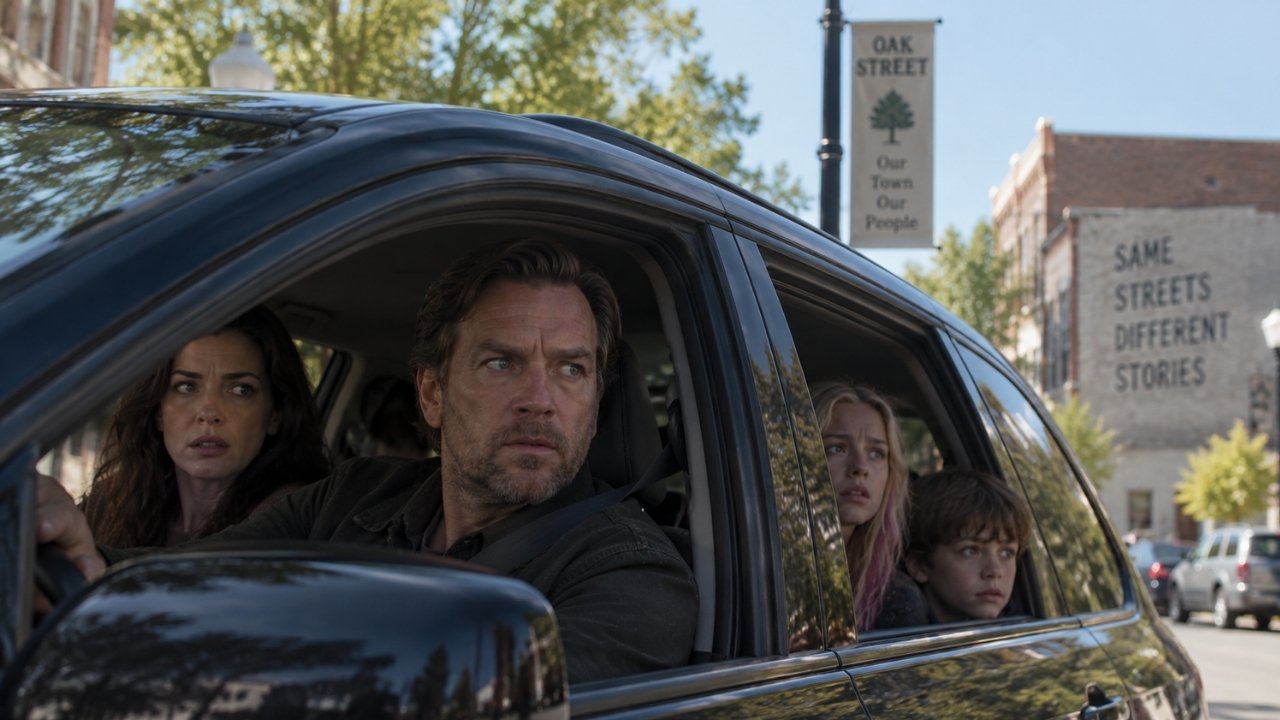
The Platt family is the emotional center of The End of Oak Street. Each member responds to the crisis differently, and their different reactions create much of the movie’s drama.
Denise Platt
Denise is one of the strongest emotional figures in the story. As the crisis becomes more dangerous, she is forced to become practical, determined and responsible. Her journey involves more than finding a way back home. She must also learn how to make difficult decisions when the safety of her family depends on her.
Denise’s character represents the struggle between fear and responsibility. She is not free from panic or uncertainty, but she continues to move forward because other people depend on her.
Greg Platt
Greg has a complicated relationship with Denise and the rest of the family. The unexpected disaster brings unresolved problems to the surface and makes their disagreements more serious.
His character adds emotional tension to the survival story. In a normal situation, family conflict may be uncomfortable but manageable. In a prehistoric world, however, disagreement can create real danger. Greg’s decisions and eventual fate become important to the emotional direction of the movie.
Audrey Platt
Audrey helps show how the younger members of the family experience the crisis. She must deal with fear, confusion and the sudden loss of normal life.
Her character adds a personal perspective to the story. Through Audrey, the movie shows that the event is not only a large-scale science-fiction mystery. It is also a deeply emotional experience for someone who has no control over what is happening.
Brian Platt
Brian also represents the younger generation facing an impossible situation. His reactions help communicate the uncertainty of the prehistoric world.
The movie uses Brian and Audrey to show how children and teenagers respond when adults are unable to provide clear answers. Their presence makes the family’s struggle more realistic and emotionally meaningful.
Jeannette Christiansen
Jeannette becomes especially important because of the movie’s time-travel elements. The appearance of two versions of her near the ending creates questions about identity, memory and alternate timelines.
Her role is connected to the movie’s larger mystery and helps make the conclusion more complicated than a simple return-home story.
Family Drama and Emotional Conflict
Although the movie includes dinosaurs and survival scenes, its main conflict is deeply connected to the family. Denise and Greg do not always agree about what should be done, and their disagreements become more serious under pressure.
The crisis exposes problems that already existed before the neighborhood was transported. Old arguments and emotional distance become difficult to ignore. The family cannot simply avoid these issues because survival requires cooperation.
This is one of the movie’s strongest ideas. The prehistoric world does not create every problem. Instead, it makes existing problems impossible to hide. The characters must face their personal responsibilities while also dealing with an external threat.
The movie therefore works on two levels. On the surface, it is a survival story involving dinosaurs and an unexplained cosmic event. On a deeper level, it is about whether a family can remain connected when everything familiar has been taken away.
The Dinosaur and Prehistoric Elements
The prehistoric creatures are an important source of suspense. Their presence changes the meaning of ordinary locations and makes every movement dangerous.
A backyard, road or house may have been safe in the characters’ original world, but the same location can become a hiding place for a dangerous creature. This allows the movie to create tension without depending only on large action sequences.
The Allosaurus attack involving Greg is one of the most important dangerous moments in the story. It demonstrates how quickly the situation can become fatal and raises the emotional stakes for the rest of the family.
However, the movie does not treat the dinosaurs as the only threat. The characters must also deal with hunger, fear, confusion, family disagreements and the uncertainty of their future. These different forms of danger give the survival story a more emotional dimension.
Is The End of Oak Street Only a Dinosaur Movie?
No. The dinosaur elements are important, but The End of Oak Street is not only a creature-based adventure. The movie combines science fiction with family drama and survival themes.
The dinosaurs provide the external conflict, while the family relationships provide the emotional conflict. The characters are not simply trying to defeat prehistoric creatures. They are trying to understand what happened, protect one another and discover whether returning home is possible.
This combination may appeal to viewers who enjoy movies that use a large science-fiction idea to explore personal problems. The unusual setting gives the characters an opportunity to confront questions about responsibility, identity and the meaning of normal life.
Direction and Storytelling
David Robert Mitchell’s direction gives the movie a distinctive balance between mystery, emotional drama and survival tension. Instead of treating the cosmic event only as an excuse for action, the story uses it to place ordinary people in an extraordinary situation.
The movie’s pacing is connected to the family’s emotional journey. Some scenes focus on danger and suspense, while others concentrate on disagreements, fear and personal decisions. This approach may feel slower than a traditional dinosaur action movie, but it allows the characters to receive more attention.
The direction also benefits from the contrast between the familiar neighborhood and the prehistoric world. The audience understands what the characters have lost, which makes their desire to return home more powerful.
Comparison With Jurassic Park
Many viewers may compare The End of Oak Street with Jurassic Park because both stories feature dinosaurs and prehistoric danger. However, the two movies have different central ideas.
Jurassic Park is built around scientific experimentation, a dinosaur attraction and the consequences of trying to control nature. The End of Oak Street focuses on an entire suburban neighborhood being displaced into a prehistoric environment.
The emotional structure is also different. Jurassic Park emphasizes scientific ambition, park security and creature chaos. The End of Oak Street gives more attention to family relationships, personal responsibility and the desire to return to a familiar time and place.
The comparison is useful because it shows that The End of Oak Street is not simply trying to repeat the same dinosaur-adventure formula. Its main interest lies in placing ordinary family life inside an extraordinary survival situation.
The End of Oak Street Ending Explained
The ending introduces the movie’s time-travel concept more clearly. Denise and the other survivors discover a possible route back to their original time. Their journey is connected to a wormhole that may allow them to return to 1982.
Before the return is completed, the family faces another serious loss. Greg is attacked by an Allosaurus and appears to die. This moment gives the story an emotional turning point because the family must continue despite the possibility of losing him.
The ending later suggests that Greg may be saved. This creates an unexpected change in the outcome and prevents the story from ending only as a tragedy.
After returning to 1982, Denise tries to warn residents about the danger connected to the event. The military becomes involved and attempts to contain the affected area. These events suggest that the incident is larger than the Platt family and may have consequences beyond their personal experience.
The conclusion also includes two versions of Jeannette at a barbecue. This detail introduces a time-travel paradox and suggests that the events may have affected reality in a way the characters do not completely understand.
What Does the Ending Mean?
The ending can be interpreted as a reflection on identity, memory and the consequences of changing time. The appearance of two versions of Jeannette suggests that the past and present may no longer follow one clear timeline.
The return to 1982 also raises an important question: can people truly return to normal after experiencing something extraordinary? Even if the characters physically return home, their memories and emotional experiences remain with them.
Denise’s decision to write a successful book about the experience suggests that she transforms the crisis into a way of understanding what happened. Writing becomes a form of processing the event and sharing it with others.
The ending therefore does not simply close the survival story. It leaves the audience with questions about alternate realities, identity and whether the characters have actually restored the world they knew before.
Visual Style and Production
The visual style of the movie depends heavily on the contrast between ordinary suburban spaces and the prehistoric environment. This contrast makes the premise visually interesting because familiar locations are shown in completely unfamiliar conditions.
Michael Gioulakis’ cinematography helps create the atmosphere of uncertainty. The camera work presents the neighborhood as both recognizable and dangerous, allowing the audience to feel the characters’ confusion.
Maya Shimoguchi’s production design supports the transformation of the setting. The suburban environment must feel believable before the cosmic event and strange after the event. This visual contrast is essential to the movie’s identity.
The visual effects work by Industrial Light & Magic is important for creating the prehistoric creatures and the larger sense of scale. The dinosaurs need to feel threatening while still fitting into the movie’s emotional and dramatic world.
Michael Giacchino’s music adds another layer to the film. The score supports moments of wonder, fear and emotional tension, helping connect the large science-fiction concept with the personal experiences of the family.
Strengths of the Movie
1. Original Premise
The idea of transporting an entire suburban neighborhood into a prehistoric world is unusual. It creates a strong contrast between everyday life and extreme danger.
2. Family-Centered Story
The movie gives importance to family relationships instead of relying only on action. This makes the survival situation more emotional.
3. Combination of Genres
The movie blends science fiction, family drama and creature survival. This combination gives it a different identity from a traditional dinosaur adventure.
4. Interesting Ending
The wormhole, return to 1982 and two versions of Jeannette create mystery and encourage viewers to think about the meaning of the story.
5. Strong Visual Contrast
The transformation of a familiar neighborhood into a prehistoric environment creates an effective visual and emotional contrast.
Weaknesses of the Movie
1. Slow Pacing
Viewers expecting constant dinosaur action may find the family-drama sections slower than expected.
2. Confusing Time-Travel Elements
The ending introduces complicated ideas about wormholes, alternate timelines and identity. Some viewers may find these elements difficult to follow.
3. Limited Explanation of the Cosmic Event
The movie focuses more on the family’s experience than on fully explaining the scientific cause of the event. Viewers who prefer detailed science-fiction world-building may want more answers.
4. Uneven Character Development
The main family members receive the most attention, while some supporting characters may feel less developed.
Is The End of Oak Street Worth Watching?
The End of Oak Street may be worth watching if you enjoy science-fiction movies that combine emotional storytelling with survival and creature elements.
It is especially suitable for viewers who prefer character-driven stories rather than nonstop action. The movie uses dinosaurs and prehistoric dangers to create suspense, but its main focus is the family’s struggle to remain together.
However, viewers who want a straightforward dinosaur action movie may have different expectations. The film spends considerable time exploring family conflict, responsibility and the psychological effect of being separated from normal life.
Final Verdict
The End of Oak Street is an unusual combination of suburban family drama, science fiction and prehistoric survival. Its strongest feature is the way it uses an extraordinary situation to explore ordinary human problems.
The movie is not only about escaping dinosaurs. It is also about family responsibility, unresolved conflict, the meaning of home and the consequences of changing time. The ending adds another layer by introducing questions about identity and alternate versions of reality.
Although the movie may feel slow in certain sections and its time-travel elements may be confusing, its central idea is creative and emotionally engaging. It offers more than a standard creature adventure by placing family relationships at the heart of the story.
Final Rating: 7.5/10
Frequently Asked Questions
What is The End of Oak Street about?
The movie follows the Platt family after their suburban neighborhood is transported into a prehistoric world by an unexplained cosmic event. They must survive dangerous creatures and find a way back home.
Who directed The End of Oak Street?
The movie is directed and written by David Robert Mitchell.
Who stars in The End of Oak Street?
The main cast includes Anne Hathaway, Ewan McGregor, Maisy Stella, Christian Convery and Jordan Alexa Davis.
Is The End of Oak Street a dinosaur movie?
It includes dinosaurs and prehistoric creatures, but it is also a family drama and science-fiction survival story.
Does Greg die in the movie?
Greg appears to die during an Allosaurus attack, but the ending suggests that he may be saved.
What happens at the end?
Denise and the survivors use a wormhole to return to 1982. The ending also includes two versions of Jeannette, creating a possible time-travel paradox.
Is the movie similar to Jurassic Park?
Both movies include dinosaurs, but The End of Oak Street focuses more on family relationships, time travel and survival in a transported suburban neighborhood.
What is the main theme of the movie?
The main themes include family, responsibility, survival, identity, time travel and the meaning of home.