 by
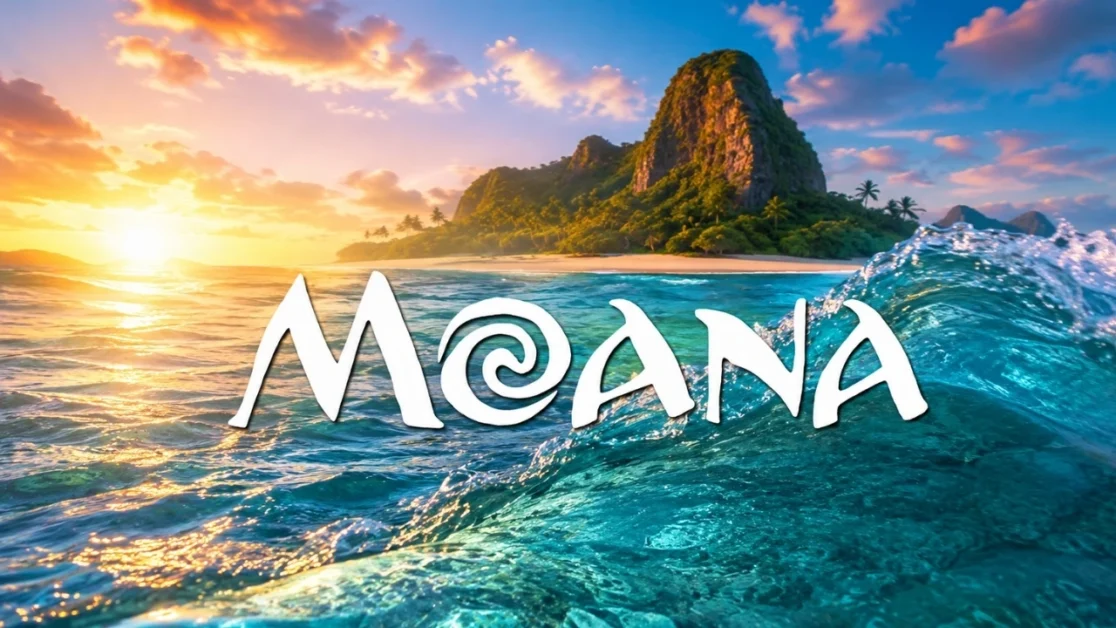
by Disney’s Moana (2026) arrives with a challenge that most new movies never face: its audience already knows exactly what kind of story it is going to tell.
The 2016 animated Moana became one of Disney’s best-known recent films, introducing audiences to Moana, Maui, Te Fiti and the island of Motunui. Its songs became just as recognizable as its characters, and its ocean adventure turned into a modern Disney favorite.
The 2026 film takes that same foundation and moves it into live action.
Catherine Laga’aia plays Moana, while Dwayne Johnson returns as Maui after voicing the character in the original. Thomas Kail directs the film, which combines live performances with extensive visual effects and the musical elements audiences already associate with the franchise.
The movie was released in theaters on July 10, 2026. It has a runtime of 1 hour and 55 minutes. In India, BookMyShow lists the film as UA 7+ and currently shows English and Hindi versions, along with formats including 2D, 3D, 4DX, IMAX 2D and 4DX 3D, depending on cinema and availability. BookMyShow – Moana (2026)
At the time of writing, BookMyShow shows Moana at 8.4/10 from more than 3,000 votes. Its audience response is considerably warmer than the critical reaction, making the movie an interesting case of a remake that seems to work differently for general viewers and professional reviewers.
So what does the live-action version actually add?
The answer is not a completely new story. Instead, the film changes the physical presentation of familiar material. The biggest differences can be found in the performances, the treatment of the ocean and fantasy creatures, and the way the songs translate from animation to live action.
Here is a detailed look at Moana (2026) without turning the entire article into a scene-by-scene plot recap.
Table of Contents
ToggleMoana (2026) Movie Details
| Category | Details |
|---|---|
| Movie | Moana |
| Release Date | July 10, 2026 |
| Director | Thomas Kail |
| Moana | Catherine Laga’aia |
| Maui | Dwayne Johnson |
| Supporting Cast | Rena Owen, John Tui, Frankie Adams |
| Genre | Adventure, Comedy, Fantasy, Musical |
| Runtime | 1 hour 55 minutes |
| Format | Live Action |
| India Certification | UA 7+ |
| Languages Listed | English, Hindi |
| Theatrical Formats | 2D, 3D, 4DX, IMAX 2D, 4DX 3D and others |
Disney’s official listing confirms the release date, director, runtime and principal cast. Disney – Moana (2026)
Moana Story: What Is the Movie About?
Moana is the daughter of the chief of Motunui, an island community whose survival depends heavily on the natural world around it.
From an early point in her life, Moana feels drawn toward the ocean. Her father wants her to remain within the boundaries of the island and prepare for her future responsibilities, but her curiosity about what lies beyond the reef never disappears.
When Motunui begins facing a serious environmental problem, Moana discovers that the crisis is connected to an ancient event involving the demigod Maui and Te Fiti.
The solution requires her to return Te Fiti’s heart.
That sends Moana across the ocean in search of Maui.
Maui is powerful, experienced and extremely confident in himself. He is also reluctant to accept responsibility for the consequences of his past actions. His meeting with Moana creates an unusual partnership: one character has determination but limited experience, while the other has enormous confidence but plenty of personal baggage.
The journey forces both of them to change.
Moana’s challenge is not simply reaching Te Fiti. She has to learn how to make decisions without depending on her family to guide every step.
That is what keeps the story from becoming just another fantasy treasure hunt. The external adventure is really a framework for Moana’s growth as a person and future leader.
The film does not need to reinvent that basic idea because it remains the most effective part of the story.
Catherine Laga’aia’s Performance as Moana
The most important new element is Catherine Laga’aia.
Taking over a role associated with Auli’i Cravalho is difficult enough, but Laga’aia also has to carry a live-action movie in which Moana spends large portions of the story interacting with computer-generated environments.
Her performance works best when Moana is uncertain.
The character is brave, but she is not presented as someone who knows exactly what she is doing from the beginning. There is a visible difference between Moana’s desire to help her people and her understanding of how difficult that task will be.
That gives Laga’aia room to develop the character rather than simply reproducing the animated performance.
One of the clearest tests comes with “How Far I’ll Go.”
The song has already become strongly associated with Moana, so a live-action performance could easily have felt like karaoke of a familiar Disney number. Instead, the sequence functions as an introduction to Moana’s inner conflict: she is physically surrounded by her home but mentally drawn toward the horizon.
Variety specifically praised Laga’aia’s performance of the song, noting the quality of her voice and the way the sequence communicates Moana’s imagination and desire to explore.
That scene matters because it establishes the character without needing long exposition.
Laga’aia also benefits from the fact that this Moana is allowed to feel like a real teenager rather than an animated icon being copied frame by frame.
Dwayne Johnson’s Return as Maui
Dwayne Johnson is the movie’s strongest link to the original.
He voiced Maui in the 2016 animated film and returns to play the character in live action.
Maui is still written as a larger-than-life personality. He enjoys being admired, constantly talks about his accomplishments and initially assumes that Moana needs him more than he needs her.
Johnson’s performance fits that personality naturally.
The challenge is physical rather than vocal.
In animation, Maui’s body could be exaggerated without anyone questioning the design. In live action, the character has to exist within the same physical world as Moana.
The movie uses Johnson’s physical presence, costume design and visual effects to retain Maui’s larger-than-life quality.
One particularly recognizable detail is Maui’s animated tattoo, which remains part of his character. In the live-action setting, the moving tattoo becomes a visual bridge between the two versions.
The partnership between Maui and Moana is also more effective when the film allows their differences to remain visible. They do not become instant friends. Their disagreements are part of what makes the journey entertaining.
More importantly, Maui’s arrogance is not treated as his entire personality. His history gives the character a reason to seek admiration, which adds some depth beneath the comedy.
The Supporting Cast and Motunui
Rena Owen plays Gramma Tala, while John Tui and Frankie Adams contribute to Moana’s family and community.
These roles are important because Motunui needs to feel like more than a place Moana leaves during the first act.
The early scenes on the island establish what Moana is risking.
Her relationship with Gramma Tala is especially useful because it connects Moana’s curiosity about the ocean with the history of her ancestors.
The family scenes also give the film a quieter rhythm before the adventure becomes the main focus.
This is one area where the live-action format has a practical advantage. Seeing villagers, family members and physical locations interact in the same space gives Motunui a grounded quality that animation did not need to create.
The Ocean Is the Real Test of the Remake
If there is one character that has to work in Moana, it is the ocean.
The animated version could make the water playful, expressive and almost magical without worrying about realism.
The live-action movie has to find a middle ground.
The ocean needs to look convincing enough to belong in a live-action film while still behaving like part of a fantasy story.
The best sequences are those where the scale of the environment becomes part of the storytelling.
Moana is often visually small compared with the water around her. Her boat can disappear into a vast stretch of blue, which emphasizes just how far she has travelled from the safety of Motunui.
The living relationship between Moana and the ocean is also easier to appreciate when the movie avoids treating the water as ordinary scenery.
The visual effects are therefore doing more than creating pretty backgrounds. They are establishing the atmosphere in which Moana’s character development takes place.
Not every reviewer has been convinced by the execution.
The Los Angeles Times criticized the film’s heavy dependence on digital environments and argued that some sequences make the live-action construction too visible.
Other critics have been more positive. Variety, for example, highlighted the visual effects surrounding the ocean, Kakamora, Tamatoa and Maui’s transformations, describing the film as occupying a space between live action and animation.
That disagreement is revealing. The visual effects are ambitious, but whether they feel immersive depends heavily on the individual scene.
Kakamora, Tamatoa and the Fantasy Characters
The fantasy characters provide another test for the adaptation.
The Kakamora, the small coconut-bodied warriors, have to look convincing enough to interact with human performers without losing their comic personality.
Tamatoa presents an even bigger challenge.
The giant crab’s glitter-covered appearance is intentionally ridiculous, and the character’s entire identity depends on visual exaggeration.
In animation, that exaggeration feels natural.
In live action, it risks looking like a computer-generated character inserted into an otherwise physical movie.
This is where the film’s hybrid visual style becomes most obvious.
The movie is not truly trying to make every fantasy element realistic. Instead, it creates a world where real actors and highly stylized digital characters can exist together.
For some viewers, that approach will work because Moana has always been a fantasy rather than a realistic adventure.
For others, the artificiality may be distracting.
That difference helps explain why reactions to the visual effects have been so divided.
Music: Familiar Songs With a New Test
The music is one area where the remake starts with a major advantage.
The original soundtrack is already familiar to millions of viewers.
“How Far I’ll Go” gives Moana her central musical statement. “You’re Welcome” introduces Maui through comedy and self-confidence, while “Shiny” turns Tamatoa’s appearance into one of the film’s strangest musical moments.
The live-action version keeps those important musical elements.
That creates a new challenge for the performers.
A familiar song can easily feel like a recreation rather than a new performance.
Laga’aia’s “How Far I’ll Go” is therefore important because it needs to establish this Moana rather than simply remind viewers of the animated one.
Johnson has a similar advantage with “You’re Welcome.” His familiarity with Maui means that the song retains the comic rhythm associated with the character.
The film also includes new musical material, which helps prevent the soundtrack from becoming a complete copy of the 2016 version.
The result is not a radically different musical experience, but it does give the live-action film some room to establish its own identity.
What Does the Live-Action Version Actually Add?
This is where the remake becomes harder to judge.
The story itself does not need much fixing.
The real question is whether changing the medium creates a worthwhile new experience.
The answer is partly yes.
The physical performances give Moana’s family and community a different sense of realism. The ocean journey becomes closer to a traditional live-action adventure. Maui’s presence changes because audiences are watching Dwayne Johnson physically inhabit the role.
At the same time, the film does not completely escape its source.
Rotten Tomatoes’ current critics consensus describes the movie as an underwhelming new version and argues that the animated predecessor remains the stronger adventure.
That criticism is understandable.
The remake does not need to change the story completely, but it does need to provide a reason for audiences to revisit material they already know.
Its strongest answer is visual rather than narrative.
The new movie is primarily offering a different way to see Moana, not a different Moana story.
Moana (2026) Compared With the 2016 Animated Film
The 2016 animated movie remains the natural reference point, but the comparison should be kept simple.
The original starred Auli’i Cravalho as Moana and Dwayne Johnson as Maui, while the new version places Catherine Laga’aia in the title role and keeps Johnson as Maui. Disney describes the 2026 film as a live-action reimagining of the earlier movie. Disney – Original Moana
The main difference is not the basic plot.
It is the filmmaking language.
The animated film can exaggerate movement, facial expressions and fantasy environments without breaking its visual rules.
The live-action version has to combine human performers with computer-generated elements.
That gives each movie a different texture.
The animated film feels more naturally stylized.
The live-action movie feels more like a conventional adventure with fantasy elements layered into it.
Neither version changes the fundamental message of Moana’s journey.
The 2026 film is therefore best understood as a companion interpretation rather than a replacement.
Audience Response and Critical Reception
At the time of writing, the audience response is noticeably more positive than the critic response.
BookMyShow lists Moana at 8.4/10 from 3.2K+ votes. Its user-review summary includes frequent praise for the story, music, acting, direction and overall production.
Rotten Tomatoes currently lists a 32% Tomatometer score from 197 reviews and an 88% audience score from more than 1,000 verified ratings.
These numbers should be treated as a snapshot rather than permanent facts because audience and critic scores can change.
The difference between them is nevertheless useful.
Critics are largely evaluating the movie as a remake and asking what it contributes beyond the original.
Audiences appear more willing to judge it as a family adventure in its own right.
That distinction is particularly relevant for Moana. Someone looking for originality may be disappointed, while someone looking for familiar characters, music and spectacle may have a more positive experience.
Is Moana (2026) Suitable for Kids?
Yes. The film is designed for family audiences.
BookMyShow lists the Indian certification as UA 7+, while Disney lists the movie with a PG rating.
There are fantasy creatures, action sequences and moments of danger.
The live-action presentation may make some of those moments feel more immediate than they did in animation, particularly for very young viewers.
For most school-age children, the movie should be accessible.
The story also provides useful themes for families to discuss, including leadership, responsibility, family expectations and the importance of understanding where you come from.
Is Moana (2026) Worth Watching?
The answer depends less on whether you like Moana and more on what you want from the remake.
If you are approaching the film as a family adventure, it has plenty to offer. The performances are accessible, the songs remain effective and the visual effects give the ocean journey a theatrical scale.
If you are approaching it specifically as a reinterpretation of the 2016 movie, the experience is more complicated.
The live-action format creates some interesting differences, particularly in the treatment of Motunui, Maui and the ocean, but the underlying story remains familiar.
That means the movie is more successful as a new presentation of Moana than as a new version of the story itself.
For first-time viewers, that distinction may not matter at all.
For longtime fans, it will probably determine whether the remake feels worthwhile.
Final Verdict
Moana (2026) is an ambitious live-action adaptation that succeeds when it trusts its performers and uses the new format to create a sense of physical scale.
Catherine Laga’aia gives Moana a believable identity of her own, particularly in the quieter moments when the character has to decide what kind of leader she wants to become. Her performance of “How Far I’ll Go” is an effective example of how a familiar moment can still feel fresh when the performer brings a different personality to it.
Dwayne Johnson’s return as Maui provides continuity, and his natural comic timing remains one of the film’s more dependable elements.
The visual effects are more complicated.
The ocean, Kakamora, Tamatoa and Maui’s transformations demonstrate how much work has gone into transferring an animated fantasy world into live action. Some sequences achieve the intended sense of wonder, while others make the digital construction more noticeable.
That inconsistency is probably the film’s most significant technical weakness.
The larger issue, however, is creative rather than technical.
The movie is very close to a story audiences already know. That gives it accessibility, but it also limits surprise. The live-action format changes the surface of Moana more than it changes its substance.
For a family audience, that may be perfectly acceptable.
For viewers hoping for a bold reimagining, it is likely to feel conservative.
Final Rating: 7/10
Moana (2026) is a worthwhile family adventure with a capable new lead performance, a familiar but effective soundtrack and enough visual spectacle to justify the big-screen treatment. It does not erase the need for the animated original, but it provides a different way to experience Moana’s journey.
Frequently Asked Questions About Moana (2026)
When was Moana (2026) released?
The live-action movie was released in theaters on July 10, 2026.
Who plays Moana in the 2026 movie?
Catherine Laga’aia plays Moana.
Who plays Maui?
Dwayne Johnson plays Maui, returning to the character after voicing him in the 2016 animated film.
Who directed Moana (2026)?
Thomas Kail directed the live-action adaptation.
How long is Moana (2026)?
The movie has a runtime of 1 hour and 55 minutes.
Is Moana (2026) a remake?
Yes. Disney describes it as a live-action reimagining of the 2016 animated adventure.
Is Moana suitable for children?
Yes. BookMyShow lists the Indian certification as UA 7+. The movie includes fantasy action and some potentially intense moments for very young children.
Does the movie include the original songs?
Yes. The live-action film retains major musical elements from the animated movie and also includes new musical material.
Do I need to watch the 2016 Moana first?
No. The 2026 movie provides enough context for new viewers. Watching the original first is mainly useful if you want to compare the two versions.
Is Moana (2026) worth watching in theaters?
For families and Disney fans, the theatrical experience is worthwhile, particularly if you enjoy large-scale fantasy visuals and musical adventures. BookMyShow lists several premium formats, although availability depends on the cinema.