 by
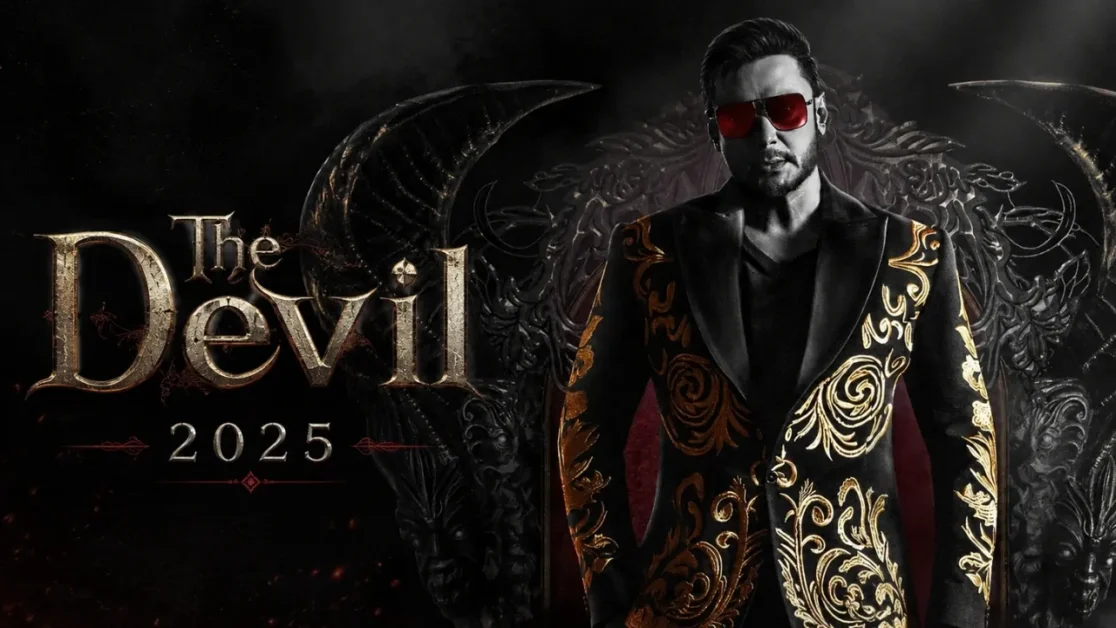
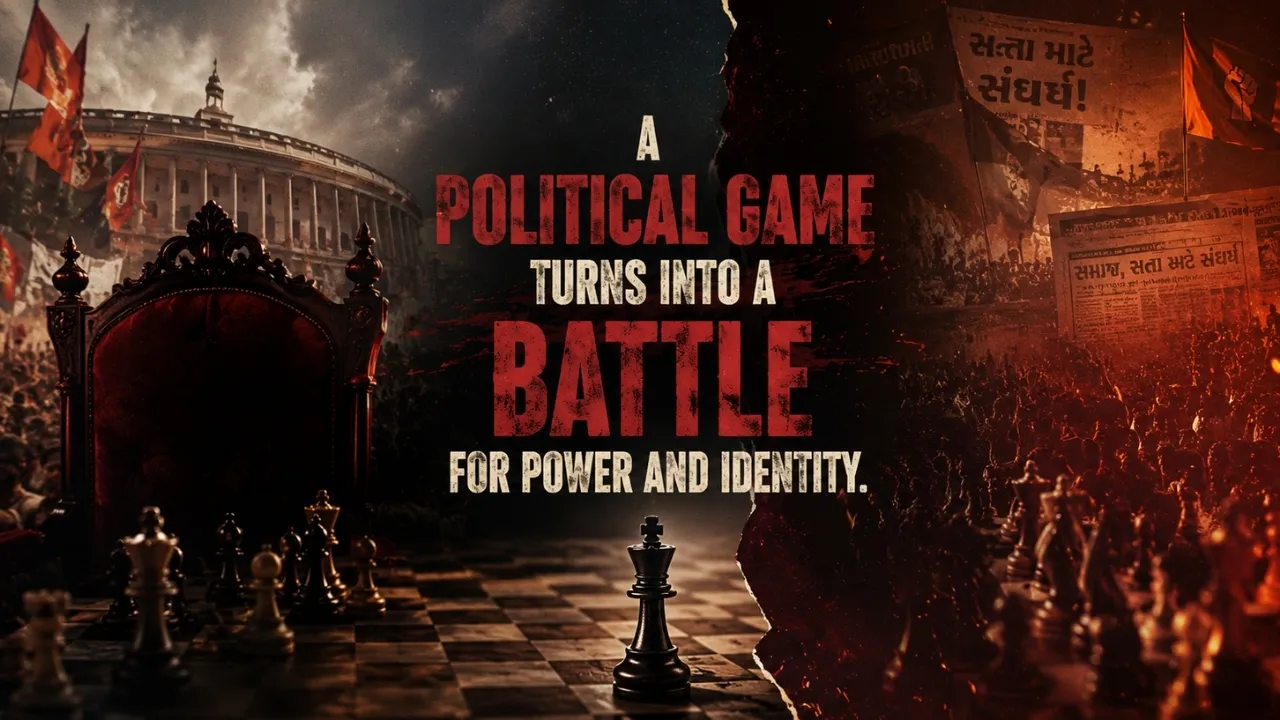
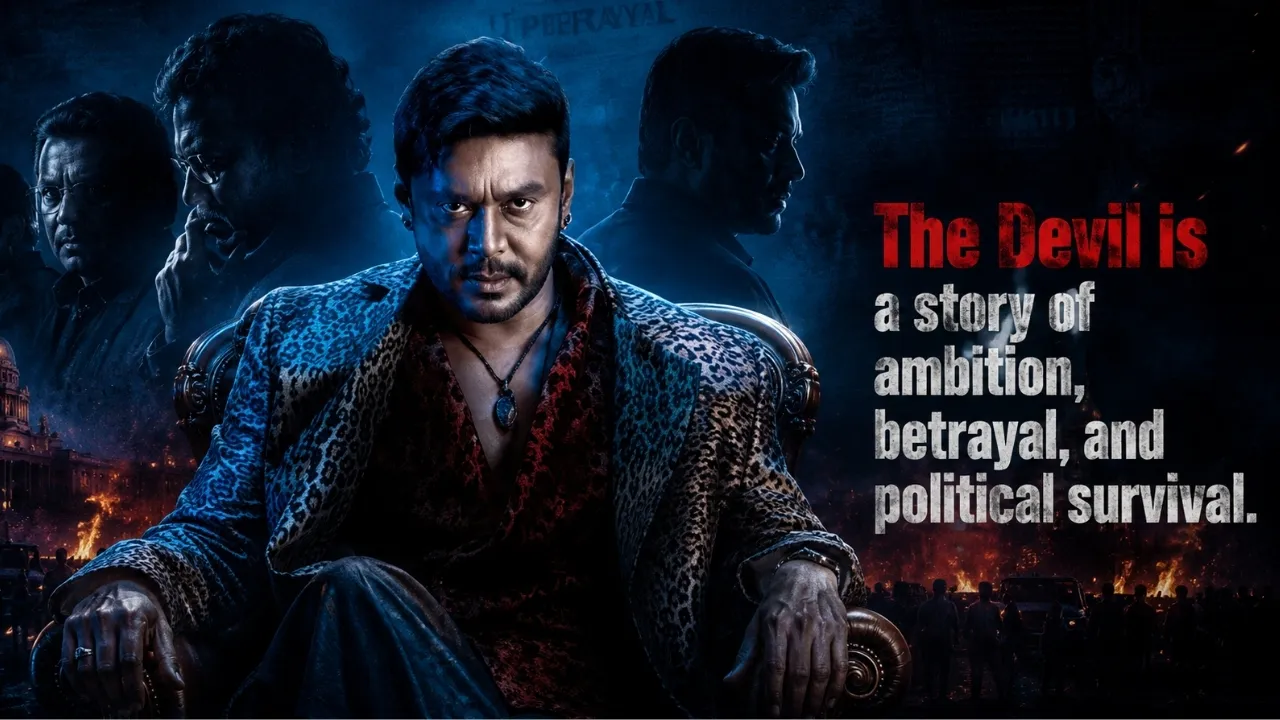
by The Devil 2025 dark storyline is one of the biggest reasons the film stands out from the usual star-driven action dramas. On the surface, The Devil looks like a mass entertainer built around swagger, action, punch dialogues, and a larger-than-life hero. But once the story opens up, it becomes clear that this is not just a film about one powerful man taking on corrupt enemies. Beneath the action and political drama, The Devil (2025) is really a story about identity, power, manipulation, class difference, political inheritance, and the strange gap between the man who deserves leadership and the man who is born into it.
That is what gives the film its dark edge. Instead of telling a simple revenge story, The Devil builds its conflict around two men who look the same but live completely different lives. One is Dhanush, the entitled son of a fallen chief minister. The other is Krishna, an ordinary man from Gandhinagar who runs a small eatery and dreams of becoming an actor. When a political crisis forces powerful people to replace one man with another, the film turns into a thriller about performance, public image, deception, and the uncomfortable truth that sometimes an ordinary man understands leadership better than the political heir who was born to inherit it.
Public story summaries describe The Devil as a Kannada political action thriller starring Darshan in a dual role, with the plot following a jailed chief minister’s desperate attempt to hold on to power by bringing back his son Dhanush from London — only for trusted IAS officer Anant Nambiar to replace the reckless son with his lookalike Krishna when things spiral out of control. (Wikipedia, FilmiBeat)
So if you’re searching for The Devil 2025 dark storyline, The Devil movie story explained, or a clear breakdown of the film’s themes, characters, and ending, here’s a full human-style analysis of what the story is really doing.
The Devil 2025 Movie Overview
Before getting into the full storyline, it helps to understand what kind of film The Devil is trying to be.
The Devil is a 2025 Kannada political action thriller directed by Prakash Veer and led by Darshan, who plays a dual role at the center of the story. The supporting cast includes Rachana Rai, Mahesh Manjrekar, Achyuth Kumar, Sharmiela Mandre, and others. Public summaries describe the movie as a political drama wrapped inside a mass-action format, where questions of power and leadership are filtered through a lookalike switch between two men from opposite social worlds. (Wikipedia, Rotten Tomatoes)
That setup matters because The Devil is not built like a straightforward gangster or vigilante film. It uses familiar commercial ingredients, but the actual story is driven by political succession, image management, deception, and class contrast.
And that’s exactly why the The Devil 2025 dark storyline works better as a discussion piece than as a simple “hero beats villain” summary.
The Devil 2025 Dark Storyline Begins with a Political Collapse
The story begins with Chief Minister Rajashekar being sent to prison on corruption charges. But this is not presented as a clean legal victory or a simple downfall. Public plot summaries explain that Rajashekar’s fall is tied to internal betrayal, especially from his own nephews, who use the corruption case to weaken him and take control of the political structure around him. (Wikipedia)
This is where the film immediately becomes darker than it first appears.
Rajashekar’s prison sentence doesn’t just remove a leader from power — it creates a vacuum. And in politics, a vacuum never stays empty for long. Everyone around him starts calculating:
- Who controls the party now?
- Who can manage public sympathy?
- Who can inherit Rajashekar’s image and influence?
- Who can be used as a face while others pull the strings behind the scenes?
That last question becomes the most important one in the entire movie.
Because Rajashekar doesn’t want to let go of power, even from prison. He wants his son Dhanush brought back from London and installed as the next chief ministerial face. On paper, it sounds logical. In practice, it turns out to be a disaster.
Who Is Dhanush in The Devil?
To understand The Devil 2025 dark storyline, you have to understand Dhanush, one of Darshan’s two characters.
Dhanush is the son of Chief Minister Rajashekar — the natural political heir, at least by bloodline. But the film does not present him as a leader in waiting. Public plot summaries describe him as arrogant, entitled, reckless, and uninterested in public service, more focused on his own ego and pleasures than on the responsibilities of power. (Wikipedia)
That’s a crucial part of the story.
Dhanush represents a very specific kind of political decay: inheritance without merit. He has access, privilege, money, and status, but none of the discipline or empathy needed to lead people. The movie uses him as a symbol of what happens when politics becomes a family possession instead of a public responsibility.
What Dhanush represents in the story
Dhanush is not just the “bad version” of the hero. He represents:
- entitlement without accountability
- power without emotional maturity
- the failure of dynastic politics
- image without substance
The film doesn’t make him dangerous because he is physically stronger than everyone else. It makes him dangerous because he is exactly the kind of man who can inherit a state without deserving it.
Krishna: The Ordinary Man at the Heart of The Devil
If Dhanush is the story’s privileged heir, Krishna is its moral counterweight.
Public plot summaries describe Krishna as a lookalike from Gandhinagar, a small eatery owner and aspiring actor who is brought into the political game by IAS officer Anant Nambiar after Dhanush proves too unstable to handle the role expected of him. (Wikipedia)
This is where The Devil 2025 dark storyline becomes more than a standard commercial thriller. Krishna is not chosen because he has political ambition. He is chosen because he has the right face.
And that’s both absurd and revealing.
The film is essentially asking:
If politics is so dependent on image, what happens when the image is fake but the humanity behind it is real?
Krishna enters the story as an ordinary man, but once he steps into Dhanush’s public identity, something unexpected happens — he starts behaving like the leader the people actually need.
Why Krishna matters
Krishna brings emotional warmth and moral grounding to a world built on performance. He connects with people naturally, not because he has been trained to act humble, but because he has actually lived a common life. He understands hunger, work, dignity, and ordinary struggle.
That difference changes everything.
Anant Nambiar: The Man Who Engineers the Lie
No analysis of The Devil 2025 dark storyline works without talking about Anant Nambiar, the IAS officer who creates the central deception.
Public plot summaries identify Nambiar as Rajashekar’s trusted advisor and the man tasked with bringing Dhanush back from London. When Dhanush proves impossible to control, Nambiar makes the bold decision to replace him with Krishna, using the lookalike as a political stand-in. (Wikipedia)
This makes Nambiar one of the most important characters in the film.
He is not a straightforward villain, and he isn’t a clean hero either. He represents bureaucratic intelligence mixed with moral compromise. Nambiar knows the system is rotten, but instead of cleaning it, he tries to manage it through manipulation.
What Nambiar represents
Nambiar is the personification of political pragmatism:
- he understands image better than ideology
- he knows public perception can be engineered
- he believes power can be stabilized through deception
- he sees people as pieces in a larger game
Without Nambiar, there is no film. He is the one who turns the political crisis into a dangerous performance.
The Devil 2025 Dark Storyline: The Fake Heir Becomes the Better Leader
Once Krishna enters politics disguised as Dhanush, the story takes its most interesting turn.
Instead of failing or being immediately exposed, Krishna begins to win people over. Public plot summaries mention that he connects with the public through small but meaningful acts — including personally serving midday meals in schools and interacting with people in a way that feels genuine rather than staged. (Wikipedia)
This is where the movie’s political commentary becomes obvious.
Krishna is technically the fake man in the system. But morally, he becomes the real leader.
That reversal is the heart of The Devil 2025 dark storyline. The film keeps pushing one uncomfortable idea:
the person chosen by bloodline is not always the person worthy of power
Krishna doesn’t understand politics in the polished, elite sense. But he understands people. And the movie suggests that empathy, honesty, and lived experience matter more than inheritance.
Rukmini and the Emotional Side of the Story
The film also uses Rukmini to deepen the emotional conflict around Krishna’s false identity.
Public plot summaries indicate that Krishna grows close to Rukmini, who responds to the kindness and sincerity she sees in him. But because Krishna is living as Dhanush, the relationship is automatically built on a lie. That emotional tension becomes even messier when the real Dhanush returns, creating confusion and danger. (Wikipedia)
Rukmini matters because she is not just there for romance. She represents the personal cost of deception. Krishna may be using the fake identity for a larger political purpose, but the lie begins affecting real human relationships.
That makes the story heavier than a simple double-role entertainer. The emotional fallout of pretending to be someone else becomes part of the central conflict.
The Real Dhanush Returns – And the Story Gets Darker
Up to this point, Krishna’s rise gives the film a hopeful edge. But that hope is unstable, because the real Dhanush is still alive and still dangerous.
Public plot summaries describe Dhanush returning to India unexpectedly, which throws the entire plan into chaos. His re-entry creates confusion, jealousy, emotional conflict, and eventually direct danger — especially when Rukmini is abducted and the rivalry between Krishna and Dhanush turns personal. (Wikipedia)
This is the point where The Devil 2025 dark storyline shifts from political drama into a more aggressive thriller.
Dhanush’s return matters because it forces the story to confront the central lie. Krishna can no longer quietly perform leadership while the real heir stays absent. Now both versions of “Dhanush” exist at once:
- one with legitimacy but no moral worth
- one with moral worth but no legitimate claim
That clash becomes the core question of the film:
Who is more dangerous — the real heir who doesn’t deserve power, or the fake heir who starts to deserve it too much?
Power, Class and Political Inheritance in The Devil
One reason The Devil 2025 dark storyline feels stronger than expected is that it keeps circling back to class and inheritance.
Dhanush and Krishna may look identical, but they are products of completely different worlds.
Dhanush’s world
- elite privilege
- political entitlement
- distance from ordinary people
- leadership treated like a family right
Krishna’s world
- everyday struggle
- small business life
- emotional connection to ordinary people
- no expectation of power
By placing these two men in the same public role, the film quietly asks whether leadership is something you inherit or something you earn.
That’s where the darkness of the story really comes from. The film suggests that politics often rewards the wrong kind of person — not the one who understands suffering, but the one who already belongs to the machine.
The Devil Ending Explained
Now let’s come to the part most readers search for directly: The Devil ending explained.
Without reducing the climax to a simple fight summary, the ending of The Devil works because it turns the double-role setup into a question of legitimacy, morality, and choice. Public plot summaries suggest that the story ultimately converges on a final conflict between Krishna, Dhanush, and the corrupt political ecosystem around them, forcing the film to answer who is truly fit to claim the future of leadership. (Wikipedia)
What the ending means
The ending of The Devil is not just about exposing a fake identity. It’s about exposing a rotten system.
By the final stretch, the film makes it clear that:
- bloodline alone does not make someone worthy of power
- political image can be manufactured, but character eventually shows through
- Krishna’s rise is a threat because it proves the system chose the wrong heir
- Dhanush’s return forces everyone to confront whether legitimacy matters more than merit
The emotional meaning of the ending
Krishna’s journey becomes powerful because he never entered the story chasing a throne. He was pulled into politics as a stand-in, but by living among the public and carrying the burden of leadership, he grows into something more genuine than the original heir.
That’s why the ending lands best when read as a moral contrast:
- Dhanush has the name but not the heart
- Krishna has the heart but not the name
And the film asks the audience which one should matter more.
Why The Devil 2025 Dark Storyline Works
The film works best when you stop expecting a pure action vehicle and start reading it as a story about political theatre.
Its strongest ideas are not the fight scenes or swagger moments. They are:
- the use of a lookalike as a political solution
- the contrast between privilege and lived experience
- the question of whether a fake leader can become more real than the original
- the way corruption forces ordinary people into dangerous performances
That’s why The Devil 2025 dark storyline feels more layered than a basic commercial script. It is interested in who gets power, who deserves it, and how public image can hide moral emptiness.
Conclusion
The Devil 2025 dark storyline is much more than a stylish political action film built around Darshan’s star presence. At its core, The Devil is a story about power without merit, leadership without empathy, and the dangerous gap between political inheritance and genuine worth. Through the contrast between Dhanush, the entitled son of a fallen chief minister, and Krishna, the ordinary man forced to wear his face, the film creates a dark and surprisingly thoughtful conflict about identity, class, deception, and public leadership. What begins as a political cover-up slowly turns into a larger question about whether the system values the right kind of person at all.
That is what gives the film its emotional and thematic strength. Krishna may enter the story as a substitute, but he becomes the human center of the film because he brings compassion into a world driven by control and image. Dhanush, meanwhile, stands as the embodiment of inherited privilege without responsibility. Between them, the movie explores how politics often turns into performance — and how sometimes the fake performance can reveal more truth than the original leader ever could.
So if you were searching for The Devil 2025 dark storyline, The Devil movie story explained, or The Devil ending explained, the clearest way to understand the film is this: The Devil is a political thriller about two identical faces but two completely different souls, and its real conflict is not just who will hold power, but who actually deserves it.