 by
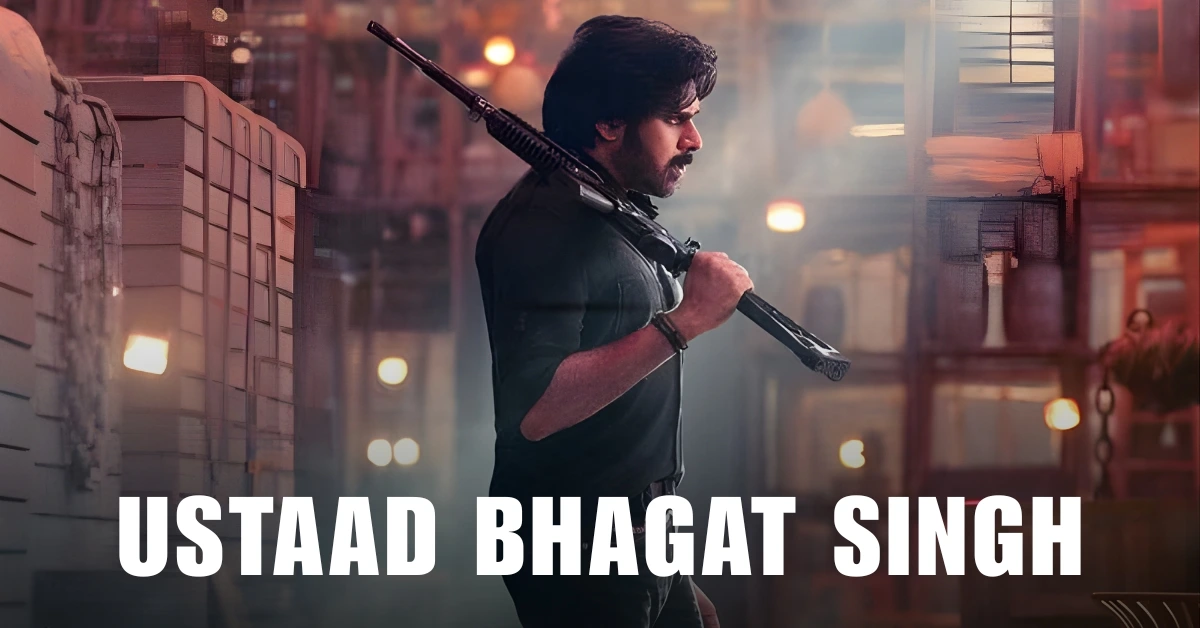
by When a Pawan Kalyan film is announced, it rarely arrives as just another release. It comes with expectations, fan theories, box-office predictions, and a lot of curiosity about how the star will be presented on screen. That curiosity was even stronger with Ustaad Bhagat Singh, because the film marked Pawan Kalyan’s collaboration with director Harish Shankar, the filmmaker behind Gabbar Singh — one of the actor’s most celebrated commercial entertainers.
So from the beginning, Ustaad Bhagat Singh was never going to be viewed as a small or ordinary project. It carried the weight of a star comeback vehicle, a fan-service action drama, and a reunion between an actor-director pair that already has a successful history. Add to that the title, the teaser build-up, the political undertones, and the expectation of a “mass” presentation, and the film naturally became one of the most talked-about Telugu releases in its phase of production and release.
But beyond the fan frenzy, what exactly is Ustaad Bhagat Singh trying to be? Is it a pure action entertainer built around hero elevation? Is it a message-driven commercial drama? Or is it one more familiar star vehicle that relies heavily on image, punch dialogues, and nostalgia?
The answer lies somewhere in the middle.
Ustaad Bhagat Singh is very much designed as a Pawan Kalyan showcase. It wants to celebrate his screen persona, give fans the whistles-and-claps moments they expect, and package all of that inside a commercial action setup with comedy, emotion, music, and a social angle. At the same time, it also tries to position the lead character as someone driven by values, anger against injustice, and a personal sense of moral duty.
That combination gives the film its identity. It’s not trying to be subtle cinema. It’s trying to be a mainstream Telugu mass entertainer with enough sentiment and conflict to keep the story moving while still making sure the hero remains the center of gravity.
A Film Built Around Image, Presence and Familiar Mass Storytelling
One thing becomes clear very quickly with Ustaad Bhagat Singh — the film knows exactly who its audience is. It is not written like an experimental action drama or a grounded character study. It is written for viewers who enjoy hero entries, swagger-heavy dialogues, dramatic confrontations, emotional flashbacks, and songs that stop the story just long enough to celebrate the star.
That’s not necessarily a criticism. Telugu commercial cinema has always had space for this kind of filmmaking, and when done well, it can be hugely entertaining. The challenge is always the same: can the film balance fan service with actual storytelling?
In Ustaad Bhagat Singh, that balance works in parts and weakens in others.
The film’s biggest strength is that it doesn’t try to hide its intentions. It knows it’s a star-driven movie and embraces that completely. The title itself tells you the tone. The promotional material made it obvious that this was going to be a swagger-filled action film, and the movie stays loyal to that promise. There’s attitude in the writing, rhythm in the hero moments, and enough dramatic staging to remind viewers that the film wants to play to the gallery.
At the same time, it also leans heavily on familiar commercial patterns. That means if you’re someone who enjoys old-school mass entertainers, Ustaad Bhagat Singh will likely offer enough moments to keep you engaged. But if you’re expecting a tightly written action drama with fresh storytelling, the film may feel more conventional than surprising.
What Is the Story Trying to Say?
Without getting lost in spoiler-heavy territory, Ustaad Bhagat Singh builds its story around a lead character shaped by conviction, courage, and a deep resistance to injustice. The title character is not written as a quiet, internal hero. He’s the kind of protagonist who confronts power directly, speaks loudly, acts decisively, and carries the aura of someone who is always one step away from turning a tense scene into a full-blown showdown.
The writing clearly wants the character to stand for more than just physical strength. There is an attempt to give him ideological weight — to present him as someone whose name, values, and actions are connected to resistance, self-respect, and a refusal to bend before corrupt systems. That is where the film tries to add emotional and political texture to the usual action formula.
Whether it fully develops those ideas is another question. The film often seems more interested in presentation than exploration. It introduces moral and social themes, but it doesn’t always pause long enough to unpack them with real depth. Instead, those ideas often function as fuel for action scenes, confrontations, and dialogue-heavy moments designed to elevate the hero.
That doesn’t mean the story is empty. It just means the film uses its themes mainly to strengthen the star image rather than build a deeply layered drama.
Pawan Kalyan Is the Main Event — and the Film Knows It
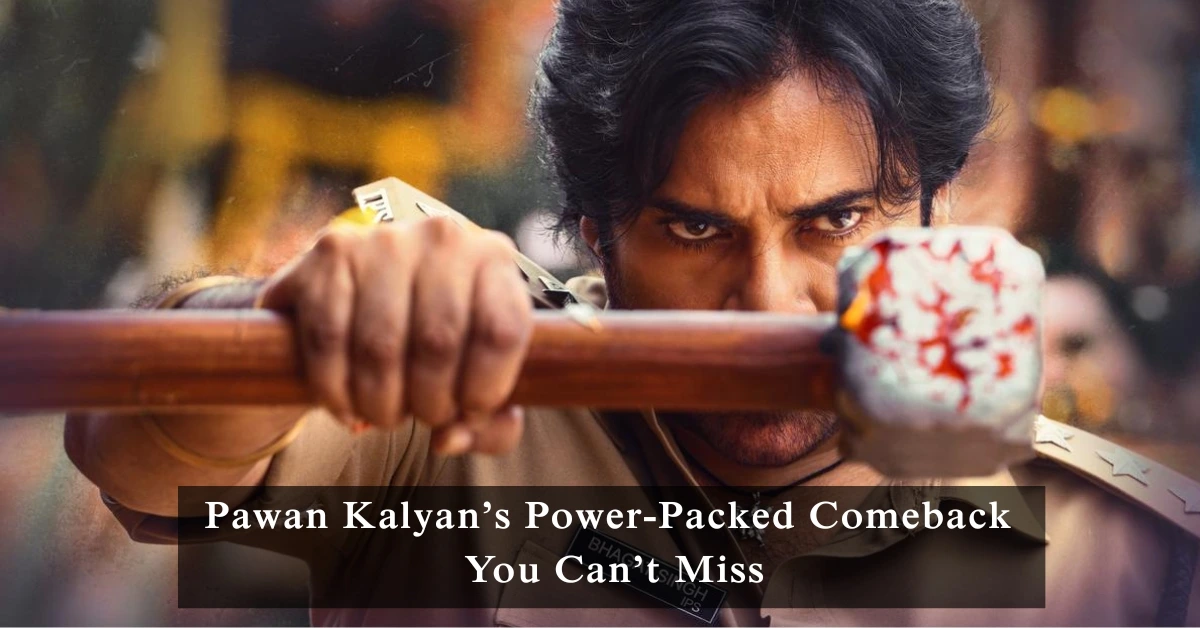
There’s no point pretending otherwise: Ustaad Bhagat Singh lives and dies on Pawan Kalyan’s presence.
The film is structured around his rhythm, his image, his pauses, his body language, and the emotional response he creates in the audience. Harish Shankar understands that better than most directors who work in mainstream Telugu cinema. He knows that with Pawan Kalyan, the performance is not just about dialogue delivery or action choreography. It’s also about how a scene is built around anticipation.
A look. A pause. A line delivered with complete calm before a burst of violence. A callback to older mannerisms. A song moment that taps into nostalgia. These are all part of the star grammar that the film uses repeatedly.
And to be fair, Pawan Kalyan’s screen presence still does a lot of heavy lifting. Even when the writing becomes predictable, the film counts on his charisma to carry scenes through. For fans, that will likely be enough in many places. For neutral viewers, the experience may depend on how much patience they have for hero-centric storytelling that prioritizes aura over nuance.
What works in his favor is that the film doesn’t ask him to do something completely outside his comfort zone. It gives him a role that fits his established strengths — authority, rebellious energy, dry attitude, and the ability to dominate a frame without doing too much. The role is clearly written as an extension of the larger-than-life Pawan Kalyan image, and the film never loses sight of that.

Harish Shankar’s Style Is Visible in Almost Every Frame
If you’ve seen Harish Shankar’s commercial films before, you’ll immediately recognize his approach here. He likes films that move with a certain loudness — not necessarily in terms of noise, but in terms of personality. His scenes are often built around dialogue punches, attitude-driven confrontations, exaggerated reactions, crowd-pleasing beats, and hero worship that is open rather than hidden.
That style is all over Ustaad Bhagat Singh.
The film doesn’t shy away from theatricality. It embraces it. The writing wants scenes to land as moments, not just as plot points. That’s why several sequences feel designed for applause first and narrative function second. Again, whether that works for you depends on what you expect from a commercial entertainer.
Where Harish Shankar succeeds is in keeping the film tonally committed to its genre. It never feels confused about whether it wants to be a serious political thriller, a grounded cop drama, or a realistic social film. It stays firmly in the commercial zone. Even the emotional scenes are staged with that sensibility.
Where the film struggles is in freshness. Some stretches feel like echoes of older star vehicles rather than scenes with a distinct identity of their own. You can sense the director trying to recreate the electric energy of past fan-favorite entertainers, but not every sequence has the same spark.
Action, Dialogues and Hero Elevation: The Film’s Core Strengths
If you strip the movie down to the things it most clearly wants to deliver, the list is obvious:
- mass action blocks
- hero introduction and elevation moments
- punch dialogues
- villain confrontations
- songs with celebratory energy
- emotional scenes placed between commercial highs
And on that level, Ustaad Bhagat Singh does give the audience a fairly clear commercial package.
The action scenes are staged to reinforce the hero’s image rather than create raw realism. They are designed to feel larger than life, with slow-burn confrontations and moments that invite cheers. The dialogues follow the same path. Many lines are written not for quiet conversation but for reaction. They are meant to sound strong, defiant, and theatrical.
This is where the film’s entertainment value largely comes from. It understands the pleasure of a star vehicle and uses it often. For fans, those moments are likely the main reason to show up. The emotional or political layers are secondary.
The Supporting Cast Adds Presence, Even if the Film Remains Hero-Centric
A commercial film like this can’t run on the lead alone, and Ustaad Bhagat Singh brings in a supporting cast that adds familiarity and weight to the screen. Sreeleela, Raashii Khanna, R. Parthiban, K. S. Ravikumar, Gautami, Nawab Shah, Rao Ramesh, and others contribute to the film’s larger commercial setup.
That said, this is still a film where almost everything bends toward the hero’s arc. Supporting characters are there to strengthen the emotional, romantic, or dramatic side of the narrative, but the film rarely allows them to overpower the central presence of Bhagat Singh. In a way, that’s expected. This isn’t an ensemble drama. It’s a star-first commercial entertainer.
Some supporting roles are functional rather than memorable, but they help keep the film moving between action blocks, emotional scenes, and plot turns. Parthiban and Rao Ramesh, in particular, fit comfortably into the kind of dramatic universe the film creates.
Music, Trailer Buzz and Commercial Packaging
The promotional build-up around Ustaad Bhagat Singh played a major role in shaping expectations. The trailer leaned heavily into heroism, mass energy, attitude, and action, making it clear that the film was being sold as a big-screen entertainer rather than a content-first drama.
That packaging matters because it tells you how the film wants to be consumed. This is the kind of movie built for audience reaction — whistles, cheering, repeat-viewing hero scenes, and social media clips of punch dialogues and elevation shots. The soundtrack and background score are used in the same spirit: not quietly, but as amplifiers of emotion and star image.
The music and score aren’t just there to support scenes. They’re there to create mood, nostalgia, and celebration. In a film like this, songs and BGM are part of the star presentation itself.
Where the Film May Divide Audiences
The biggest question with Ustaad Bhagat Singh is not whether it delivers commercial ingredients. It clearly does. The real question is whether those ingredients feel fresh enough for today’s audience.
That’s where reactions can split.
For Pawan Kalyan fans, the film has obvious appeal. It offers the hero moments, mass staging, dramatic dialogues, and screen presence they expect. It knows how to build scenes around the star and does so with full confidence.
For viewers who want tighter writing, more layered characters, and less formula, the film may feel too dependent on familiar mass templates. Some may enjoy the energy while still feeling that the screenplay doesn’t push itself hard enough beyond the standard commercial format.
And that’s probably the fairest way to look at it: Ustaad Bhagat Singh is not trying to reinvent the mass entertainer. It’s trying to deliver a star-led version of it.
Why the Film Still Matters in Pawan Kalyan’s Filmography
Even if opinions on the film differ, Ustaad Bhagat Singh remains an important title because of what it represents in Pawan Kalyan’s career arc. It’s a film built not just around a character, but around a public image, a fan legacy, and a specific kind of Telugu commercial cinema that still carries emotional value for a large audience.
It also reflects how star vehicles are evolving — or in some cases, how they are resisting change. Instead of chasing realism or darker action storytelling, the film doubles down on presence, rhetoric, attitude, and theatrical heroism. That choice will work for some viewers and frustrate others, but it makes the film easy to understand on its own terms.
Conclusion
Ustaad Bhagat Singh is exactly the kind of film that will be judged differently depending on what you want from a Pawan Kalyan movie. If you walk in expecting a grounded action drama with sharp writing and complete narrative freshness, you may find it too familiar in structure and too dependent on star elevation. But if you’re looking for a full-on commercial entertainer built around heroism, attitude, action, punch dialogues, and the unmistakable aura of Pawan Kalyan, the film knows how to deliver that experience.
It is a movie shaped by Harish Shankar’s loud commercial instincts and by the larger-than-life image of its lead star. It doesn’t pretend to be minimalist, subtle, or restrained. It wants to entertain in a big, dramatic, fan-facing way. Sometimes that works because of sheer star power. Sometimes it feels like the film is leaning too heavily on familiarity. But even in those uneven stretches, it stays committed to being a mass entertainer first.
In the end, Ustaad Bhagat Singh is less about surprise and more about screen presence, attitude, and commercial payoff. It’s a film designed to celebrate a star while packaging action, emotion, and message-driven moments into a familiar Telugu blockbuster format. Whether you connect with it will depend on one simple thing: are you showing up for a story, or are you showing up for the star?