
 by
by Some films tell you a story. Agra makes you sit inside a disturbed mind and a deeply uncomfortable home until the line between desire, fantasy, shame, and reality begins to blur. That’s what makes the film so unsettling, and that’s also why a simple plot recap doesn’t really do it justice. If you’re searching for Agra story characters ending explained, the best way to approach the film is not as a straightforward drama, but as a psychological portrait of a young man whose sexual frustration, emotional isolation, and family claustrophobia slowly push him toward obsession and collapse.
Directed by Kanu Behl, Agra centers on Guru, a call-center employee living in a dysfunctional family house in Agra. He shares the lower floor with his mother, while his father lives upstairs with another woman, and the entire home feels like a structure built on resentment, compromise, and private humiliation. Guru wants what he thinks is a simple upgrade to life: privacy, marriage, intimacy, and a room of his own. But Agra quickly reveals that his hunger is much more complicated than that. He becomes fixated on Mala, a woman from his world whom he imagines as a path to love and escape. Yet the deeper the film goes, the more unstable Guru’s reality becomes, and the more obvious it is that his longing isn’t just romantic. It’s tangled up with repression, entitlement, fantasy, and a desperate need to escape the suffocating emotional atmosphere of his home. The film’s official plot summaries and festival write-ups consistently frame it as the story of a sexually frustrated young man whose desires spiral into fantasy, self-harm, and psychological breakdown.
So this article isn’t just an Agra plot breakdown. It’s a full Agra story characters ending explained guide — what happens in the film, who the important characters are, what the ending suggests, and why the movie is less about romance than about repression and emotional damage.
Agra Story Explained: What Happens in the Film?
A proper Agra story characters ending explained breakdown starts with one important point: Agra is not told like a clean, linear “boy meets girl” drama. The film is intentionally disorienting. It wants you to feel Guru’s instability rather than simply observe it from a safe distance.
The film opens in a strange, unsettling space
Right from the beginning, Agra signals that it’s going to blur fantasy and reality. The opening is surreal and disturbing, and it places us inside Guru’s fractured mental state before we fully understand who he is. That matters because the film isn’t just interested in external events. It wants to show how Guru experiences desire — as something feverish, distorted, humiliating, and impossible to separate from fantasy. Plot summaries for the film specifically note that Guru’s journey is shaped by extreme fantasies and a mental state that borders on breakdown.
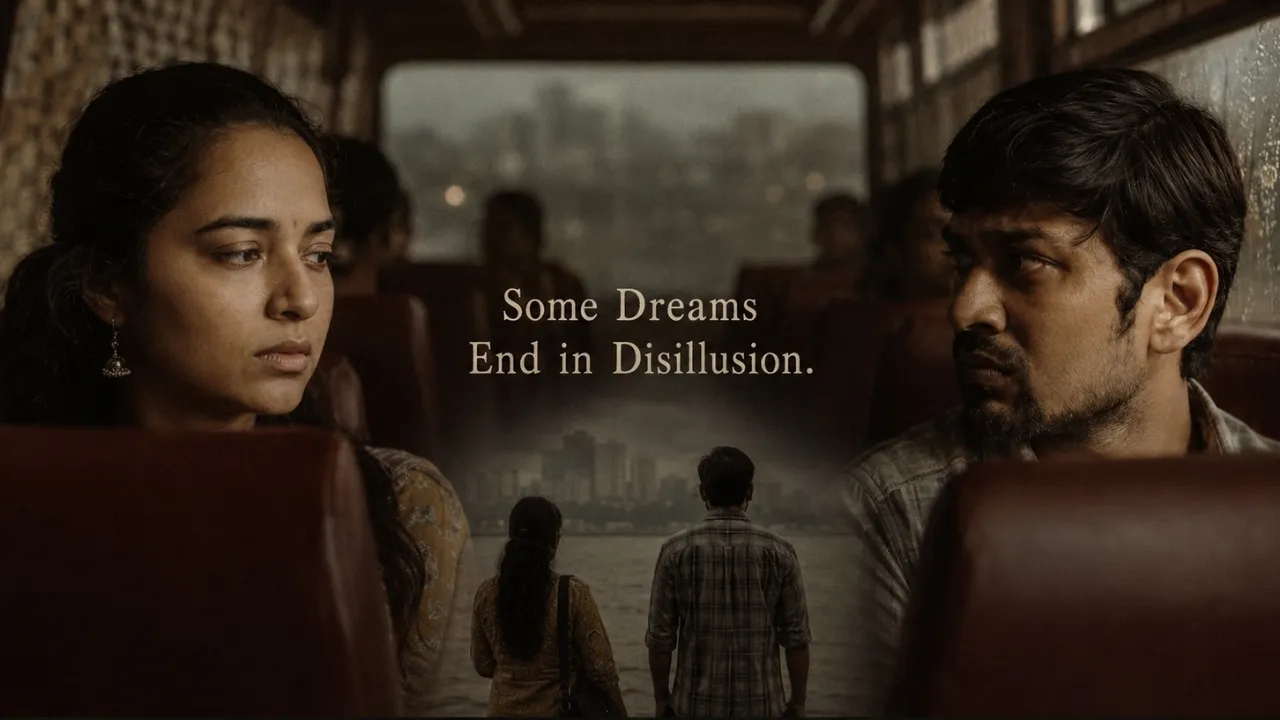
Guru’s everyday life is already emotionally suffocating
Once the story settles into its main setting, we see that Guru’s real problem isn’t one single crisis. It’s the life he’s already living. He works in a call center, but the bigger issue is what waits for him at home. He lives in a house with almost no privacy, no emotional warmth, and constant reminders of family dysfunction. His mother lives with him downstairs. His father occupies the upper floor with a mistress. Every level of the house feels divided, but not cleanly separated. People are physically close and emotionally hostile at the same time.
This family setup is crucial to any Agra story explained article because the house itself functions almost like a character. Guru doesn’t simply want a girlfriend or a wife. He wants an escape route from a domestic space that has left him emotionally stunted and sexually frustrated. Several interviews and reviews of the film highlight how Kanu Behl connects sexuality to cramped living conditions, lack of privacy, and the politics of space in Indian households.
Mala becomes the center of Guru’s fantasy
Guru believes marriage to Mala could fix his life. He imagines that if he can marry her, he’ll gain intimacy, legitimacy, and perhaps even a room of his own. On the surface, this may sound like a familiar small-town romantic setup. But Agra is doing something much darker. Guru’s attachment to Mala is not just love or attraction. It is projection. He places on her everything he thinks is missing from his life — desire, comfort, adulthood, and freedom.
This is where the Agra story characters ending explained angle becomes important, because the film keeps pushing us to question how much of Guru’s relationship with Mala is emotionally real and how much of it is shaped by his own unstable mind. The film’s synopsis and plot descriptions indicate that Guru plunges into a world of fantasies, self-destructive impulses, and increasingly unsteady behavior.
The conflict over space, family and marriage keeps escalating
As Guru tries to move his fantasy into reality, the family tensions intensify. In Agra, a room is never just a room. Space is tied to dignity, adulthood, marriage, and power. Guru wants access to the terrace and a private room because he sees them as proof that he can finally become a full adult man with control over his own life. But the household is already full of territorial disputes, emotional resentment, and power games. So every conversation about marriage or space becomes charged with something larger.
The film turns these family negotiations into psychological warfare. Guru doesn’t just feel trapped by poverty or limited opportunity. He feels trapped by a household where emotional boundaries have collapsed. That’s why Agra feels so claustrophobic even when nothing “big” is happening on screen.
Guru’s desperation turns self-destructive
As the story moves deeper into Guru’s psyche, his frustration stops looking like simple longing and starts looking like collapse. One of the major turning points involves a blackmail-like emotional confrontation with his family and a desperate act involving phenyl, which pushes his already fragile state further out of balance. Plot descriptions and discussions around the film mention this incident as a major marker of Guru’s instability and a sign that his emotional need has curdled into self-destructive behavior.
By this point, Agra is no longer a film about whether Guru will “get the girl” or “find happiness.” It becomes a film about what happens when a person has built their entire emotional future around a fantasy that can’t hold.
Agra Characters Explained
Any good Agra story characters ending explained article has to slow down and look at the people who shape Guru’s emotional world, because the film works less like a plot machine and more like a pressure chamber built out of damaged relationships.
Guru – the center of the film’s emotional chaos
Guru is the film’s protagonist, but Agra never treats him like a heroic lead. He’s a sexually frustrated, emotionally unstable young man who wants intimacy but doesn’t know how to handle it. He wants escape, but he doesn’t have the emotional maturity to build a life outside fantasy. He is vulnerable, lonely, awkward, and deeply damaged — but he can also be manipulative, entitled, obsessive, and frightening.
That complexity is what makes Guru such a difficult but compelling character. He is not written for easy sympathy. Instead, he represents a certain kind of masculine repression: a person raised in a culture where desire is shamed, privacy is scarce, emotional communication is weak, and frustration has nowhere healthy to go. Reviews and festival coverage repeatedly describe Guru as the embodiment of repressed male sexuality in a suffocating social and domestic environment.

Mala – desire, fantasy and the idea of escape
Mala is central to the Agra story explained discussion because she exists in the film not only as a woman Guru desires, but as the symbol of the life he thinks he deserves. She represents intimacy, sexual fulfillment, marriage, and emotional rescue. But the film deliberately keeps her relationship to Guru unstable. The more you watch, the more you realize that Guru’s idea of Mala may matter more than the real woman herself.
This is one of the film’s sharpest ideas: when a person is emotionally starved, they don’t always fall in love with a person. Sometimes they fall in love with the role that person might play in rescuing them.
Priti / the mother figure
Guru’s mother is not simply a passive victim of the household’s dysfunction. She is part of the emotional structure that shapes him. She lives with him in a space that is too intimate and too tense at the same time. Her presence in the film adds to the sense that Guru has never been allowed a healthy emotional separation from his family. The mother-son dynamic is not melodramatic in a loud Bollywood way, but it is quietly suffocating.
Daddy Ji – patriarchy embodied at home
Guru’s father is one of the clearest symbols of the family’s moral and emotional disorder. He lives upstairs with another woman, creating a house divided not just physically but ethically. He represents a version of masculinity that normalizes emotional abandonment, selfishness, and entitlement. Guru may not consciously want to become him, but the film strongly suggests that he has already inherited some of the same broken patterns.
The wider household
Characters like Mummy Ji, Chhavi, and other family members matter because they turn the house into a living ecosystem of compromise, resentment, and emotional exhaustion. Nobody in Agra feels fully free. Everyone seems to be managing damage in one form or another.
What Is Agra Really About? Themes Behind the Story
If you’re searching for Agra story characters ending explained, you’re probably not just looking for “what happens.” You also want to know what the film is saying. And that’s where Agra becomes much richer than a basic plot summary.
1. Sexual repression
This is the film’s most obvious and most discussed theme. Guru’s frustration isn’t casual lust. It’s the product of a social and domestic environment where desire is bottled up, shamed, denied privacy, and pushed into unhealthy forms. Kanu Behl has explicitly spoken about the idea that sexual lives in India are deeply repressed, and Agra uses Guru to explore what that repression does to the mind.
2. The politics of space
One of the smartest recurring ideas in Agra is that space equals dignity. A room is not just a room. It means privacy, adulthood, sexual freedom, and status within the family. Guru’s obsession with getting a room on the terrace is tied to much more than convenience. It’s tied to identity.
3. Patriarchy as inheritance
The film doesn’t present patriarchy as an abstract system floating above the story. It shows patriarchy as something lived inside a family home — in the way fathers behave, the way sons learn desire, the way women adapt to survival, and the way emotional damage gets passed from one generation to the next.
4. Fantasy versus reality
Guru keeps turning fantasy into a coping mechanism. But the more he retreats into fantasy, the less capable he becomes of dealing with reality. That tension drives the film’s structure and explains why Agra often feels like a fever dream rather than a conventional drama.
Agra Ending Explained
Now to the part most readers are searching for: Agra ending explained.
The ending of Agra doesn’t give you a neat resolution because the film isn’t built around solving a mystery or rewarding the hero. Instead, the ending functions like an emotional reveal. By the final stretch, Guru’s fantasies about intimacy, marriage, and escape have already started collapsing. He has spent the film trying to convince himself that a woman, a room, or a new domestic arrangement could cure the deeper emptiness inside him. The ending suggests that he was wrong.
What exactly does the ending mean? My reading is this: Guru doesn’t simply lose a romantic dream — he loses the illusion that desire alone can save him. The final act reveals that his real crisis was never just sexual frustration. It was emotional and psychological disintegration shaped by shame, entitlement, family toxicity, and the inability to form healthy intimacy.
This is also why the ending feels unresolved. It doesn’t show Guru neatly healed, transformed, or redeemed. If anything, it leaves us with the impression that he may continue living with the same damaged instincts, even if his circumstances shift. Audience discussions after release reflect exactly this uncertainty, with some viewers reading the ending as a sign that Guru remains mentally disturbed even after the external conflict changes shape.
So if you want the simplest Agra ending explained takeaway, it’s this:
The ending is about the collapse of fantasy. Guru thinks desire, marriage, and possession will free him. Instead, the film reveals that his problem is far deeper — a damaged emotional core shaped by repression and patriarchy.

Why Agra Feels So Uncomfortable — and Why That’s the Point
One reason people search for Agra story characters ending explained is because the film is not emotionally easy to process. It’s claustrophobic, awkward, sexually charged, and often unpleasant. But that discomfort is not accidental. Kanu Behl builds the film so that the audience feels trapped in the same emotional suffocation as Guru.
The house feels cramped. Conversations feel invasive. Desire feels ugly instead of romantic. Even moments that might have been played for tenderness in another film are filtered through tension, shame, or instability here. The result is a film that many viewers admire more than they “enjoy.” That’s not a flaw by itself. It’s part of the design.
Conclusion
If you came here looking for Agra story characters ending explained, the clearest answer is this: Agra is not really a film about romance or even just sexual frustration. It’s a dark psychological study of a young man who believes that desire, marriage, and a room of his own will rescue him from a suffocating life, only to discover that the real prison is much deeper — inside his emotional conditioning, his family history, and his own damaged idea of intimacy.
Guru is the center of the story, but the film’s real subject is much larger: sexual repression, family claustrophobia, inherited patriarchy, the politics of private space, and the collapse of fantasy when reality finally pushes back. Mala represents more than a love interest; she becomes the symbol of everything Guru thinks he lacks. His father represents the model of masculinity he has grown up around. The house itself becomes a map of power, shame, and emotional suffocation. And the ending makes one thing painfully clear: wanting something intensely does not mean you understand it, deserve it, or know what to do with it when it arrives.
That’s why Agra stays with people even when they don’t fully “like” it. It doesn’t offer easy catharsis. It doesn’t rescue its protagonist with a convenient lesson. Instead, it leaves you with the unsettling recognition that repression doesn’t disappear just because someone finally speaks it out loud. Sometimes it mutates, deepens, and turns desire into something far more destructive.
So as a complete Agra story characters ending explained guide, the final takeaway is simple: Agra is about the emotional wreckage of a man who mistakes longing for salvation and ends up confronting the damage underneath it. It’s uncomfortable, messy, psychologically sharp, and far more interested in exposing a wound than healing it. That’s exactly what makes it memorable.





Your point of view caught my eye and was very interesting. Thanks. I have a question for you.
Thank you for your sharing. I am worried that I lack creative ideas. It is your article that makes me full of hope. Thank you. But, I have a question, can you help me?