

 by
by Some movies try to overwhelm you with scale, noise, and dramatic twists. Laalo: Krishna Sada Sahaayate goes in the opposite direction. It takes one deeply flawed man, places him inside a suffocating crisis, and slowly turns that crisis into a spiritual reckoning. That’s what makes the film stand out. If you came looking for a full Laalo divine journey characters final breakdown, the simplest way to describe the movie is this: it’s a story about a man who loses control of his life, gets trapped in a place he can’t escape, and is forced to confront his guilt, his family failures, and his faith all at once.
On the surface, Laalo is about Lalji “Laalo” Parmar, a struggling rickshaw driver from Junagadh whose life is falling apart under debt, addiction, and emotional collapse. But the film doesn’t stay at the level of domestic hardship for long. Once Laalo enters a remote farmhouse while chasing quick money, the movie transforms into something deeper — a spiritual drama where Krishna appears as a guide, and the locked farmhouse begins to feel less like a location and more like a mirror of Laalo’s broken inner life. Public plot summaries describe the film as the story of a rickshaw driver trapped in a farmhouse who confronts guilt and painful memories while being guided by visions of Lord Krishna toward healing and redemption.
This article is designed as a complete Laalo divine journey characters final guide. Instead of just retelling the plot scene by scene, it breaks the film into the parts readers actually care about: Laalo’s journey, the meaning of the farmhouse, character arcs, Krishna’s role, the emotional weight of Tulsi and Khushi, and what the ending is really saying.
Why Laalo Feels Different From a Typical Devotional Film
Before getting into the full Laalo divine journey characters final analysis, it’s worth understanding why the movie hit audiences so strongly. Laalo is a devotional film, yes, but it doesn’t behave like one in the usual sense. It doesn’t rely on oversized miracles, loud religious spectacle, or a perfect hero whose faith is rewarded. Instead, it centers on a man who is already failing. Laalo is poor, impulsive, emotionally lost, and increasingly dependent on alcohol. He has a wife who still cares for him, a daughter who depends on him, and a life that once had love in it — but he has drifted so far from responsibility that even he no longer knows how to repair what’s broken.
That’s why the “divine journey” part of the title matters. The journey in Laalo isn’t about travelling from one place to another. It’s about moving from denial to acceptance, from guilt to accountability, and from spiritual numbness to some kind of grace. Reviews and synopses repeatedly describe the film as a quiet story of self-realisation and redemption rather than a conventional mythological entertainer.
Laalo Full Story Explained: The Divine Journey at the Center of the Film
Laalo is introduced as a man already slipping
A proper Laalo divine journey characters final article has to begin with the version of Laalo we meet at the start. He is not shown as a flawless family man ruined by one unfortunate incident. He’s already slipping. Lalji Parmar, known as Laalo, works as a rickshaw driver and struggles to keep his family afloat. Money is tight, debt is growing, and his drinking habit is making everything worse. The pressure comes not just from poverty, but from the emotional weight of failing the people he loves most.
His daughter Khushi has gone through a serious medical crisis, and the family’s treatment expenses have added to Laalo’s financial burden. His marriage to Tulsi is still emotionally important, but it’s under heavy strain. He has become irritable, defeated, and increasingly reckless. That’s one of the strongest things about Laalo as a film — it doesn’t present collapse as a sudden event. It presents it as erosion. One compromise at a time. One bad night at a time. One excuse at a time.
This is where the Laalo divine journey truly begins, even before Krishna appears. The film wants you to understand that Laalo’s real prison started long before the farmhouse.
Tulsi and Khushi represent the life Laalo is losing
In many films, the wife and child are just emotional props to make the hero’s pain feel bigger. Laalo handles them with more care. Tulsi is not there simply to cry or wait. She is the emotional conscience of the film. Through her, we see the gap between who Laalo used to be and who he has become. The marriage clearly began with warmth, affection, and shared hope. Tulsi knows the version of Laalo that existed before alcohol, debt, and shame took over, which is exactly why her disappointment hurts so much.
Khushi, meanwhile, functions as more than a child in need of protection. She represents innocence and the future. Laalo’s inability to provide stability for her becomes one of the clearest signs of how far he has drifted from his role as a father. In a deeper sense, both Tulsi and Khushi are tied to the “divine journey” idea: they are the living reminders of what Laalo is meant to return to, not just materially, but morally.
Desperation pushes Laalo toward the farmhouse
The plot’s major turn begins when Laalo becomes tempted by the possibility of quick money. He’s already exhausted, ashamed, and cornered by debt. When he sees what looks like an opportunity to solve his problems through theft, he grabs it. Different plot summaries phrase the setup slightly differently, but the core is the same: Laalo follows a money lead to a remote farmhouse and enters hoping to change his luck, only to discover that he is trapped inside. Public reviews and listings describe him as an indebted rickshaw driver lured by fast money who ends up confined in a farmhouse, cut off from help and forced into self-confrontation.
This is where the film shifts from family drama into spiritual survival story.
The farmhouse is the real turning point
If you’re writing about Laalo divine journey characters final, the farmhouse is not just a plot location — it’s the heart of the movie’s symbolism. Once Laalo is locked inside, everything changes. He is alone. He cannot drink away his anxiety, argue with Tulsi, distract himself with daily survival, or blame someone else for his life. Hunger, fear, and silence start doing what nothing else could: they strip away his defenses.
That’s why the farmhouse sequences matter so much. Physically, it is a prison. Spiritually, it is a confession room. Psychologically, it is a mirror. Laalo is forced to replay his past — his mistakes, his anger, his weakness, his guilt, and the version of himself he has been trying not to look at. Reviews of the film consistently describe the farmhouse as a place where Laalo confronts his inner demons, buried memories, and painful regrets.
The genius of the film is that the suspense isn’t only about whether he’ll escape. It’s about whether he’ll finally stop lying to himself.
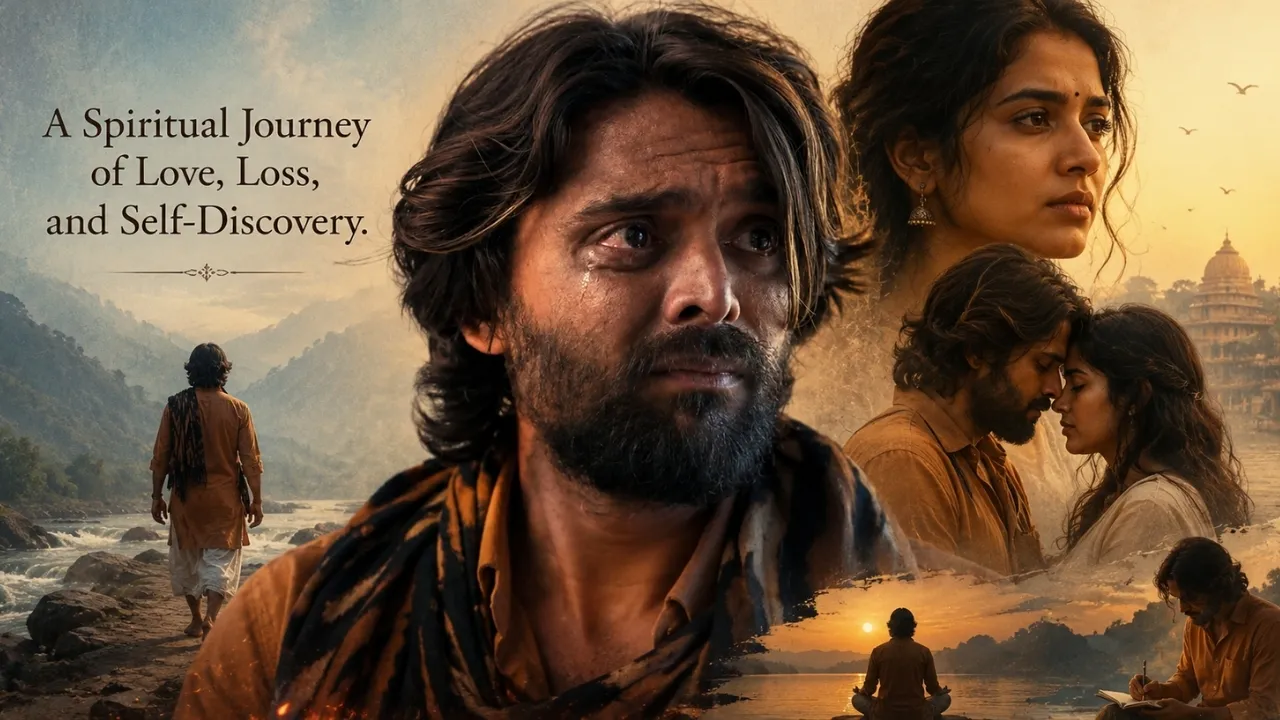
Krishna’s Role in Laalo’s Divine Journey
Krishna appears as a guide, not a spectacle
The most important part of any Laalo divine journey characters final breakdown is Krishna’s presence. In many devotional films, God arrives as power. In Laalo, Krishna arrives as presence. He doesn’t show up in a thunderous, miracle-heavy form. Instead, he appears almost like an ordinary man — calm, watchful, quietly compassionate. Public cast listings identify Shruhad Goswami in the Krishna/Laalo spiritual role, which reflects the film’s layered treatment of divinity and conscience.
What makes this work is that Krishna doesn’t simply rescue Laalo from danger. He challenges him. He speaks to him, listens to him, and gently forces him toward truth. The film is careful here. Krishna is not a vending machine for miracles. He is a guide into self-awareness.
Is Krishna real, symbolic, or Laalo’s conscience?
One of the most interesting parts of the film is that it leaves space for interpretation. You can read Krishna in at least three ways:
1. Krishna as literal divine intervention
If you take the film at face value, Krishna appears because Laalo has reached a point where grace is the only thing left that can reach him. This reading fits the devotional framework of the movie.
2. Krishna as Laalo’s awakened conscience
Another reading is that Krishna is the voice Laalo had buried under addiction, fear, and shame. The locked farmhouse breaks him open enough to hear that voice again.
3. Krishna as both spiritual and psychological truth
The strongest reading may be the middle one: Krishna is both a divine presence and a symbol of inner awakening. The film doesn’t force a neat answer because it doesn’t need to. What matters is the effect Krishna has on Laalo. He makes him confront his guilt honestly.
That’s why Laalo’s divine journey works emotionally even for viewers who don’t approach it as a religious film. Krishna’s presence is gentle, but it’s also deeply confronting.
Laalo Characters Explained
A full Laalo divine journey characters final article also needs a clear character guide because the film’s impact comes from a small set of emotionally important people.
Lalji “Laalo” Parmar
Laalo is the center of the story and the emotional engine of the film. He is not a perfect devotee or a larger-than-life hero. He is a flawed man who has made poor choices, hurt the people closest to him, and lost touch with the values he once had. What makes him compelling is that the film never turns him into a villain. He is broken, not monstrous. Weak, not evil. That distinction matters because the entire film depends on whether you believe someone like him can still change.
Tulsi
Tulsi is Laalo’s wife and the film’s emotional anchor. She represents patience, disappointment, love, and the cost of standing by someone who keeps slipping further away from himself. She also prevents the film from becoming too self-absorbed. Through Tulsi, we see that Laalo’s mistakes don’t only damage him — they damage everyone around him.
Khushi
Khushi, Laalo and Tulsi’s daughter, represents innocence and hope. Her accident and treatment costs contribute to the family’s debt, but emotionally she stands for something larger: the future Laalo is failing to protect. In many ways, she is one of the reasons his transformation matters.
Krishna
Krishna is the spiritual center of the film. Whether read literally or symbolically, he acts as a moral and emotional guide. He doesn’t erase Laalo’s mistakes. He helps Laalo see them clearly.
Supporting family and social world
The supporting characters, including Laalo’s father and Tulsi’s family members, help ground the film in a recognisable Gujarati social world. They’re important because Laalo never feels like a detached philosophical parable. It feels lived-in.
What the Film Is Really Saying About Faith and Redemption
The best Laalo divine journey characters final articles go beyond plot and ask what the movie is actually trying to say. For me, Laalo revolves around four big ideas.
1. Faith begins where excuses end
Laalo spends much of the film blaming circumstances, bad luck, debt, and desperation. But Krishna’s presence slowly pushes him past that. The film suggests that faith is not just asking God for help — it is the courage to stop hiding from your own truth.
2. Guilt can become a locked room
The farmhouse is the film’s most obvious symbol. It isn’t only a place. It’s the physical shape of Laalo’s inner life: closed, airless, and built from his own unresolved shame.
3. Devotion is shown through people, not just prayer
Tulsi’s endurance, Laalo’s love for Khushi, and the memory of their family life all become forms of devotion. The film quietly expands spirituality beyond ritual.
4. Redemption is possible, but not cheap
This is one of the reasons the film lands emotionally. It doesn’t say that one prayer erases years of damage. It says transformation begins with honesty, and only then can grace mean something.

Laalo Final Ending Explained
Now to the part most readers are searching for: Laalo final ending explained.
The ending of Laalo works because it resolves two separate questions at once. The obvious question is physical: Does Laalo escape the farmhouse? But the deeper question is emotional and spiritual: Has he actually changed?
By the final act, the film has made it clear that Laalo’s real battle is not with locked doors. It is with the version of himself he has become. He has spent years making excuses, numbing himself, and avoiding responsibility. The farmhouse strips all of that away. Krishna’s guidance, whether you read it as divine or internal, leads Laalo toward a point of surrender — not surrender to defeat, but surrender to truth. Analyses of the film’s ending often interpret the farmhouse as a prison of karma, ego, and guilt, while Krishna represents the voice that guides Laalo toward self-realisation and liberation.
So what does the ending mean?
The ending suggests that Laalo’s real escape is spiritual before it is physical.
He does not emerge from the farmhouse as the same man who entered it. The crisis becomes a purification. He sees how badly he has failed Tulsi, how deeply his choices have damaged his family, and how far he has drifted from the person he once was. His return, then, is not just survival. It is a second chance.
The film doesn’t pretend that everything is magically solved. Debt, pain, and consequences don’t disappear overnight. But the emotional meaning of the ending is clear: grace becomes possible only after Laalo stops running from himself.
That’s why the ending resonates. It’s not really saying “God rescued Laalo.” It’s saying something more mature: Laalo could only be rescued once he became willing to confront the truth of his own life.
Why Laalo Connected With Audiences
One reason Laalo connected so strongly with Gujarati audiences is that it feels rooted rather than manufactured. It uses faith without turning it into spectacle, and it treats ordinary suffering with seriousness. The setting, language, and emotional texture all feel close to lived experience. Public coverage and audience reactions highlight how the film’s Kathiawadi flavor, spiritual tone, and grounded portrayal of poverty, addiction, and emotional struggle helped it stand out.
The responses are especially interesting because many viewers didn’t describe Laalo as “perfect cinema.” They described it as felt cinema — a film that connected emotionally because it understood shame, prayer, regret, and the need to believe that a person can still come back from the edge.
Conclusion
If you came here searching for a complete Laalo divine journey characters final breakdown, the clearest way to understand the film is this: Laalo: Krishna Sada Sahaayate is a story about spiritual confrontation disguised as a survival drama. It begins with a struggling rickshaw driver whose life has been hollowed out by debt, addiction, guilt, and poor choices, but it slowly reveals itself as a much more intimate story about accountability, grace, and second chances.
Laalo’s divine journey matters because it doesn’t begin with holiness. It begins with failure. He is not a perfect believer waiting for divine reward. He is a broken husband, an anxious father, and a man who has let desperation turn into moral collapse. Tulsi represents the emotional cost of that collapse. Khushi represents the innocent future he is in danger of losing. And Krishna represents the possibility that even a man who has drifted this far can still be called back — not through spectacle, but through truth.
The farmhouse is the film’s masterstroke because it traps Laalo in more than one way. It traps his body, yes, but it also traps him inside the life he has built through avoidance and weakness. That’s why the final act hits the way it does. The real question is never just whether he gets out. It’s whether he becomes someone different when he does.
So as a full Laalo ending explained and Laalo characters explained article, the final takeaway is simple: Laalo is a film about guilt, faith, surrender, and redemption — a story where Krishna doesn’t simply save a man from danger, but guides him back toward the person he had forgotten how to be.





Can you be more specific about the content of your article? After reading it, I still have some doubts. Hope you can help me.
Your article helped me a lot, is there any more related content? Thanks!