 by
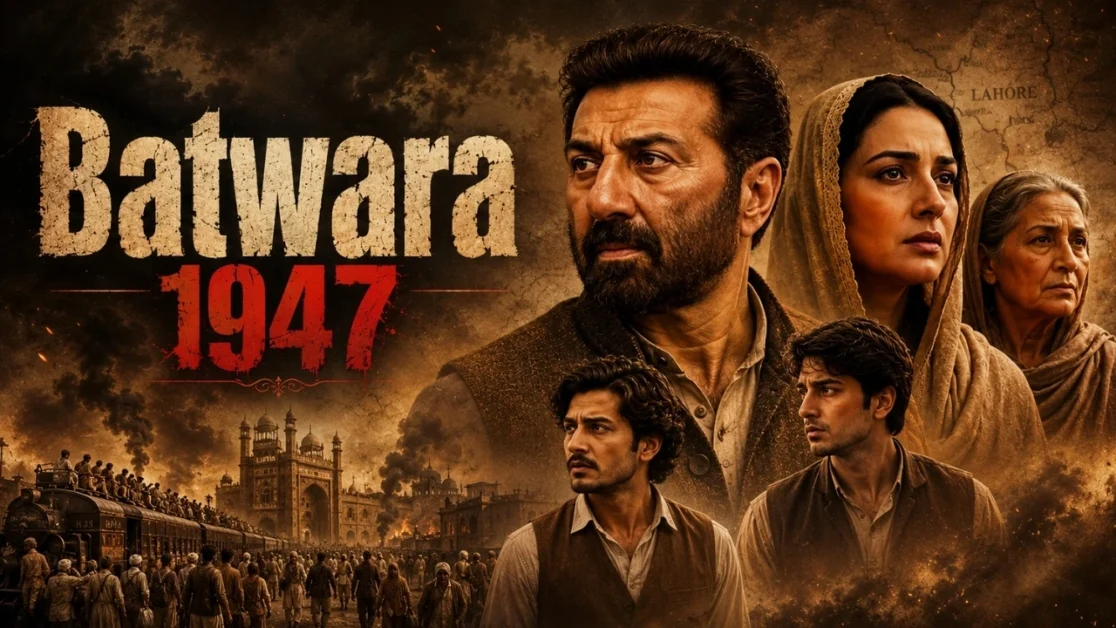
by Batwara 1947 is a Hindi period drama directed by Rajkumar Santoshi and produced by Aamir Khan and Aparna Purohit under Aamir Khan Productions. The film stars Sunny Deol, Preity Zinta, Shabana Azmi, Karan Deol, Ali Fazal, Abhimanyu Singh, Khushi Hajare and Kanikka Kapur in important roles. It is set in Lahore during the turbulent period of the 1947 Partition of British India and focuses on displacement, family, identity, conflict and human relationships.
The film was released in Indian cinemas on August 14, 2026, during the Independence Day weekend. BookMyShow lists it as a Hindi Action, Drama and Period film with an A certificate and a runtime of 2 hours and 25 minutes.
For readers searching for Batwara 1947 release date, cast, story, director, runtime, review, box office, OTT release date, where to watch and movie details, this guide brings the important information together without making unconfirmed OTT claims or presenting early box-office figures as final results.
Release Date
Batwara 1947 was released in theatres on August 14, 2026. The release was scheduled for the Independence Day weekend, a particularly relevant date for a film dealing with the Partition of British India. The movie is in Hindi and has a reported runtime of 145 minutes, or approximately 2 hours and 25 minutes.
The film had previously been associated with the working title Lahore 1947. According to the film’s Wikipedia entry, the project was later renamed this movie. The movie was initially planned for earlier releases, but post-production work and reshoots resulted in delays before the final August 2026 theatrical release.
The final release date also gave the movie a natural connection with Independence Day audiences, although its story is more concerned with the human consequences of Partition than with the celebration of independence itself.
What Is Batwara 1947 About?
Batwara 1947 is set in Lahore against the backdrop of the Partition of British India.
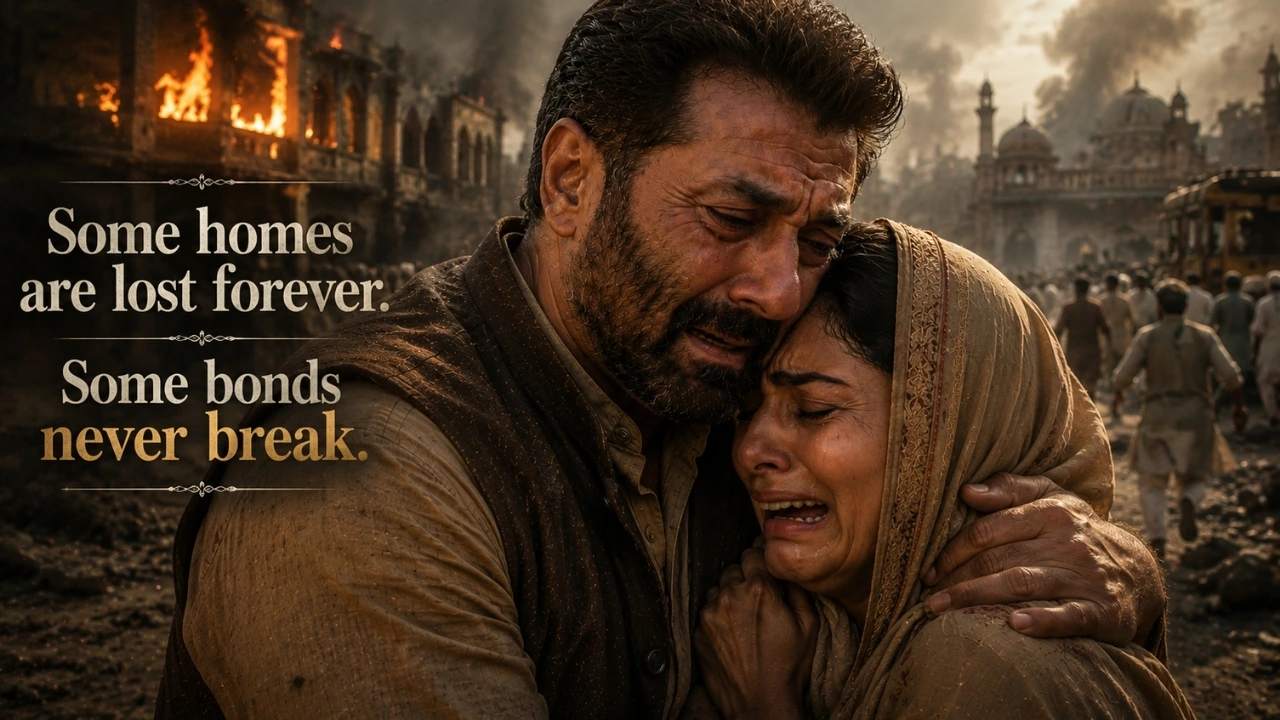
The story follows Sikander Mirza, a Muslim man who moves with his family from Meerut to Lahore after Partition. Sikander, his wife Hamida, their son Javed and their daughter Tanvir eventually receive a large haveli after spending time in a refugee camp. The property had previously belonged to a Hindu family that had left for India following Partition.
The situation changes when Sikander discovers that an elderly Hindu woman, known as Mai, is still living inside the haveli. She refuses to leave and claims that the house is her ancestral home.
This creates the central conflict of the story. What initially appears to be a dispute over property becomes a much deeper confrontation involving identity, displacement, memory and the meaning of home.
The film therefore uses one household to explore the wider human consequences of Partition. Instead of treating the historical event only through political developments, the story focuses on people who have suddenly lost their homes and are trying to rebuild their lives in an unfamiliar environment. IMDb describes the story as one involving families attempting to survive amid violence and upheaval while relying on courage, compassion and resilience.
Cast of this movie
The film has a large ensemble cast, with Sunny Deol, Preity Zinta and Shabana Azmi at the centre of the main story. BookMyShow and IMDb list the principal cast and characters.
Sunny Deol as Sikander Mirza
Sunny Deol plays Sikander Mirza, the central character.
Sikander is a Muslim man who migrates with his family to Lahore after Partition. The character is significant because it places Deol in a role that is different from the straightforward action-hero image associated with many of his most popular films.
His character has to deal with displacement while also trying to establish a new home for his family. The conflict surrounding the haveli forces him to make difficult decisions about ownership, compassion and coexistence.
Preity Zinta as Hamida
Preity Zinta plays Hamida Mirza, Sikander’s wife.
The role is particularly notable because the film marks Zinta’s return to the big screen after an extended absence. Her character is part of the family at the heart of the story and experiences the uncertainty surrounding their new life after migration.
Shabana Azmi as Mai
Shabana Azmi plays Mai, the elderly Hindu woman who remains in the haveli.
Mai is central to the film’s emotional conflict. She represents the people who have lost a world that existed before Partition and are unwilling or unable to simply abandon their ancestral home.
The clash between Mai and Sikander creates the film’s main dramatic tension.
Karan Deol as Javed
Karan Deol plays Javed Mirza, the son of Sikander and Hamida.
His presence also gives the film another connection between the younger and older generations of the Deol family, as he appears alongside his father Sunny Deol.
Ali Fazal as Habeeb
Ali Fazal is part of the principal cast as Habeeb. IMDb lists him among the film’s leading cast members.
Other Cast Members
The film also features Abhimanyu Singh, Khushi Hajare, Kanikka Kapur, Isha Sandhir, Khalid Siddiqui, Sunil Saraswat, Fareed Ahmed, Chandan Dilawar, Pankaj Raina and other performers.
Director
Batwara 1947 is directed by Rajkumar Santoshi, who is also credited with the screenplay and dialogue work. The story is credited to Santoshi and Asghar Wajahat, and the film is based on Wajahat’s play Jis Lahore Nai Vekhya, O Jamya E Nai.
The project also reunites Santoshi and Sunny Deol, a director-actor combination known for earlier films such as Ghayal, Damini and Ghatak. That history naturally created interest before the release.
However, Batwara 1947 is not simply another reunion action film. Its subject required a more serious period-drama approach, with the Partition and its effect on families forming the foundation of the narrative.
Aamir Khan as Producer
Aamir Khan is one of the producers of Batwara 1947, alongside Aparna Purohit. The production company is Aamir Khan Productions.
The collaboration brought together several established names from Hindi cinema. Rajkumar Santoshi handled direction, Sunny Deol led the cast, and the technical team included cinematographer Santosh Sivan, composer A. R. Rahman, lyricist Javed Akhtar, editor Shyam Salgaonkar and sound designer Resul Pookutty.
For a period film, these departments are especially important because the visual design, music, costumes, sound and cinematography all contribute to creating a believable historical environment.
Music and Technical Team
The music of Batwara 1947 is composed by A. R. Rahman, while Javed Akhtar is credited for the lyrics. Santosh Sivan serves as cinematographer, and Shyam Salgaonkar is credited as editor. Resul Pookutty is the sound designer.
The film’s technical setup is one of its notable strengths on paper because it combines experienced filmmakers from different areas of Hindi cinema.
The period setting also means that production design and costumes have an important role. The objective is not simply to show a story that happens in 1947 but to make the audience feel that the characters belong to that historical environment.
Historical Background
Partition in 1947 changed the political geography of the Indian subcontinent and led to one of the largest mass migrations in modern history.
The division of Punjab was particularly traumatic. Families moved across newly created borders, properties changed hands and communities that had lived together for generations were suddenly separated.
That history provides the foundation for Batwara 1947. The movie does not attempt to present Partition only as a political event. Its central conflict is built around what happens to individuals when political decisions transform the meaning of home and ownership.
This is why the haveli becomes more than a physical location. For Sikander’s family, it represents the possibility of starting again. For Mai, it represents an ancestral home that cannot simply be replaced.
That contrast gives the film a straightforward emotional question: who has the right to call a place home after Partition?
What Makes the Story Different?
Partition has been represented in Indian cinema and literature many times, so Batwara 1947 enters a subject that already has a substantial artistic history.
Its distinctive element is the decision to place much of the emotional conflict inside a single household. Instead of relying only on large-scale political scenes, the story uses the relationship between Sikander’s family and Mai to show how displacement can create conflicting ideas of justice.
The film’s premise also creates room for questions about identity. Sikander has crossed a border to survive, while Mai remains attached to the home she believes belongs to her. Neither character can simply erase the past.
That gives the story a human dimension beyond the historical setting.
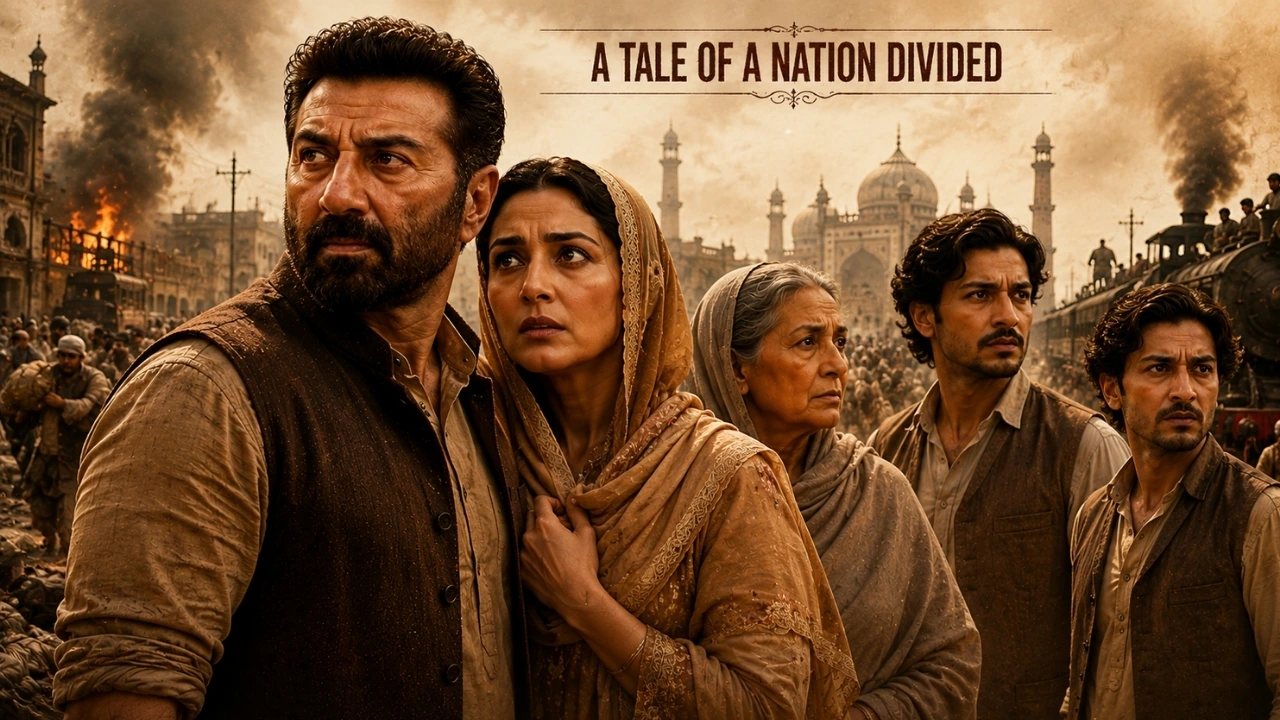
Is Batwara 1947 an Action Movie?
BookMyShow categorises Batwara 1947 as Action, Drama and Period, with an A certificate.
However, viewers should not expect a conventional Sunny Deol action film built entirely around action sequences.
The movie’s central story is a historical family and social drama. Conflict is part of its world, but the emotional and historical elements are equally important.
This distinction is useful for viewers because expectations can strongly influence the viewing experience. Someone looking for a traditional action entertainer may approach the film differently from someone interested in Partition-era drama.
Batwara 1947 Reviews and Audience Response
Audience response to Batwara 1947 has been mixed.
BookMyShow currently displays a rating of approximately 7.9/10 based on more than 13,000 votes, although individual reactions vary widely. Some users praise the acting, story and direction, while others criticise the film for its pacing and execution.
This mixed response is important to mention instead of presenting the movie as universally successful or universally disappointing.
The film deals with a serious historical subject, and viewers can respond differently depending on their expectations. Some may appreciate the performances and emotional premise, while others may find the storytelling too slow or less effective than expected.
Therefore, the most useful way to describe the reception is that the audience response is divided, rather than assigning the movie an exaggerated label.
Batwara 1947 Box Office
Box-office performance should be treated carefully because figures can change as a film continues its theatrical run.
Recent reporting has described the movie’s theatrical performance as underwhelming, with the film struggling to maintain momentum after its opening period. The Times of India reported that it had difficulty reaching ₹40 crore after its second weekend.
Earlier reporting also noted a strong initial boost around the Independence Day holiday followed by a slowdown during weekdays.
Because box-office numbers are time-sensitive, websites should avoid presenting an early figure as the final lifetime collection unless the theatrical run has concluded and the number has been verified.
Batwara 1947 and Awarapan 2 Clash
The movie also faced competition from Awarapan 2, which released around the same Independence Day period.
Both films appealed to different segments of the Hindi-speaking audience, but the release clash became part of the discussion surrounding their commercial performance.
The competition is worth mentioning as context, but it should not be used as the only explanation for the film’s box-office results. Audience response, genre expectations, reviews, release strategy and the strength of competing films can all influence a theatrical run.
Why Sunny Deol’s Role Is Interesting
Sunny Deol’s casting as Sikander Mirza is one of the most discussed aspects of Batwara 1947.
The actor has a long association with action-driven roles and patriotic cinema, so placing him in the role of an Indian Muslim character during Partition creates a different screen image.
Director Rajkumar Santoshi has discussed the concerns surrounding this casting choice and acknowledged that the filmmakers had considered whether audiences would accept Deol in such a role.
That makes the casting more than a simple star decision. It is connected to the film’s larger attempt to examine identity and communal relationships during one of the most difficult periods in South Asian history.
Where Can You Watch Batwara 1947?
As of August 24, 2026, Batwara 1947 is still listed as a theatrical release on BookMyShow. The platform currently provides cinema listings and identifies the film as a Hindi 2D title.
Recent reports have discussed OTT plans and a reported deal, but the exact streaming date has not been officially confirmed in the sources reviewed here.
Therefore, readers looking for Batwara 1947 OTT release date should treat unofficial dates circulating online as tentative.
Batwara 1947 Runtime and Certification
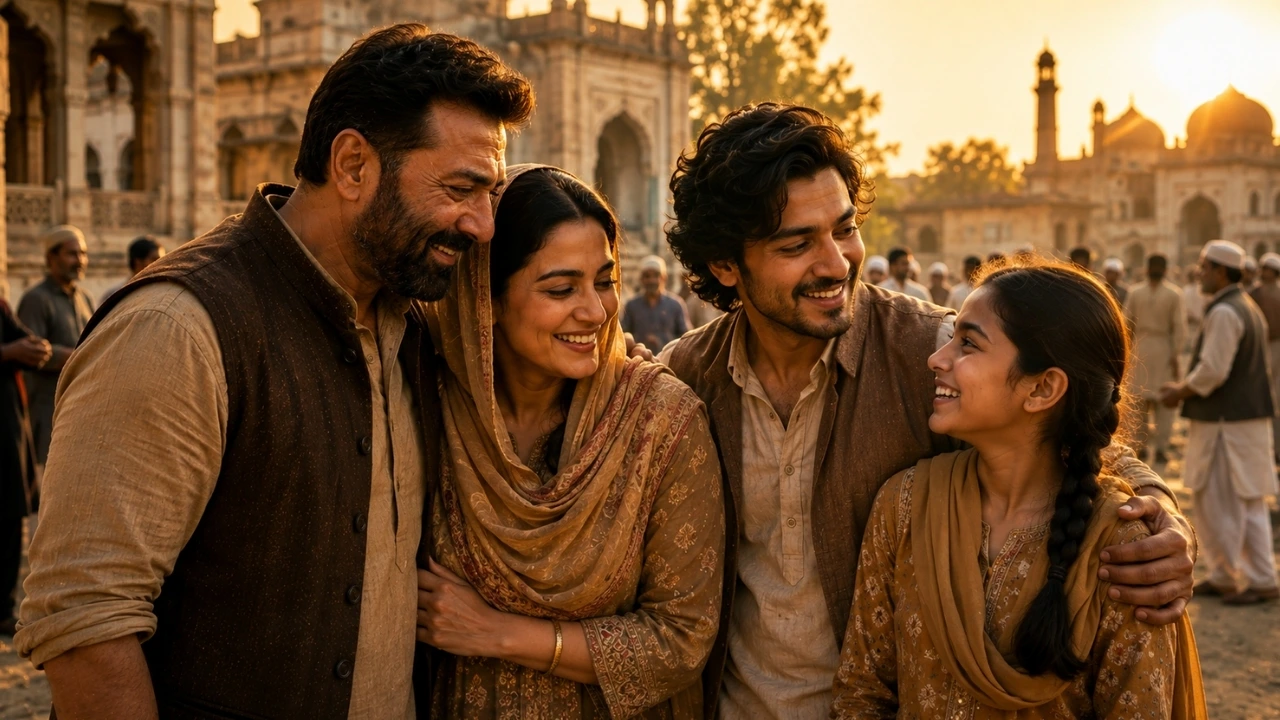
The movie has a runtime of 145 minutes, or approximately 2 hours and 25 minutes. BookMyShow lists the film with an A certificate.
The certification is an important detail for parents and younger viewers. Anyone planning to watch the film should check the current theatrical classification and content information before making a decision for children.
Is Batwara 1947 Based on a True Story?
Batwara 1947 is a fictionalised historical drama, rather than a direct biography of a particular real-life person.
The story is set against the real historical circumstances of the 1947 Partition. The film is based on Asghar Wajahat’s play Jis Lahore Nai Vekhya, O Jamya E Nai, with Rajkumar Santoshi and Wajahat credited for the story.
This distinction is important. The historical background is real, but the central characters and their dramatic journey should not automatically be treated as documentary representations of actual individuals.
Is Batwara 1947 Worth Watching?
Whether Batwara 1947 is worth watching depends on what you expect from it.
If you enjoy Partition stories, historical dramas, serious Hindi cinema and character-driven narratives, the film offers a premise that may interest you.
If you are primarily looking for a fast-paced Sunny Deol action entertainer, it is better to approach the film with different expectations.
The film’s main attraction is the combination of a significant historical setting, an established director and a cast led by Sunny Deol, Preity Zinta and Shabana Azmi.
Its central conflict also gives viewers something more substantial to think about after the film: what happens when two families connect the same house with completely different memories and claims of belonging?
Final Verdict
Batwara 1947 is a Hindi period drama that uses the Partition of 1947 as the setting for a story about displacement, family and the meaning of home.
The film brings together Sunny Deol as Sikander Mirza, Preity Zinta as Hamida, Shabana Azmi as Mai, Karan Deol as Javed and Ali Fazal as Habeeb, with Rajkumar Santoshi directing. It was released in theatres on August 14, 2026, and runs for approximately 2 hours and 25 minutes.
Its biggest point of interest is the central conflict between Sikander’s family and Mai. That setup allows the film to explore Partition through personal relationships instead of presenting the historical event only through dates and political developments.
Audience response has been mixed, and current box-office reporting suggests that the film has faced commercial challenges.
For viewers interested in Partition-era stories, Rajkumar Santoshi’s cinema, Sunny Deol’s different screen image or the film’s ensemble cast, Batwara 1947 remains a notable 2026 release.
Frequently Asked Questions
When was the film released?
Batwara 1947 was released in Indian cinemas on August 14, 2026. Its Independence Day weekend release is particularly relevant because the story is set around the events of India’s Partition in 1947.
Who directed Batwara 1947?
The film was directed by Rajkumar Santoshi, who is also associated with the screenplay and dialogue. The project brings Santoshi together with Sunny Deol once again after their earlier collaborations on films such as Ghayal, Damini and Ghatak.
What is the story of the movie?
The story is set during the Partition of India and follows a Muslim family that moves to Lahore after the division of the subcontinent. They receive a haveli whose previous Hindu owner has left for India. However, an elderly Hindu woman remains inside the property and refuses to leave, creating a difficult situation for the family and bringing questions of identity, belonging and humanity into the story.
Who are the main actors in the film?
The movie features Sunny Deol as Sikander Mirza, Preity Zinta as Hamida Mirza and Shabana Azmi as Mai. The cast also includes Ali Fazal, Karan Deol, Abhimanyu Singh, Khushi Hajare and Kanikka Kapur in supporting roles.
How long is the movie?
The film has a runtime of 145 minutes, which is approximately 2 hours and 25 minutes. The relatively long runtime allows the story to explore its historical setting, character relationships and central conflict in greater detail.
Is the movie available on OTT?
As of August 24, 2026, the movie is still listed for theatrical viewing. An exact official OTT release date has not been confirmed in the sources reviewed for this article. Viewers should rely on an official announcement from the streaming platform or the film’s production team rather than unconfirmed dates circulating online.
Is the story based on a true story?
The movie is a fictionalised historical drama set against the real events of the 1947 Partition. It is based on Asghar Wajahat’s play Jis Lahore Nai Vekhya, O Jamya E Nai. While the central characters and their specific circumstances are part of the dramatic story, the historical background reflects the real social and political upheaval of Partition.
Is the movie worth watching?
The film may appeal to viewers who enjoy historical dramas, Partition-era stories and character-driven Hindi cinema. Its subject goes beyond conventional action and focuses on displacement, family relationships, communal tension and human emotions. However, viewers expecting a typical Sunny Deol action film should keep in mind that the historical and dramatic elements play a major role in the overall experience.