 by
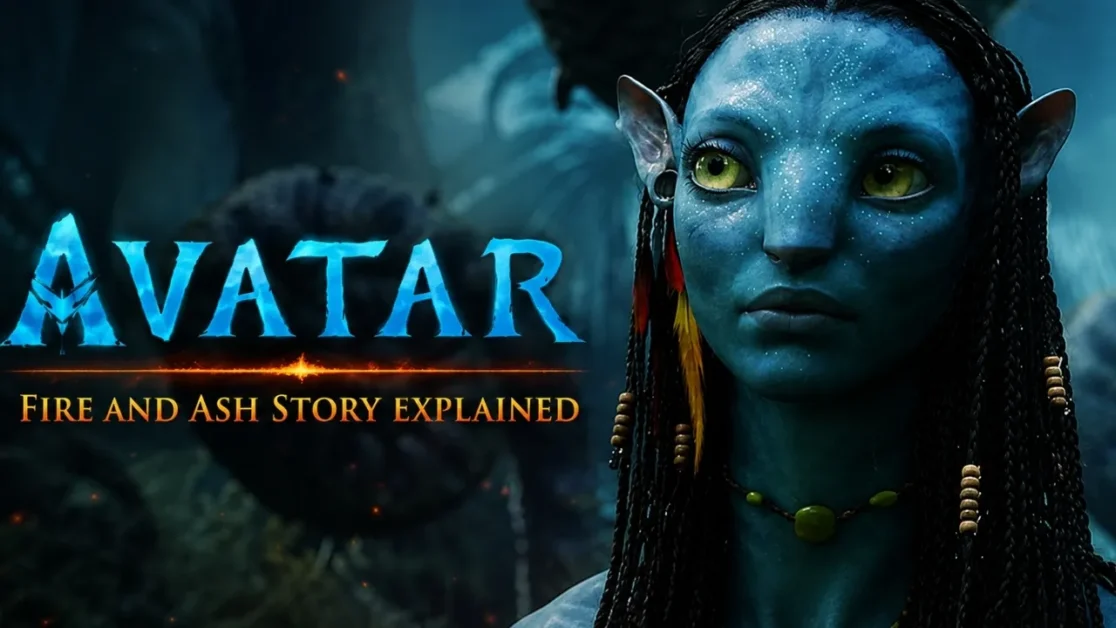
by Avatar: Fire and Ash story explained is the best way to approach James Cameron’s third Avatar film because this isn’t just another visual trip through Pandora. On the surface, Avatar: Fire and Ash looks like a large-scale sci-fi adventure with new clans, volcanic landscapes, aerial battles, and another round of conflict between the Na’vi and human invaders. But once you get past the spectacle, the movie is really about grief, fractured loyalty, moral compromise, and the way war changes people from the inside out.
That shift in tone is what makes this film stand apart from Avatar and Avatar: The Way of Water. In this chapter, the Sully family is no longer trying to find a new home or simply survive an attack. They are living with the emotional fallout of Neteyam’s death, and that loss hangs over nearly every major decision in the film. At the same time, Pandora itself becomes even more unstable as a new Na’vi faction called the Ash People enters the conflict, led by the fierce and deeply wounded Varang. Official plot material describes the film as following Jake, Neytiri, and the Sully family after The Way of Water as they face the Ash People and an escalating war that threatens Pandora on a much larger scale.
So if you’re looking for Avatar: Fire and Ash story explained, Avatar Fire and Ash ending explained, or a simple breakdown of what the movie is trying to say, this article walks through the story, characters, conflict, and ending in a way that feels more like a real movie blog and less like a copied summary.
Avatar: Fire and Ash Movie Overview
Before jumping into the full plot, it helps to understand what kind of story Avatar: Fire and Ash is telling.
Directed by James Cameron, Avatar: Fire and Ash is the third film in the Avatar saga and continues the journey of Jake Sully, Neytiri, and their children after the events of The Way of Water. Official film pages and promotional material describe it as a darker, more emotionally intense chapter where the Sully family is still processing the death of Neteyam while facing a new and aggressive Na’vi tribe known as the Mangkwan Clan, or the Ash People. These new antagonists come from a harsh volcanic region of Pandora, and their worldview is shaped by devastation, survival, and rage rather than harmony.
That setup is important because it changes the entire emotional rhythm of the film. This isn’t a movie about discovering Pandora for the first time. It’s about what happens after innocence is gone.
Avatar: Fire and Ash Story Explained: The Sully Family After Neteyam’s Death
The story begins with the Sully family in a very different emotional place than where we last saw them. Jake Sully and Neytiri are still living with the Metkayina Clan, but the atmosphere around them is heavier. The family is grieving the death of Neteyam, and the film doesn’t treat that grief like a quick plot device. Instead, it becomes the emotional foundation of the story.
Official summaries describe the movie as taking place after The Way of Water, with the Sully family still reeling from Neteyam’s sacrifice. That loss affects everyone differently:
- Jake becomes more guarded and tactical, slipping back into survival mode.
- Neytiri carries anger, pain, and a growing distrust of anything that threatens her family.
- Lo’ak feels the pressure of stepping into a role his older brother once held.
- Kiri, Tuk, and Spider are all forced to grow up in a world where safety no longer feels possible.
This matters because Avatar: Fire and Ash story explained is not just about the next enemy. It’s about a family trying to function after trauma while a new war is already forming around them.
Jake Sully’s Arc: From Protector to War Leader Again
Jake’s story in Fire and Ash feels different from his earlier arcs. In the first Avatar, he was an outsider learning to belong. In The Way of Water, he was a father trying to protect his family by relocating them. In Fire and Ash, he is something more hardened.
He’s still a father first, but grief pushes him back toward the military mindset he never fully left behind. Promotional material and official story teases describe Jake as “haunted by grief and driven by instinct” as he returns to battle.
That’s a key piece of the film’s emotional logic. Jake is no longer fighting only for Pandora in an abstract sense. He’s fighting from a much more personal place now. He’s trying to stop more loss before it happens, and that makes him more aggressive, more suspicious, and at times more emotionally closed off.
In a way, Avatar: Fire and Ash story explained is also the story of Jake trying to decide whether grief will make him a better leader or a more dangerous one.
The Ash People: Why They Change the Story
The biggest new element in the film is the introduction of the Ash People, also called the Mangkwan Clan.
Official material describes them as a Na’vi tribe from a volcanic region whose land has been devastated by eruptions, leaving behind ash-covered terrain and a much harsher way of life. That environmental change matters because it explains why they feel so different from the forest clans and ocean clans we’ve seen before.
The Ash People are not framed as simple monsters. They are still Na’vi, still part of Pandora, but their relationship with the world around them has been shaped by destruction rather than abundance. They don’t carry the same trust in balance, peace, or spiritual order. They’ve learned to survive in scarcity and violence.
That makes them a powerful addition to the story because they challenge one of the central ideas of the Avatar universe: the belief that all Na’vi are naturally closer to harmony than humans are.
What the Ash People represent
In story terms, the Ash People represent:
- the side of Pandora that has been broken by catastrophe
- the idea that suffering can distort culture and belief
- a mirror image of what the Sullys could become if grief fully consumed them
- proof that not every conflict on Pandora is simply “Na’vi good, humans bad”
This is one of the reasons Fire and Ash feels darker than the earlier films.
Varang Explained: The New Threat at the Center of the Film
The central figure among the Ash People is Varang, played by Oona Chaplin. Official previews position her as the main antagonist and leader of the Ash People, while trailer footage and Avatar.com material describe her as fierce, scarred by the past, and openly hostile to the spiritual worldview that has guided other Na’vi clans. In one of the trailer’s most striking moments, she tells Kiri, “Your goddess has no dominion here.”
That line tells you almost everything you need to know about Varang.
She isn’t just another enemy trying to conquer territory. She represents a rejection of Eywa, of old faith, and of the emotional worldview that binds the Sully family to Pandora. Her power comes not only from force but from ideology. She believes the old order failed her people, and now she is willing to build something harsher in its place.
Why Varang matters so much
Varang is important because she makes the conflict personal and philosophical at the same time. She doesn’t just threaten Jake’s family physically. She challenges the values they are trying to preserve.
That gives Avatar: Fire and Ash story explained a more interesting shape than a basic war sequel. The enemy isn’t only external; it’s also ideological.
Quaritch Returns and the War Gets Messier
As expected, Colonel Miles Quaritch is still part of the story, and his role complicates everything. Rather than being the only villain, he becomes one dangerous force inside a much bigger conflict.
Official plot summaries and trailer descriptions note that Varang allies with Quaritch as the war escalates. That alliance is one of the film’s smartest story moves because it turns the conflict into a three-layer war:
- The Sully family and their allies trying to protect Pandora
- The RDA continuing its campaign through Quaritch and human military power
- The Ash People pursuing their own brutal agenda
This means Jake is no longer fighting one clear enemy. He’s trapped in a battlefield where motives overlap, loyalties shift, and even Pandora’s own people are divided.
Quaritch’s presence also keeps the series’ larger human-vs-Pandora conflict alive. But in Fire and Ash, he feels less like the sole focus and more like an accelerant — someone who helps push Pandora’s internal fractures into full-scale war.
Lo’ak, Kiri, Tuk and Spider: The Children Carry the Emotional Weight
One of the best things about the newer Avatar films is that the Sully children aren’t just side characters. In Fire and Ash, that continues in a big way.
Official story notes highlight that the younger characters are all processing Neteyam’s death while being drawn into the next battle. And emotionally, that’s where a lot of the movie’s real heart lies.
Lo’ak
Lo’ak’s arc is about stepping into responsibility. He has always been impulsive, emotional, and slightly outside the image of the “ideal son,” but Neteyam’s death forces him to mature. He is no longer just reacting to danger; he is being shaped by it.
Kiri
Kiri remains one of the most mysterious and spiritually connected characters in the franchise. In Fire and Ash, her connection to Eywa matters even more because Varang openly rejects the authority of the goddess. Kiri becomes, in some ways, the emotional opposite of Varang: one character leaning into spiritual connection, the other abandoning it.
Tuk
Tuk continues to represent innocence under pressure. She is the reminder that this family is still trying to protect childhood in a world that keeps destroying it.
Spider
Spider’s place in the story remains complicated because he sits between human and Na’vi worlds. In a film so focused on loyalty and identity, Spider becomes a living symbol of divided belonging.
Together, these characters make Avatar: Fire and Ash story explained feel less like a single-hero film and more like a family war drama.
The Wind Traders and Pandora’s Expanding World
Another major addition to the movie is the Wind Traders, a nomadic Na’vi group led by Peylak. Official promotional material describes them as a new clan that travels through Pandora’s skies and becomes part of the widening conflict.
The Wind Traders matter for two reasons.
First, they continue the franchise tradition of showing that Pandora is much bigger than any one clan or environment. Just as The Way of Water expanded the world through the Metkayina, Fire and Ash uses the Wind Traders to add another layer of culture and movement.
Second, they help the story avoid feeling too closed. If the film were only about the Sullys versus the Ash People, the world might start to feel smaller. The Wind Traders remind us that Pandora is still alive with other communities, other histories, and other alliances.
Avatar: Fire and Ash Story Explained – The Real Conflict Is Grief
On paper, the plot of Fire and Ash sounds like a war story:
- a grieving family
- a dangerous new clan
- Quaritch’s return
- a bigger military threat
- a final battle for Pandora
But emotionally, the movie is about what grief does when it is left unresolved.
Jake and Neytiri are grieving Neteyam.
Lo’ak is grieving the brother he could never fully stop trying to impress.
Spider is grieving the possibility of belonging somewhere cleanly.
And Varang, in her own way, seems to be grieving a destroyed homeland, a broken faith, and a version of Pandora that no longer exists.
That’s why the title Fire and Ash works beyond just the volcanic imagery. Fire destroys, and ash is what remains after destruction. The film keeps asking what kind of people are left behind after the fire passes through them.
That’s the deeper emotional layer of Avatar: Fire and Ash story explained.
Avatar: Fire and Ash Ending Explained
If you’re here mainly for Avatar Fire and Ash ending explained, here’s the simple version.
By the final act, the conflict on Pandora escalates into a massive confrontation involving Jake’s allies, the Metkayina, the Ash People, Quaritch’s forces, and larger human military power. Official pages and audience discussions describe the film as building toward one of the biggest battles in the franchise, with Jake and the Sullys fighting to stop both the human threat and the devastation being driven by Varang’s alliance with Quaritch.
What the ending is doing emotionally
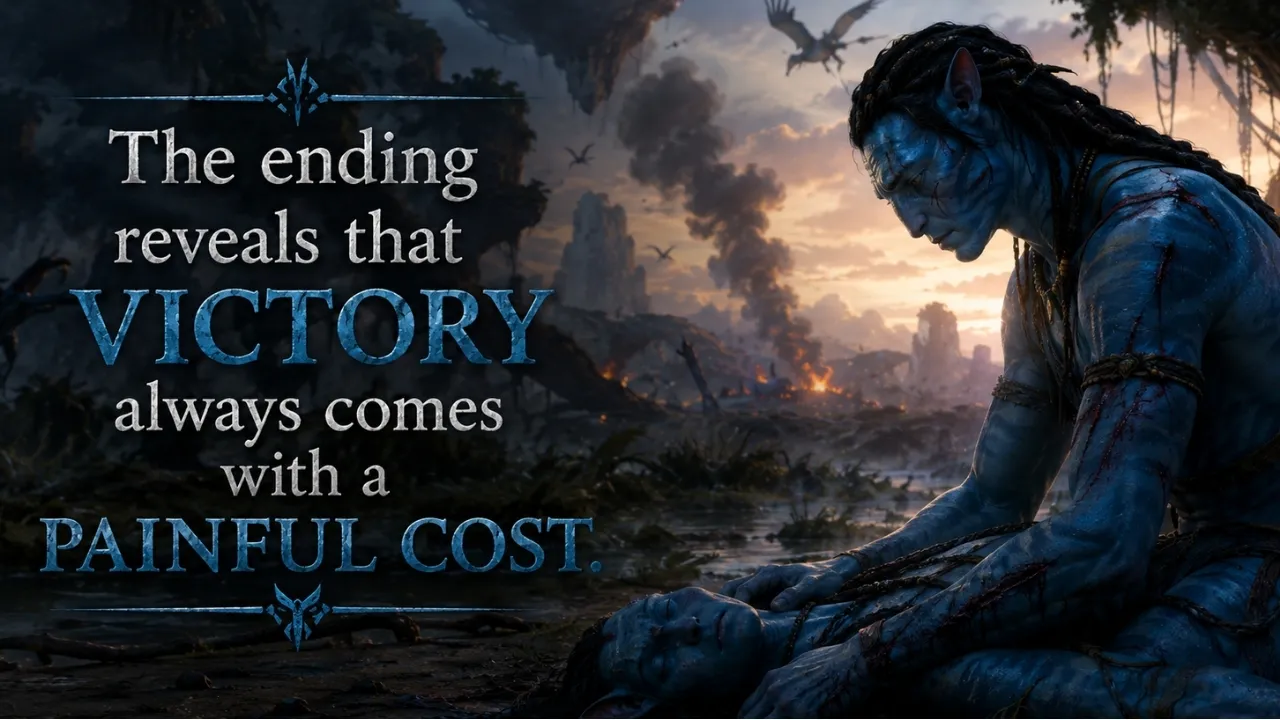
The ending is not just trying to deliver action. It’s pushing the characters to choose who they will become after loss.
- Jake has to decide whether grief will make him only a warrior or still a father.
- Neytiri has to decide whether rage can coexist with healing.
- Lo’ak has to step into courage without simply becoming a replacement for Neteyam.
- Kiri becomes more central as the spiritual conflict with Varang sharpens.
- Varang stands as the embodiment of what happens when pain turns into ideology and vengeance.
Without spoiling every beat beyond what’s publicly discussed, the ending suggests that Fire and Ash is less about “defeating a villain forever” and more about shifting Pandora into a new phase of conflict. The war is not over. The emotional damage is not healed. But the Sully family comes out of this chapter changed, more united in some ways and more scarred in others.
That’s why Avatar: Fire and Ash ending explained is best understood as a transition point in the larger saga, not a neatly wrapped conclusion.
What Avatar: Fire and Ash Is Really About
If you strip away the VFX, the flying creatures, the giant battle scenes, and the new clans, Avatar: Fire and Ash story explained comes down to a very human idea:
Loss doesn’t just hurt people. It changes the way they see the world.
Jake starts seeing danger everywhere.
Neytiri sees grief as a wound that refuses to close.
Lo’ak sees adulthood arriving too soon.
Varang sees a world that no longer deserves trust.
And Pandora itself begins to feel less like a paradise under threat and more like a planet where even its protectors are capable of becoming hard, divided, and dangerous.
That’s what makes this film more interesting than “Avatar but with fire.” It’s a story about mourning, identity, survival, and what happens when war stops being an event and becomes a state of mind.
Conclusion
Avatar: Fire and Ash story explained is ultimately the story of a family trying to survive grief while Pandora enters its most emotionally complex war yet. After the death of Neteyam, Jake Sully, Neytiri, and their children are no longer fighting from a place of innocence or discovery. They are fighting from pain, memory, and fear of losing even more. That personal grief collides with a much larger crisis when the Ash People, led by Varang, emerge as a fierce new force shaped by destruction and anger rather than balance and spiritual harmony. Add Quaritch and the human threat back into the picture, and the result is a story where every battle is carrying emotional weight as well as physical danger.
What makes Avatar: Fire and Ash stand out is that it doesn’t just expand Pandora geographically; it expands it morally. The film introduces Na’vi who do not fit the peaceful image we’ve come to expect, and it forces the Sully family to face enemies who reflect some of their own pain back at them. The real tension isn’t only about who wins the war. It’s about what grief, rage, and survival are turning these characters into. That’s why the film feels darker than the earlier entries.
So if you were searching for Avatar: Fire and Ash story explained, Avatar Fire and Ash ending explained, or Avatar Fire and Ash full plot breakdown, the clearest way to understand the movie is this: it’s a war story on the surface, but underneath it’s a film about mourning, fractured faith, family survival, and the dangerous people that pain can create on both sides of a conflict.