
 by
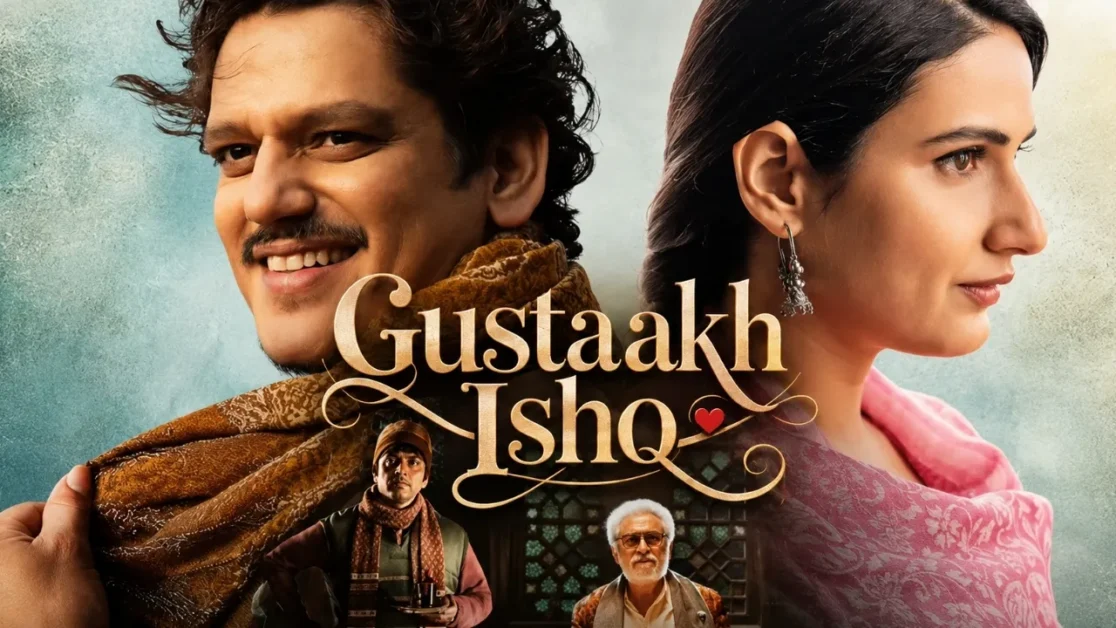
by Not every love story tries to win you over with fast-paced drama or unexpected twists. Some films prefer a quieter approach, relying on atmosphere, emotions, and meaningful conversations to leave an impression. Gustaakh Ishq is one such film. Set against the backdrop of poetry, old Delhi, and a fading literary world, it explores love, ambition, family, and the emotional weight of preserving memories in a rapidly changing world.
If you’re looking for a detailed review covering the story, performances, strengths, weaknesses, climax, and whether the film is worth your time, this article breaks everything down in a balanced and spoiler-conscious way. Rather than simply deciding whether the movie is “good” or “bad,” we’ll examine what makes it work, where it falls short, and whether its slow-burn storytelling is likely to resonate with different kinds of viewers.
Gustaakh Ishq Movie Overview
Before diving into the full review, here’s a quick overview of the film.
- Movie Name: Gustaakh Ishq
- Language: Hindi
- Genre: Romantic Drama
- Director: Vibhu Puri
- Main Cast: Vijay Varma, Fatima Sana Shaikh, Naseeruddin Shah, Sharib Hashmi
- Music: Vishal Bhardwaj
- Setting: Delhi in the late 1990s, with a world shaped by poetry, books, family memory, and romance
- Core Story: A young man trying to revive his family printing press enters the orbit of an aging poet and falls in love with the poet’s daughter, forcing him to navigate love, loyalty, ambition, and emotional inheritance.
Gustaakh Ishq Plot: What Is the Film About?
The story revolves around Pappan (played by Vijay Varma), a young man trying to save or revive his family’s struggling printing press. That mission brings him into the life of Aziz Beg (Naseeruddin Shah), an aging poet whose work Pappan wants to publish as a book. On paper, it sounds like a professional or literary journey. In practice, it becomes much more personal.
As Pappan spends time with Aziz and enters his world, he also meets Mannat/Minni (Fatima Sana Shaikh), Aziz’s daughter. What begins as admiration for a poet and a dream of publishing his words slowly turns into a more layered emotional triangle of love, approval, legacy, and longing. Pappan wants Aziz’s trust, but he also falls for the daughter. That puts the Gustaakh Ishq story in an emotionally tricky space where romance, art, and ambition begin to overlap.
That makes the story both appealing and frustrating. Appealing, because it doesn’t feel like a factory-made love story. Frustrating, because it sometimes drifts so gently that the emotional momentum weakens.
Gustaakh Ishq Review: What Works in the Film
1. The performances are the film’s biggest strength
If there’s one thing most viewers and critics agree on, it’s that the cast does a lot of the heavy lifting. Vijay Varma brings a softness to Pappan that suits the film’s emotional tone. He doesn’t play the character as a flashy romantic hero. He plays him as someone quietly vulnerable, earnest, and slightly overwhelmed by the world he’s entered. That restraint helps. The film is already drenched in poetry and nostalgia; a louder performance might have pushed it into artificial territory.
Fatima Sana Shaikh gives the romance warmth. She doesn’t just function as an object of affection in the story; she helps make the emotional stakes feel lived-in. The chemistry between Vijay Varma and Fatima is one of the reasons the film stays watchable even in its slower sections. Online audience reactions echoed that too — many viewers singled out the pair’s chemistry and softness as a major plus.
And then there’s Naseeruddin Shah, who is arguably the best thing in the film. He gives Aziz Beg gravitas, sadness, intelligence, and emotional history. In a film so obsessed with words, you need someone who feels like he has lived inside language for decades. Naseeruddin Shah gives the movie that credibility. Several reviews specifically highlighted him as the standout performance, and it’s hard to disagree.
2. The film creates a distinctive emotional atmosphere
One of the film’s biggest strengths is the world it creates. From the old Delhi setting and the fading printing press to its poetry, music, and literary atmosphere, every element contributes to a distinct identity. Rather than relying on grand romantic moments, the film embraces quiet sincerity and emotional restraint. That approach won’t appeal to everyone, but for viewers who enjoy slow-burn dramas with old-world charm, it gives the film a personality that feels both refreshing and memorable.

Where Gustaakh Ishq Struggles
No honest review should ignore the film’s weaknesses, because they’re real.
1. The pacing is slow — sometimes too slow
This is probably the most common complaint across reviews. The first half especially can feel indulgent. The film takes a long time to settle into its emotional core, and during that stretch it sometimes seems more interested in marinating in its own aesthetic than in moving the story forward. Critics from multiple outlets made similar observations: the movie is beautiful and thoughtful in parts, but it can also test your patience.
2. The writing doesn’t always convert mood into emotional power
The Gustaakh Ishq plot has the ingredients for a moving love story — love, artistic mentorship, father-daughter tension, loyalty, longing. But the screenplay doesn’t always turn those ingredients into strong dramatic payoff. Sometimes it feels like the film is circling its emotions rather than diving into them.
3. The poetry can become overwhelming
The film’s language is part of its charm, but it can also become a barrier. If you aren’t already in the mood for a world where nearly every exchange feels dipped in Urdu poetry, the film may feel mannered or overly precious. Even positive reviews acknowledged that the film’s dialogue-heavy poetic style could alienate some viewers early on.
Gustaakh Ishq Plot Breakdown: The Emotional Core of the Story
A useful way to understand the story is to think of it as a story about three kinds of longing.
1. Romantic longing
Pappan’s growing connection with Mannat/Minni is the most obvious emotional thread. Their romance unfolds through shared space, emotional curiosity, and the kind of slow attraction that suits a film this old-fashioned in tone.
2. Artistic longing
Pappan doesn’t just want love; he wants legitimacy. He wants Aziz’s approval, the chance to publish something meaningful, and perhaps entry into a world that feels more elevated than his own daily struggle.
3. Generational longing
Aziz is not just a father or poet. He represents a fading world — of literary seriousness, emotional memory, and artistic pride. The younger characters aren’t just falling in love inside that world; they’re inheriting it, challenging it, and trying to find their place within it.
Seen from that perspective, the story becomes much more compelling. It’s not simply about romance—it explores how love, ambition, and legacy become deeply intertwined.
Gustaakh Ishq Climax Breakdown: How the Film Resolves Its Emotional Conflict
Now let’s get into how the ending resolves the film’s emotional conflict.
By the time the film reaches its final stretch, the central emotional conflict is no longer just about whether Pappan and Mannat will be together. The climax is also about whether Pappan can prove that his love is sincere and whether Aziz can let go of the emotional control he has over both his art and his daughter’s future.
Without turning this into a line-by-line spoiler dump, the Gustaakh Ishq climax works less as a “big reveal” and more as an emotional reckoning. Pappan has to confront what he really wants: the poet’s approval, the survival of the printing press, or the woman he has fallen for. At the same time, Aziz has to confront his own fears — about legacy, trust, and the possibility that love might require surrender rather than control.
That’s why the ending matters. The final act isn’t trying to shock you. It’s trying to soften you. It’s about emotional acceptance rather than narrative fireworks.
Some viewers may find that satisfying because it fits the film’s gentle tone. Others may feel it’s too understated after such a long build-up. That split is reflected in audience reactions as well: a section of viewers appreciated the warmth of the ending, while others felt the movie never fully transformed its setup into a deeply powerful payoff.
Gustaakh Ishq Ending Explained
The Gustaakh Ishq ending ultimately suggests that love and art cannot be separated from vulnerability. Pappan’s journey is not just about winning a woman or printing a book. It’s about earning emotional honesty. Aziz’s journey is not just about protecting his daughter or guarding his poetry. It’s about accepting that art cannot remain locked away forever and that love cannot survive under constant supervision.
If you’re looking for an explanation of the ending, the simplest interpretation is this: the film is ultimately about letting go of fear, control, and emotional hesitation.

Is Gustaakh Ishq Worth Watching? My Verdict
Yes — if you know what kind of film you’re walking into.
If you’re expecting a fast, dramatic romance with major twists, Gustaakh Ishq may disappoint you. It’s too soft, too slow, and too language-driven for that. But if you enjoy romantic dramas that value atmosphere, literature, and performance over plot mechanics, there’s a lot here to appreciate.
For me, the film works more as a mood piece with strong acting than as a fully satisfying love story. Vijay Varma is very good, Fatima Sana Shaikh brings warmth, and Naseeruddin Shah gives the movie its emotional authority.
My verdict lands somewhere in the middle: it’s a flawed but sincere romantic drama that’s worth watching for its performances, poetry, and old-world atmosphere, even if it never fully becomes the great love story it aims to be.
Frequently Asked Questions (FAQ)
Is Gustaakh Ishq worth watching?
Yes, if you enjoy slow-burn romantic dramas with strong performances, poetic storytelling, and an old-world atmosphere. Viewers looking for a fast-paced commercial romance may find the film slower than expected.
What is Gustaakh Ishq about?
The film follows Pappan, a young man trying to revive his family’s printing press. His journey leads him into the world of an ageing poet, where love, literature, ambition, and family relationships gradually become intertwined.
How does Gustaakh Ishq end?
The ending focuses on emotional acceptance rather than dramatic twists. It explores themes of love, trust, legacy, and letting go, making the conclusion more reflective than surprising.
Who gives the best performance in Gustaakh Ishq?
While the entire cast delivers convincing performances, Naseeruddin Shah stands out with a deeply layered portrayal of the ageing poet Aziz Beg. Vijay Varma and Fatima Sana Shaikh also bring warmth and sincerity to the central romance.
Is Gustaakh Ishq family-friendly?
Yes. The film is primarily a romantic drama with emotional themes and is generally suitable for family viewing.
Conclusion: Is Gustaakh Ishq Worth Watching?
Gustaakh Ishq isn’t a film for everyone, and that’s precisely what gives it its identity. Rather than relying on dramatic twists or larger-than-life romance, it embraces quiet storytelling, literary charm, and emotionally grounded performances. Its deliberate pacing may test the patience of viewers expecting a conventional romantic drama, but those who appreciate character-driven narratives and poetic cinema are likely to find genuine value in its understated approach.
What ultimately stays with you is the sincerity of the performances. Vijay Varma brings quiet vulnerability to Pappan, Fatima Sana Shaikh adds warmth and emotional depth, and Naseeruddin Shah delivers a performance that gives the film its emotional and literary soul. Although the screenplay doesn’t always turn its promising ideas into a deeply powerful emotional payoff, it succeeds in creating an atmosphere that feels authentic and memorable.



thc hard candy edibles provide long lasting flavor and effects